
The US and Israel's war on Iran is not only a human tragedy. It is also a textbook example of the fossil fuel industry's war playbook, turning oil and gas chaos into record profits while people face higher bills. Governments can either keep playing along, or break the cycle with renewables and justice‑based solutions.
War, energy shock and a playbook written in oil and gas profits
The US and Israel's war on Iran is shattering lives across Iran and the wider region. Civilians pay first and hardest with their lives or living through fear, displacement, destroyed infrastructure and deepening environmental harm, while the risk of a wider regional war grows by the day. Greenpeace condemns these attacks, calls for an immediate end to the violence and a return to real diplomacy under credible international oversight and cooperation.
At the very same time, the conflict is triggering a huge fossil fuel and petrochemical shock. Shipments through the Strait of Hormuz, one of the world's most critical oil and gas chokepoints, are being disrupted, pushing up prices for fuel, food, plastics and everyday goods. Families in countries that had no say in this war are suddenly paying more at the pump, at the supermarket and on their energy bills. That is not an accident. It is the result of a fossil fuel based energy system that turns every crisis into a profit engine for oil and gas companies.
We have been here very recently. When Russia invaded Ukraine in 2022, fossil fuel giants cashed in on the energy chaos, with Big Oil more than doubling its profits in what became a historic windfall year. The war on Iran is now exposing the same pattern on an even more volatile stage. From Ukraine to Hormuz, the fossil fuel industry is following a predictable war playbook designed to turn instability into power, pollution and profit.
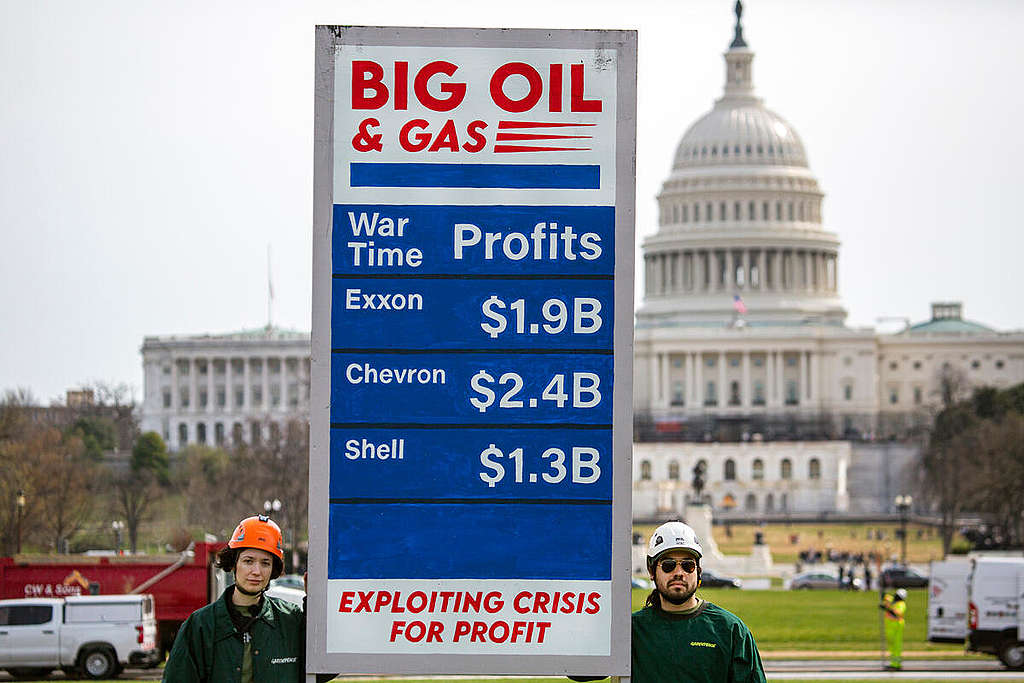
A report by Greenpeace US, Global Witness and Oil Change International projects that oil and gas companies could make tens of billions in additional profits while we see skyrocketing gas prices around the country. Oil prices have been rising to near-record levels due to Russia's ongoing war in Ukraine.
Inside the fossil fuel industry's war playbook
The fossil fuel industry's war playbook has one core message: fossil fuels are essential. Around that story, the industry repeats a set of moves whenever conflict hits a major producing region.
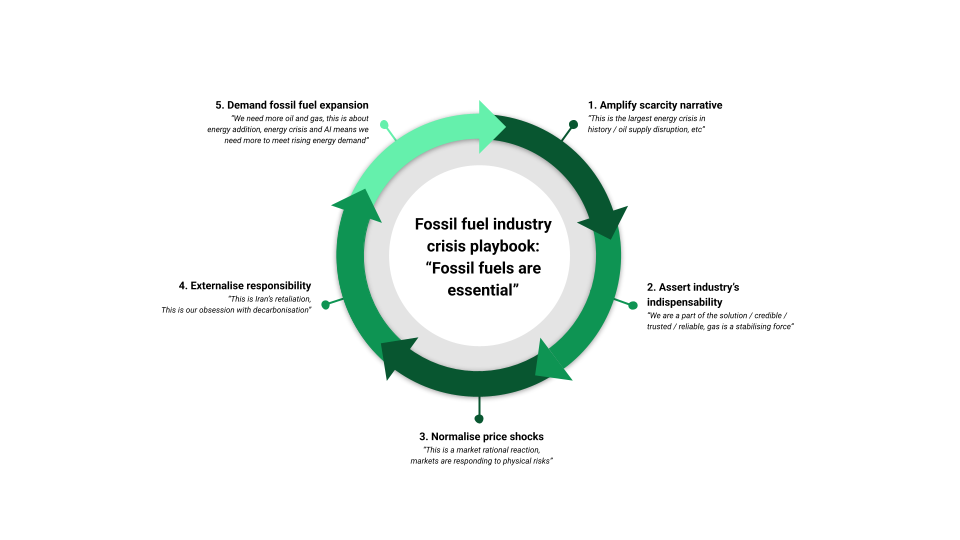
First, fossil fuel companies and the politicians enabling them amplify fear and scarcity while ignoring their central role in the problem, and presenting themselves as the solution. European and Asian governments are told to brace for shortages and blackouts. This creates a sense that there is no alternative to more drilling, more liquefied natural gas (LNG) and more public money for fossil fuel infrastructure. And that's precisely what oil and gas giants want: all their "solutions" are about doubling down on the fossil fuels that got us into the crisis, deepening dependence and ensuring they can continue to profit from crises for decades to come. Their tactics are all self-serving and follow a consistent pattern: protect and maximise profits, entrench dependency, and shift costs onto the public.
Second, the industry declares itself indispensable. During the gas crisis that followed Russia's invasion of Ukraine, US LNG exporters presented themselves as "freedom gas" rescuers of Europe. Literally a few hours after the Russian invasion in Ukraine they asserted themselves with "a critical role to play in supporting European allies with access to a stable supply of reliable and affordable energy" Today, as Iran war disruptions ripple through shipping lanes, the same companies are positioning themselves as the answer again, promising to provide "abundant and reliable energy" if governments approve new export terminals, pipelines and long‑term contracts. Let's not be mistaken: these are self-serving tactics designed to protect and maximise profits, and deepen fossil fuel dependency while people bear the costs.
Third, they normalise price shocks and externalise blame. Oil and gas majors present soaring prices as an unfortunate but unavoidable result of war, sanctions or environmental rules, rather than of a system that concentrates control of essential fuels in the hands of a few countries and corporations. Central banks and market analysts talk about inflation and "market anxiety", while fossil fuel CEOs quietly bank windfall profits and increase shareholder payouts.
Finally, they demand expansion. In Europe, Asia and beyond, industry lobbyists use the Iran war energy shock to argue for fast‑tracking LNG terminals, locking in new gas fields and weakening environmental and social safeguards that "stand in the way". All this hardwires decades more fossil fuel dependence into our economies that goes directly to fossil fuel companies' bottom line. Scientists and frontline communities warning that every new project deepens climate breakdown and exposure to future wars are ignored.
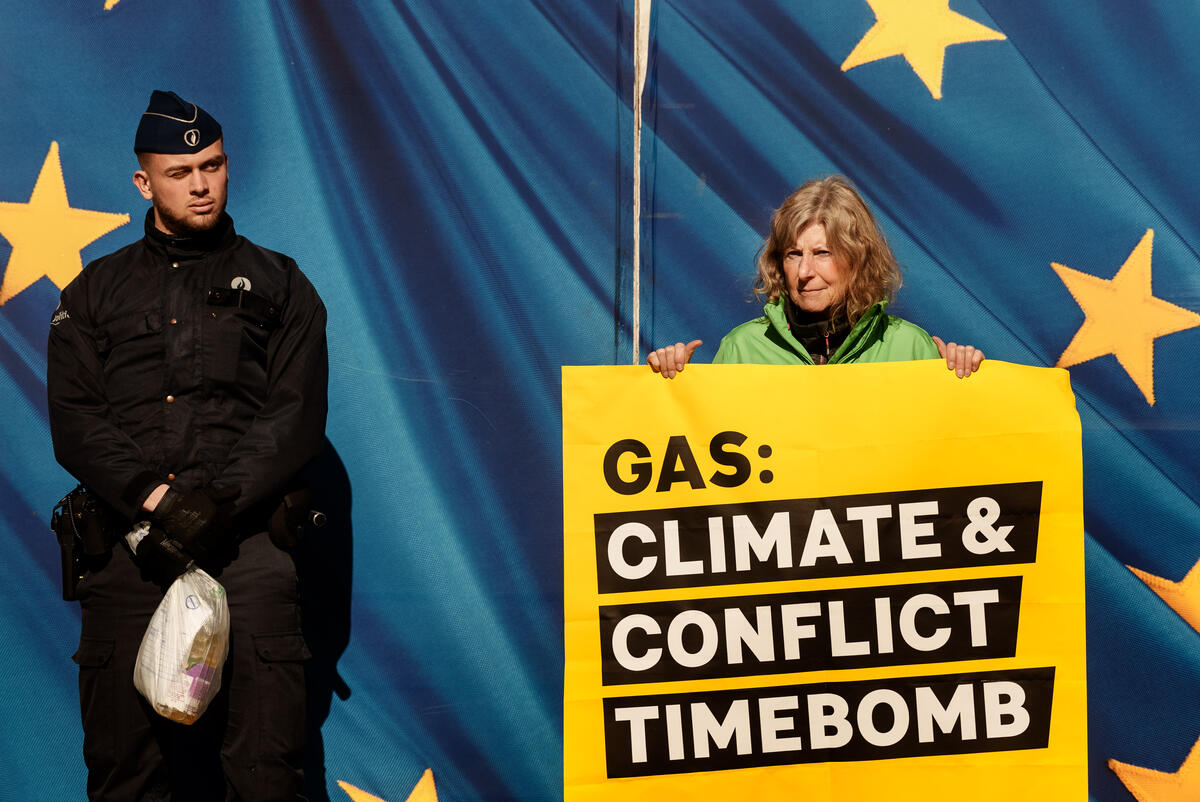
This is not just about energy policy. It is about power and profits. Every time governments follow the fossil fuel war playbook, they reinforce an extractive system that enriches a few while treating nature as a resource to be burned and human life as a disposable cost.
People are paying the price, polluters are counting the wins
For millions of people, the war on Iran energy shock is making the cost of living crisis worse. When oil and gas prices spike, fuel and electricity bills rise. Food and transport costs follow, with low income households and communities in the global South hit hardest. No one should have to choose between heating and eating, or between paying the rent and paying for a bus to work, because of a war they did not choose.
Meanwhile, the winners are painfully clear. Energy researchers estimate that US oil producers alone could see tens of billions of dollars in additional profits as crude prices climb past US$100 a barrel. Russia's oil income reportedly doubled in April compared with before the conflict, and major European oil companies have already made hundreds of millions by trading on war‑driven price swings. This is on top of the record profits that oil and gas firms made during the previous crises, from Covid‑19 supply shocks to Russia's invasion of Ukraine.
Price shocks are not a bug in this system. They are a feature. Every time war, sanctions or blockades disrupt fossil fuel flows, the same pattern repeats. Import‑dependent countries scramble for supply. Households and small businesses pay higher bills. Oil and gas majors, petrochemical firms and their shareholders collect extraordinary gains. The system is working exactly as designed, but not for us.
Governments that respond to this crisis by expanding fossil fuels are choosing to reinforce the very cause of the problem. They are letting the industry that engineered our dependence write the rules.

Breaking the war playbook: protection, renewables and justice
The way out of this fossil fuel war cycle is clear. Governments can choose a crisis response that does two things at once: ensure people's access to energy at lower cost and cut fossil fuel dependence for good.
In the short term, that means targeted support for households and small businesses, funded by bold taxes on oil and gas profits. Polluters that profit from instability and environmental harm must pay for the damage they cause, instead of being buffered against price shocks with public money while people already suffering with the cost of living bear the burden of the energy crisis. Tax cuts and fossil fuel subsidies only protect the profit of the powerful oil companies. On the other hand, new national level surtaxes and a global tax on fossil fuel superprofits under a UN tax convention could raise hundreds of billions to lower energy bills, strengthen social protection and invest in climate‑safe solutions.
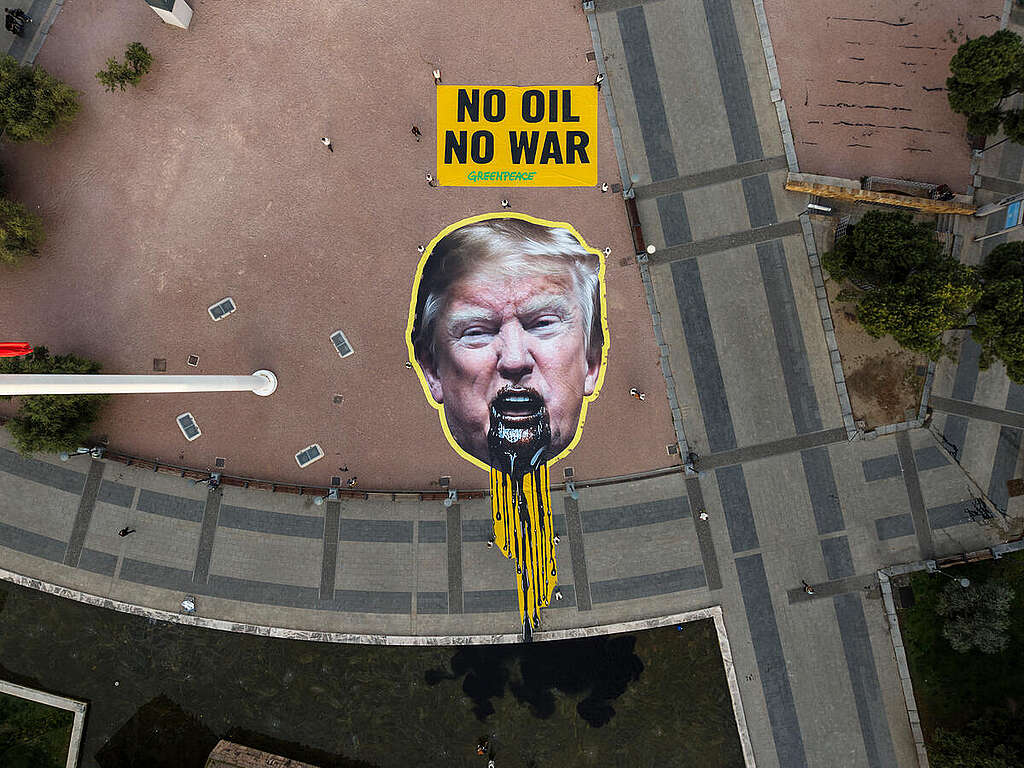
Governments must stop pouring public money into new oil, gas and petrochemical projects. Every euro, dollar or rupee invested in LNG terminals, pipelines or refineries today locks in decades more exposure to volatile prices, autocrats and climate chaos. Instead, public funds should flow into projects that ensure long-term economic resilience and energy security: renewable‑centred energy systems, home insulation, public transport, local and sustainable food systems and reuse infrastructure that reduce overall demand for fossil fuels and plastics.
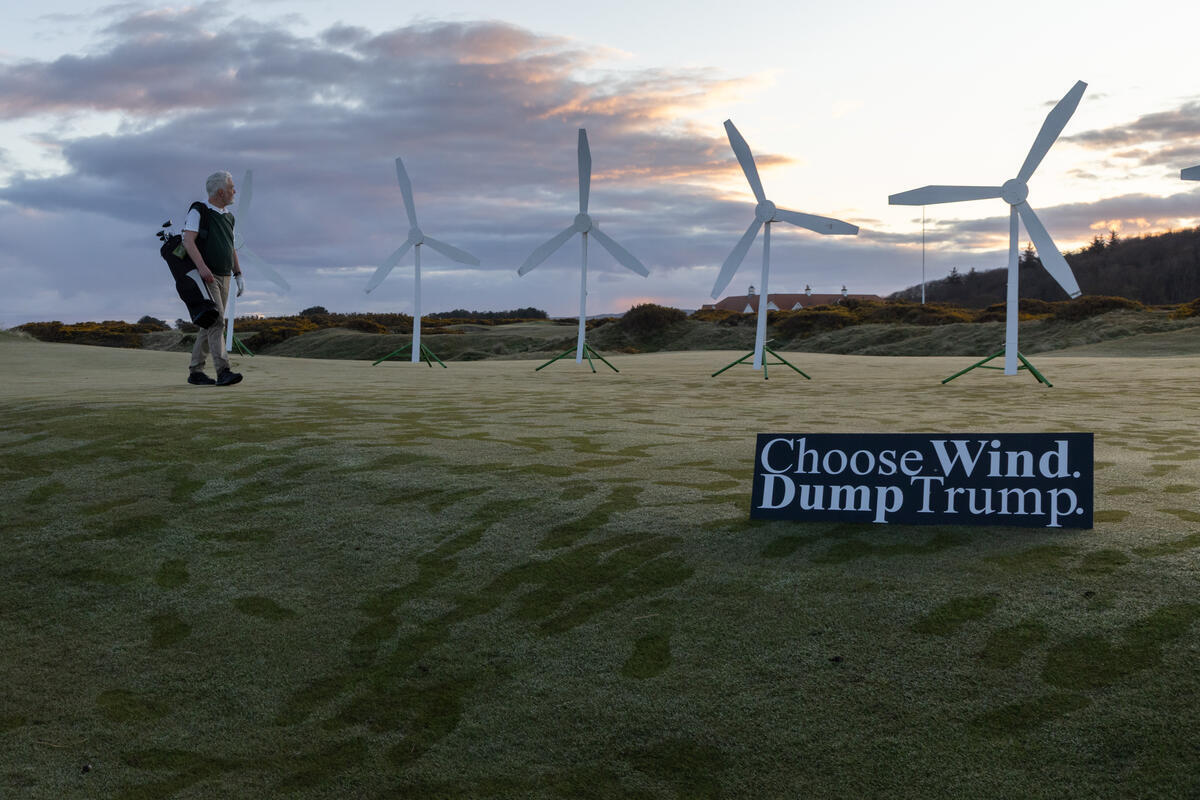
Renewables are already showing what real energy security can look like. You cannot blockade the sun or sanction the wind. Countries that have scaled up solar, wind and storage are less exposed to fossil fuel price shocks than those that still rely heavily on imported oil and gas. Decentralised and democratically owned renewable systems are harder to sabotage, less vulnerable to shipping disruptions and better able to keep homes, schools and hospitals running during crises.
From the war on Iran to the war in Ukraine, this crisis keeps proving the same point: a fossil‑fuelled economy creates fossil‑fuelled wars and price shocks. We can keep following this fossil fuel war playbook, or scrap it and build energy systems that put people, peace and the planet ahead of corporate profit.
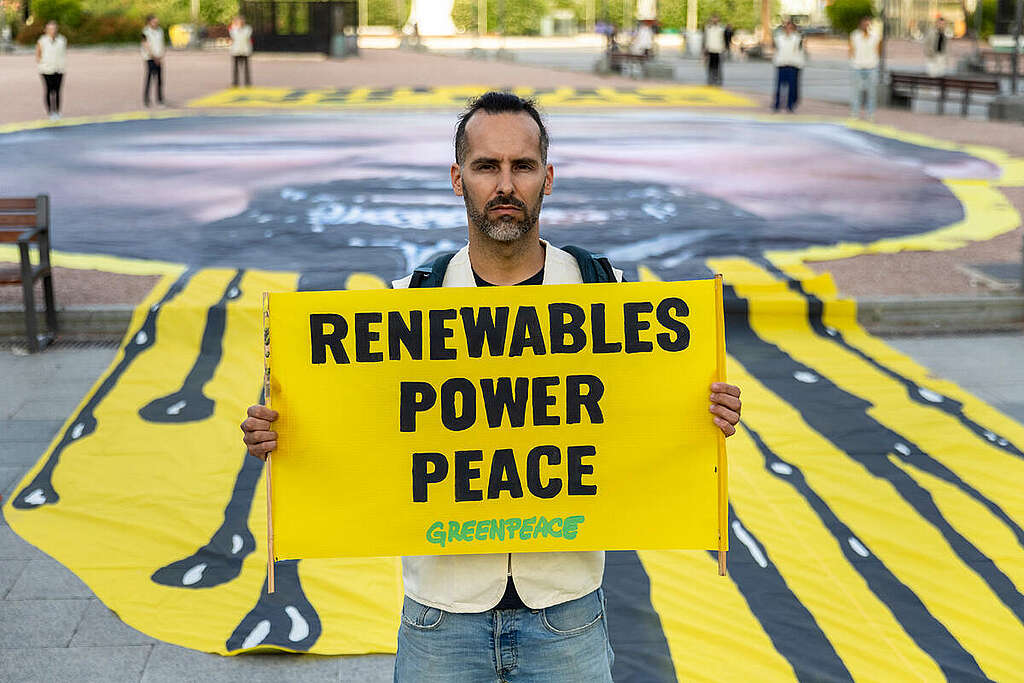
We must tax the fossil fuel corporations profiting from these crises instead of letting them pass on the cost to us.
Dimitris Ibrahim is a climate and energy campaigner at Greenpeace International, based in Athens. Mehdi Leman is a Content Editor for Greenpeace International, based in France.


