
An International study involving the UAB warns that critical scientific research and environmental management gaps in relation to blue carbon ecosystems (BCEs), coastal wetlands that capture and store carbon dioxide, hinder the consideration of these ecosystems in global efforts to tackle climate change.
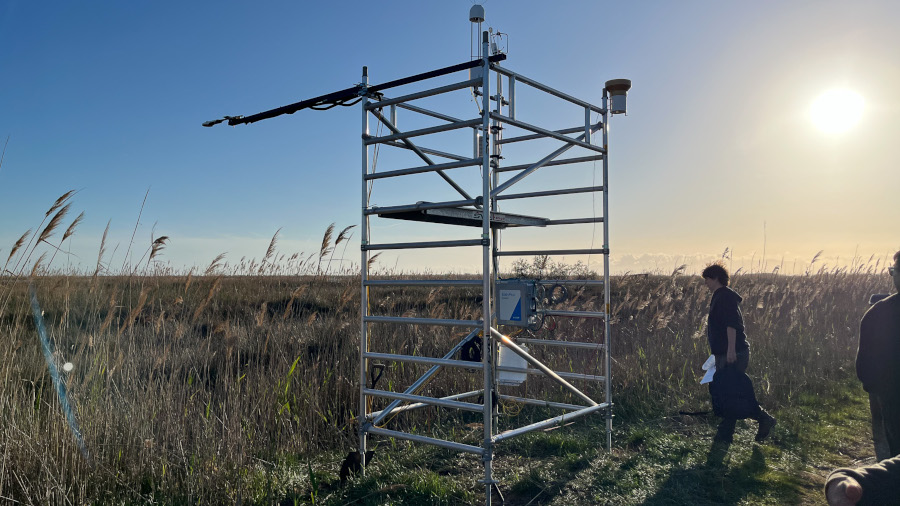
A team of international researchers, including Ariane Arias-Ortiz, researcher at the Department of Physics at the Universitat Autònoma de Barcelona (UAB), has identified the most urgent issues that need to be addressed to improve the conservation and restoration of blue carbon ecosystems —the coastal wetlands that capture carbon dioxide (CO2) from the atmosphere and store it in sediments—in a credible, equitable and effective way at a global level.
The study, published in Nature Ecology & Evolution, sets out a global agenda to accelerate progress in this rapidly developing field. Despite the significant potential of blue carbon to contribute to climate mitigation, only 20% of countries with these ecosystems currently include them in their National Inventory Reports, representing a substantial gap in the opportunities offered under the Paris Agreement.
Advances in measuring carbon stocks and fluxes in coastal and marine ecosystems have made it increasingly feasible to integrate blue carbon into national climate strategies, greenhouse gas inventories, and emerging carbon markets. This progress has driven global interest and accelerated research efforts, strengthening the links between science, policy, and on-the-ground action.
The study is intended as a guide for researchers, practitioners and policy makers facing the challenge of the need for robust evidence to underpin effective governance of BCEs as sites which, through conservation and restoration, have the potential to offset a further 1-3% of global greenhouse gas emissions.
A panel of international experts from 15 institutions identified the top ten questions shaping the future of blue carbon, highlighting the push to balance scientific rigour with practical action. Out of all the proposals, the highest-ranked question focuses on managing large-scale coastal ecosystems while supporting local livelihoods.
Co-author Dr Ariane Arias Ortiz, researcher in the Department of Physics at the UAB, highlights recent scientific progress in the projections of these ecosystems' greenhouse gas balance: "Predicting the future GHG balance of blue carbon ecosystems is finally within reach. With growing open-access datasets, emerging process-based models, and remote-sensing tools, we can start piecing together how these ecosystems may respond to global change, even as uncertainties in lateral fluxes—the exchange of carbon dioxide with the ecosystem's surroundings, not the atmosphere—environmental drivers, and biosphere feedbacks remain".
This study brought together blue carbon experts from across the world as part of the United Nations Decade of Ocean Science for Sustainable Development (2021-2030), a global initiative to promote ocean science and put it at the service of sustainable development and the health of the seas. The study was made possible by the international collaboration put forward by the group GO-BC (Global Ocean Decade Programme for Blue Carbon) and the support of the International Atomic Energy Agency (IAEA), which made it possible for scientists from around the world to meet and establish the roadmap for blue carbon research.
Reference article:
Macreadie, P.I., Biddulph, G.E., Masque, P. et al. Priority questions for the next decade of blue carbon science. Nat Ecol Evol (2026). https://doi.org/10.1038/s41559-026-03020-6


