
Every April 14, the global quantum community celebrates World Quantum Day. It's a day that resonates strongly in Waterloo, home to Canada's densest cluster of quantum talent, researchers, students and industry partners. Here, they work in close proximity, using the universe's fundamental rules of quantum science to create new technologies, shaping Waterloo's Quantum Valley.
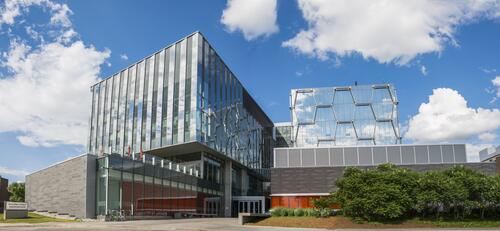
The Institute for Quantum Computing (IQC) at the University of Waterloo is a world leader in the second quantum revolution. Founded in 2002, it was one of the earliest global centres of quantum information research and technology. Since then, Waterloo has emerged as Canada's full-stack quantum ecosystem, anchored by IQC.
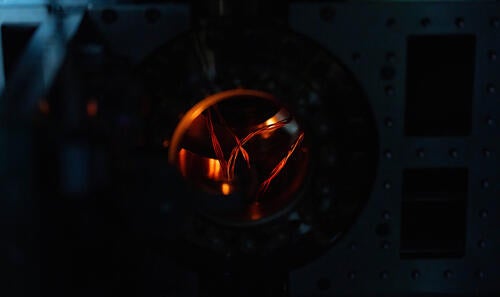
Waterloo's Quantum Valley thrives because of its close-knit community of partnerships, including collaborations between IQC and Perimeter Institute for Theoretical Physics. Interdisciplinary talent spanning mathematics, physics, computer science, engineering, and entrepreneurship converge to enable researchers to take discoveries from theory to prototype to market within a single ecosystem. It has also become home to research sites such as the Quantum Valley Ideas Lab and a National Research Council Collaboration centre, while attracting global technology leaders, including Google and Xanadu.
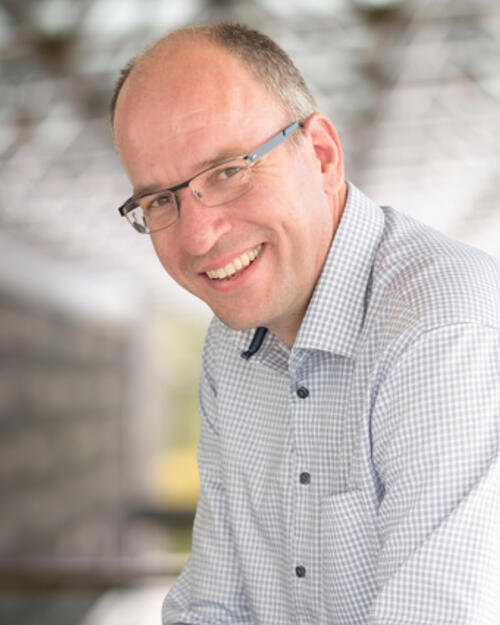 "We have more than 400 quantum researchers within the Waterloo area, using state-of-the-art facilities, that create a vibrant research environment and an ecosystem that became the blueprint for quantum hubs globally," explains Dr. Norbert Lütkenhaus, the executive director of IQC and professor, Department of Physics and Astronomy. "Connecting talent, research, venture capital and industry is crucial to create the critical mass needed to advance breakthrough research and innovation."
Quantum mechanics is often considered one of the most complex areas of modern research, but advancing theoretical insights and creating technologies has a transformational potential to benefit society and grow economies of the 21st century.
Quantum statistics and phenomena such as superposition, entanglement and quantum tunnelling underpin emerging innovations in computing, sensing, communications, and materials and devices. These advances are reshaping fundamental scientific discoveries from cybersecurity to medicine, while also providing opportunities to safeguard national infrastructure.
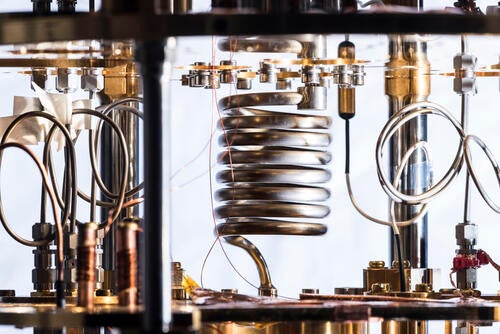
The Quantum Valley has also been the launching ground for dozens of quantum startups. Waterloo has launched 30+ quantum startups, backed by over $60M in investment.
High Q Technologies is a company that spun out of IQC research from Dr. David Cory's group. Located in Waterloo, High Q makes a quantum-enabled electron paramagnetic resonance (EPR) system that reveals molecular structure and dynamics. Built on technology developed at IQC for spin-based quantum information processing, their system is smaller and highly automated compared to its classical counterpart, with features enabled by superconducting quantum sensor. It helps characterize proteins and other biomolecules to understand protein dynamics and disorders. This method can accelerate drug discovery and advance understanding of neurodegenerative diseases like Alzheimer's and Parkinson's.

Troy Borneman is principal scientist at High Q Technologies. He joined IQC to work with Cory, after working with him at MIT where he was pursuing his PhD. He has seen the company grow from the lab to the startup phase and now to a revenue-generating company that has customers and collaborations globally.
"In Waterloo, there is something very unique; even undergraduate-level students are thinking of commercialization, so there are a lot of enterprising young people who have a mindset for early-stage quantum tech companies," Borneman says. "Being here and next to IQC we can still collaborate with Cory's group and have close access to university resources which gives us a big advantage and sets us apart from competitors."
Waterloo's quantum research community brings together talent, infrastructure, and investment to drive technologies that is helping support Canada's future economy and security.
"The scientific community has come a long way since quantum mechanics and computer science came together to form the field of quantum information technology. It is exciting to be at the frontline of discoveries that will benefit society. And there is more to come," Lütkenhaus says.


