
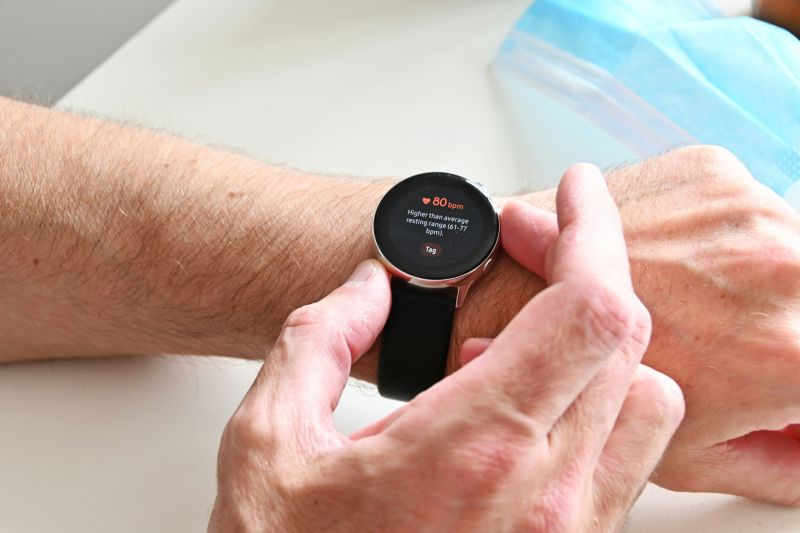
University of Melbourne researchers working on a large study of smartwatch data have found that the heart rates of 70 per cent of people follow weekly, quarterly or even yearly cycles.
The research, published in EBioMedicine, could have implications for how we understand our bodily functions and how we manage neurological, psychiatric and broader health conditions.
Led by Associate Professor Pip Karoly, program leader of the Rhythms in Physiology Lab (RiPL) at the Graeme Clark Institute for Biomedical Engineering, the study analysed over 900 years of smartwatch data from 623 healthy university students.
"We found that many people show unique rhythms in their heart rate from weekly and monthly cycles to longer rhythms such as 10 weeks or six months," Associate Professor Karoly said.
"The resting heart rate in 70 per cent of participants followed a cyclic pattern over years, suggesting that the body has a built-in biological pacemaker controlling our heart rate long term.
"It's easy to tune into our 24-hour circadian rhythms, which make us hungry, tired or more alert at certain times of the day. But we're only just beginning to understand that longer rhythms through the year might be equally important."
Known as infradian rhythms, these patterns are involved in reproductive cycles, seasonal affective disorder – which can cause mental health challenges in times of lower light – and animals shedding fur or skin.
They are also linked to seizure risk in epilepsy, with clinical trials of cycle-based forecasting under way in the US to deliver anti-seizure medications during vulnerable periods.
The factors governing infradian rhythms in humans remain a mystery, although the team suspects they arise due to a combination of hormonal, environmental and genetic causes.
A key scientific question is whether these longer rhythms 'emerge' due to interactions between many circadian pacemakers such as the brain, heart, skin and gut, or whether there is a separate 'slow clock' that may have evolved from marine or other tidal organisms.
"We set out to see whether infradian rhythms affected the heart rates of a cohort of students enrolled in the NetHealth Project in the USA," Associate Professor Karoly said.
The Melbourne researchers found most students' heart rate followed multi-day patterns not explained by season, exercise or environment.
She said establishing patterns of infradian rhythms in healthy adults, and discovering their biological drivers, are critical steps toward understanding their impact on health.
"These little-understood rhythms could provide a window into periods of heightened susceptibility to stress, which may be connected to symptoms across neurological, psychiatric and other health conditions," she said.
The researchers found sex had a significant effect on heart rate cycle period, with males more likely to have weekly and multi-month rhythms, and females more likely to have monthly rhythms.
"Our study sheds light on the bigger picture of how there are diverse rhythms in both sexes that are not driven by the day-of-the-week, season or moon. Interestingly though, housemates, siblings and friends had similar rhythms, suggesting people's bodies naturally sync with those they are close to," Associate Professor Karoly said.
The team is working on an app to track infradian rhythms in relation to neurological and psychiatric patterns and collaborating with partners in medical research to understand the genetics of multiday rhythms.
They have already created an app where members of the public can learn about their own heart rate rhythm and participate in the research (https://rhythmo.me/).


