
Adopting a 'don't ask, don't tell' approach to illicit tobacco enables people to avoid thinking about where cheap smokes come from, researchers at the University of Otago, Wellington, have found.
The researchers interviewed 20 people who use illicit tobacco in Wellington and Dunedin and explored their purchasing experiences, motivations, and views on regulating the illegal tobacco market.
Their findings are published in the international journal Tobacco Control.
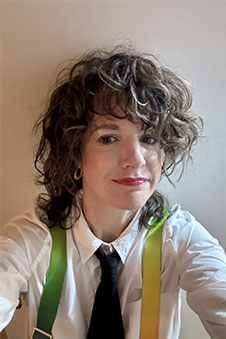
Dr Lori Leigh
Co-lead author Dr Lori Leigh, from the ASPIRE Aotearoa Research Centre and the Department of Public Health, says people using illicit tobacco generally regarded themselves as law abiding members of society and "convenient unknowing" helped legitimise illicit tobacco use.
"Without knowing these uncomfortable details, people in our study could view themselves as pragmatic consumers, and the suppliers as ordinary community members keen to help others, avoiding the fact that they were involved in an illegal trade." – Dr Lori Leigh
"Without knowing these uncomfortable details, people in our study could view themselves as pragmatic consumers, and the suppliers as ordinary community members keen to help others, avoiding the fact that they were involved in an illegal trade."
Nearly all of those interviewed viewed illicit tobacco use as a response to the cost-of-living crisis, and the severe financial strain they were under.
Others said illicit tobacco was their way of rebelling against unfair government policies, with one commenting, "[tobacco prices] are a way to keep poor people poorer".

Professor Janet Hoek
Senior and co-lead author Professor Janet Hoek, from the Department of Public Health and Co-director of the ASPIRE Aotearoa Research Centre, says these attitudes help embed illicit tobacco as a normal part of New Zealand life, making it more difficult to combat the illegal trade.
Study participants bought illicit tobacco from family, friends, co-workers and online sellers on social media sites, as well as from dairies, tobacconists and vape shops. The products included contraband tobacco imported to evade excise duties, counterfeit products, stolen tobacco and illegally sold home-grown tobacco (sometimes called 'chop-chop').
Participants described hearing 'whispers' from friends about the availability of illicit tobacco, and using code words to buy products from dairies, tobacconists and vape shops.
Others had long-standing sources who sold specific products, particularly the Chinese brand 'Double Happiness'. A small number of the participants bought what they assumed was stolen tobacco, which they recognised through familiar packaging and described as authentic.
Despite the financial appeal, most participants described illicit tobacco as lower quality, or 'crap', 'cheap', 'nasty' and 'awful' and akin to smoking 'cardboard clippings'.
Some regarded homegrown tobacco as the worst of the options, describing it as the lowest quality available, and also the riskiest, given it was open to adulteration.
Professor Hoek says independent estimates of illicit tobacco consumption in New Zealand suggest it accounts for around five to seven per cent of the overall market, based on pack collection analyses and surveys. This estimate contrasts with Australia, where illicit tobacco is now thought to account for between 50 and 60 per cent of all tobacco consumed.
She says the significant level of illicit use in Australia, and a recent increase in the number of border seizures of tobacco in New Zealand, show there is reason to be concerned about the illegal trade here.
"If people know that illicit tobacco is making it easier for young people to take up smoking, they may think twice before buying it." – Professor Janet Hoek
"Our findings reinforce the need for a comprehensive strategy to address illicit tobacco supply. The availability of cheap illegal tobacco is reducing people's incentives to quit smoking, making it easier for young people to take up smoking, and entrenching health inequities.
"Proactive measures could avoid the problems now faced in Australia and adopting a World Health Organization protocol setting out best practice measures to manage illicit tobacco would create a regulatory infrastructure that supports rapid detection and enforcement," she says.
"These measures include licensing each step in the supply chain, implementing a track and trace system, greatly increasing surveillance and penalties, and protecting systems from tobacco industry interference."
Dr Leigh says social marketing campaigns could expose connections between illicit tobacco trade and criminal activity and show the harms that occur when tobacco becomes more accessible to young people.
"If people know that illicit tobacco is making it easier for young people to take up smoking, they may think twice before buying it."
The research was funded by the Health Research Council of New Zealand.
Publication details
The research paper, 'From illicit to accepted: a qualitative study of illicit tobacco use in Aotearoa New Zealand' is published in Tobacco Control.


