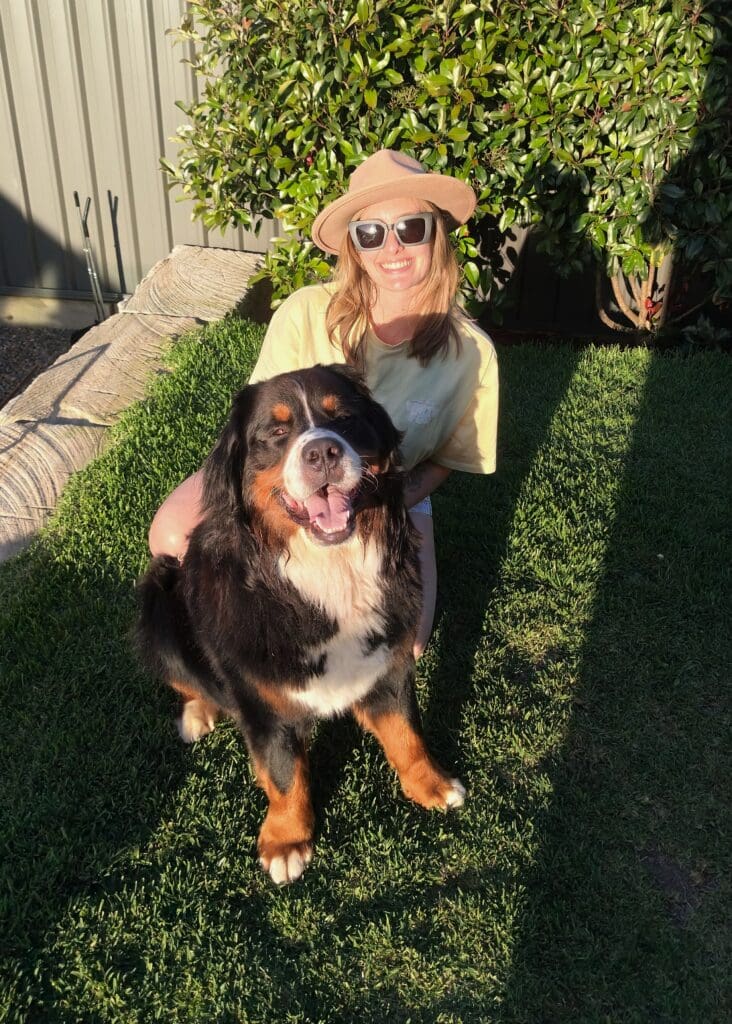
Having grown up with a freckled complexion, Jennae knew she needed to watch her skin for changes, such as a new or changing mole. However, as her career as an event manager became increasingly demanding, she kept putting off seeing her GP despite noticing a suspicious-looking mole on her thigh.
During a doctor's appointment in April 2020, her GP recommended removing it and testing it. A few days later, Jennae received a phone call with news she wasn't expecting: "You have cancer."
At just 24, Jennae was shocked.
"I felt quite overwhelmed because I never thought it was going to come back positive for cancer," she said.
"It felt quite surreal. I remember thinking it was something that older people get, not young people."
She added: "The doctor who called me said I had to come back within the next week to get it removed as soon as possible, so it really dawned on me then how serious it was."
Jennae underwent surgery to remove the melanoma shortly afterwards. Although the procedure itself was relatively straightforward, recovery proved challenging.
"The procedure was fairly painless after the local anaesthetic, which I hated, but the recovery was excruciating," she said.
Thankfully, follow-up appointments confirmed the melanoma had been completely removed. Jennae has remained cancer-free since 2020.
Learning the importance of sun safety
Growing up in Australia, Jennae learned the importance of sun protection. Her parents and school encouraged sun-safe behaviours, but like many teenagers, she didn't always prioritise sun protection.
"My parents and school always encouraged sun safety with wearing hats and sunscreen, however, like many young people, I often found myself thinking I was too cool for any of that," she said.
"It was one of those mindsets like, 'cancer won't ever happen to me'."
Now cancer-free, Jennae approaches sun safety very differently.
"I'm pedantic about my skin checks now and often get one every six to 12 months. I often book earlier than needed if I find a new freckle that I want checked," she said.
"Now you won't ever find me out in the sun without some kind of protection."
A message to the community
By sharing her story, Jennae hopes more Australians understand that melanoma can affect people of any age.
"You're never too young to get skin cancer," she said.
"Growing up in Australia, being outdoors is part of our lifestyle and it's almost unavoidable. We need to remember that a tan isn't worth risking your health."
She added: "Looking after your skin today can make all the difference to your future."
About skin cancer in Australia
- Australia has one of the highest rates of skin cancer in the world. In Australia, melanoma of the skin was estimated to be the third most common cancer: 2 in 3 Australians will be diagnosed with skin cancer in their lifetime.
- The good news is that skin cancer is highly preventable. This is because ultraviolet (UV) radiation is responsible for about 95% of all skin cancers in Australia, which means that when we protect our skin we reduce our risk.
Protecting yourself from the sun
- Sun protection is needed when the UV Index is 3 or above regardless of the time of day or time of year, even on cool and cloudy days.
- Use the free SunSmart app to check the recommended sun protection times in your local
- Protect yourself in five ways from skin cancer:
- Slip on clothing that covers your shoulders, arms and legs
- Slop on SPF50 or SPF50+ broad-spectrum and water-resistant sunscreen and reapply every two hoursSlap on a broad-brimmed hat
- Seek shade whenever you can
- Slide on sunglasses that meet Australian Standard AS1067
You should get to know your skin and regularly check for any changes such as a new or changing mole, freckles and spots. If you notice anything new or different, it's important to seek medical advice as soon as possible.