
Jen and Ron were together for 49 years. After raising a family and working hard, with Jen as a nurse and Ron as a truck driver, they were looking forward to slowing down and travelling Australia.
But life took a turn when Ron was diagnosed with a rare head and neck cancer in 2013. Over the next 11 years, Ron was then diagnosed with multiple other cancers, as well as Lynch Syndrome, a hereditary condition that runs in their family.
Despite fierce advocacy and years of treatment, Ron died in May 2024.
Now, Jen is learning to live with her grief while raising awareness about hereditary cancer and the challenges faced by regional patients.
A rare diagnosis and years of treatment
Ron's first cancer diagnosis arose after he began losing his hearing in one ear. Jen noticed a worrying smell "like dead tissue". She helped fast-track scans, which revealed a rare nasopharyngeal cancer (head and neck cancer).
This turned out to be just the beginning.
Further testing brought another life-changing diagnosis: Lynch Syndrome, a hereditary condition that increases the risk of developing certain cancers.
Over the next 11 years, Ron faced a series of diagnoses including prostate cancer, colon and rectal cancer, and a particularly aggressive skin cancer, called metastatic squamous cell carcinoma (SCC).
He underwent intense rounds of chemotherapy and radiation, multiple surgeries, a feeding tube, full dental extractions, facial palsy and vision loss.
"We weren't expecting it to be like this," Jen says. "As a clinician, you see the signs. As a wife, you refuse to accept them."
Caring through cancer and grief
Jen was Ron's primary carer, advocating fiercely for him, especially when they faced the challenges of regional cancer care.
"Sometimes it felt like squeezing juice out of a tin can to get him what he needed," reflects Jen.
Jen put her career on hold, to care for Ron full-time. Despite his serious illness, Centrelink hold him he "wasn't sick enough" to qualify for support. They were forced to redraw their home loan and came close to losing their house.
By early 2024, Ron's had declined rapidly. He grew weaker, stopped eating, slept more and fell more often.
"It was an absolute nightmare," says Jen.
When his condition worsened, Jen told him to go to the hospital - "With a few extra choice words thrown in", laughs Jen.
On the way, they passed the beach. Ron never usually looked at the beach, but Jen says "this day he asked to stop and watch the planes coming past".
Ron died in May 2024 with Jen sleeping beside him in a hospital bed.
Jen remembers, "It was 4.57am. I heard him stop breathing. At first, I thought he was in a deep sleep."
Ron's legacy and raising awareness
Ron's funeral was a celebration of the man he was, with music, motorbike gear and Southern Comfort and vodka shots poured over his coffin. His grandchildren's notes and drawings were placed gently inside.
When everyone had left, Jen found herself in a quiet house, and grief hit hard. "I went into a really horrible period," Jen says.
Her medical background, which had helped them navigate Ron's treatment, had now thrown her into a cycle of "what if" thoughts and clinical analysis instead of allowing herself to grieve.
Eventually, Jen reached out to Cancer Council's 13 11 20 support line for counselling.
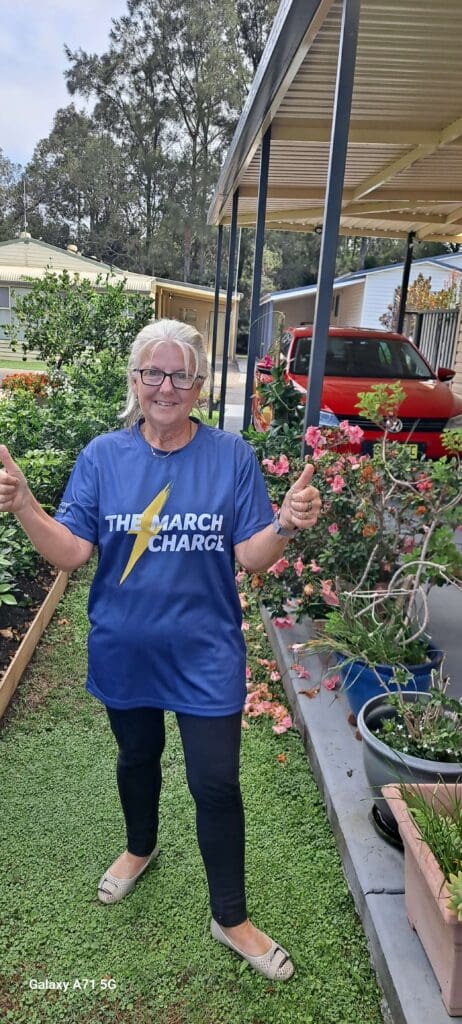
Last year, she took part in The March Charge in Ron's honour, grateful for the hope it represented. She is also determined to raise awareness of hereditary cancer and Lynch Syndrome. Their youngest daughter, who has children of her own, has tested positive for the gene.
"We've all got the cancer gene - it affects all of us. It's only a matter of time when and where it will pop up," Jen says. "If something doesn't feel right, get it checked."
Jen adds, "I'm sharing my story because maybe it might help somebody else.".
If you or someone you love is affected by cancer or coping with grief, you're not alone. You can learn more about understanding grief here.
Find out what support is available after a loved one dies of cancer by calling Cancer Council on 13 11 20 or visit our support page.


