
Artificial Intelligence that detects breast cancer, enables medical imaging in low-resource countries and that identifies the patients who require advanced treatment even at the point of diagnosis - these are just a few examples of AI research at Karolinska Institutet that is impacting an entire world.
Artificial Intelligence based on deep-learning has revolutionised image-based pattern recognition, not least in the field of medical diagnostics. One example is an "AI radiologist" that tirelessly assesses mammograms to find anomalies that bypass the human eye.
Since June 2023, the AI algorithm "AIna" at Capio St Göran's Hospital has been in operation in its mammography unit, which receives an annual 80,000 or so women for breast cancer screening.
Traditionally, the images are double-checked by two radiologists, who flag any anomalies they see. At such a consensus discussion, the hospital can opt to recall the woman for a complementary examination. Before the decision to let an AI replace a radiologist, a study was made of over 55,000 women and published in The Lancet Digital Health 2023.
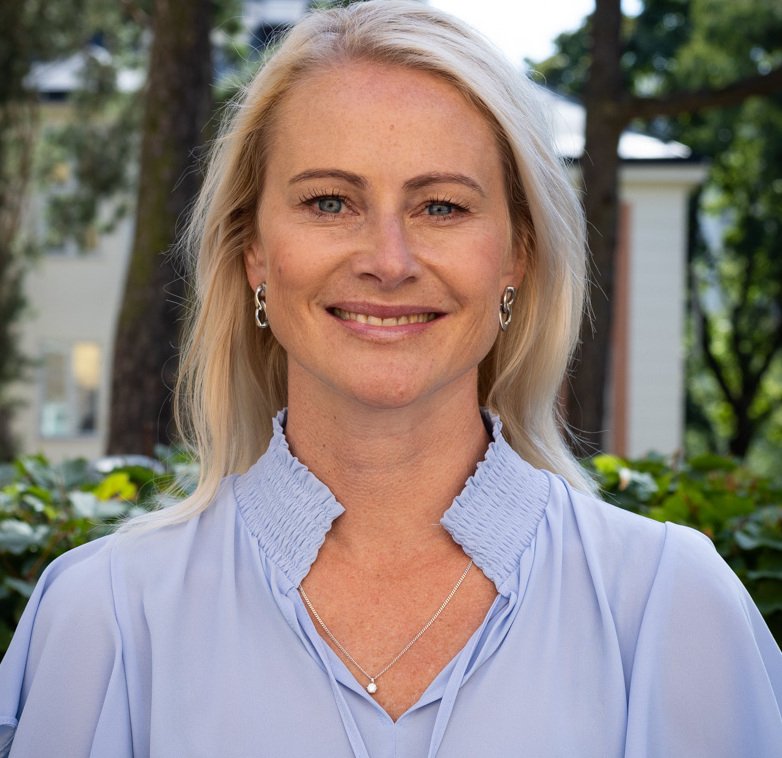
"What we found, to put it briefly, was that examination by an AI and a radiologist was a better alternative to having two radiologists," says consultant and breast imaging specialist Karin Dembrower , researcher at the Department of Medical Epidemiology and Biostatistics , KI.
AI plus one radiologist found four percent more cancer cases, and recalled six per cent fewer women. Recalling women who are actually healthy takes time and causes concern.
Greater accuracy with AI
In a recent review published in Radiology in 2025, the AI was ten times more accurate when engaged in the flagging process than a radiologist acting alone. These days if the AI flags an examination, it always triggers a consensus discussion.
"If we can't explain away the finding by, say, using older scans that we, but not the AI, have access to, we recall," explains Dr Dembrower. "It's the radiologist who takes the final decision, but the AI provides vital information."
When the first study was launched, there was a certain resistance from the radiologists, as it took more time.
"But when we realised that we're finding more incidences of cancer, attitudes gradually changed," she says.
Shorter waiting times
In another unpublished study, it was found that an AI and a radiologist found more cases of invasive cancer, which is when tumour cells have spread from their original location to other tissues.
"We've tended to rely more on ourselves than on the algorithm, but now we show a little more humility," Dr Dembrower continues. "One insight is that I know what I can see, but I can't say what I don't see, right?"
The way of working has sped things up for doctors, which has shortened waiting and referral times.
"This means we can concentrate on more advanced examinations and investigations for the women at the greatest risk of a breast cancer diagnosis."
As for the clinical responsibility, there are no clear national guidelines, but the EU's AI Act provides that a human must be involved in the decisions. This aligns with the opinions of the women whom the researchers interviewed in 2022. They also wanted a human somewhere in the decision-chain, and were more tolerant towards human error than algorithmic error.
"They saw AI as a good complement, not a replacement," says Dr Dembrower.
Compensates for lack of experts
Letting AI examine medical images can also be a way to move diagnostics to where it does most good. This is something of which Johan Lundin , professor at the Department of Global Public Health , KI, has taken note.
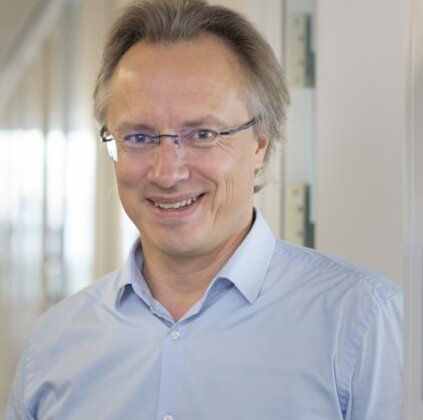
"At the moment, AI is being used where it's least needed," he says. "We've inverted that perspective and taken it to environments that lack the necessary expertise and resources."
Professor Lundin is currently collaborating with Kenya and Tanzania, where there is a desperate need for pathologists.
"In Sweden, we think we're in trouble with our 30 to 40 pathologists per million population, but in sub-Saharan Africa, there are fewer than one per million."
He hopes to use AI and digital technology to spread access to image-based diagnostics. The components for digitising samples derive from the mobile phone industry and data can easily be transmitted elsewhere.
"The one assessing the microscope images could be sitting in another city, or even country," he says.
Screening of 400 million women
In another project, researchers are working with cervical cancer. In the Nordic region, the disease is prevented through screening and vaccination, but in many low-income countries, it is the most common cancer-related cause of death amongst women.
The World Health Organisation (WHO) has set a target to have 70 per cent of women of screening age tested by 2030.
"To reach it, 400 million more women need to be screened globally, which will be hard to achieve without automated methods."
Researchers have been working with staff to screen over 3,000 women at Kenya's Kinondo Hospital, and a further 600 women in primary care in Tanzania. A nurse takes swabs from the ectocervix, after which the cell sample is placed on a microscope slide, prepared and digitised. AI then analyses the sample and an experienced pathologist verifies the AI's response remotely.
Here, the researchers could show that the AI was no less accurate than an expert. They have also analysed samples for the presence of the virus that causes cervical cancer. In many countries, this is the primary way of screening for the diseases, and the women who test positive need to provide supplementary tissue samples.
Finds parasites in seconds
"But in regions where 25-30 per cent of the women are positive, this is difficult to implement - in which case AI-mediated sample analysis can be a 'middleman' that takes some of the pressure off the system," says Professor Lundin.
Intestinal parasites spread via the soil form a group of "neglected diseases", despite the fact that some 1.5 billion people around the world are carriers, and 20 to 30 per cent of children in some regions are actually infected. The infections are treated with deworming preparations that are taken as a one-time pill, which has led to mass-treatment. Repeated treatment, however, can give rise to drug resistance.
"Our method makes it possible for doctors to only treat those who actually become re-infected after the first treatment," he says.
The researchers tested faecal samples from 2,500 schoolchildren. When a microscopist analyses the samples on the hunt for worm eggs, it takes 10 to 15 minutes per slide; for AI, it takes a matter of seconds.
"And in more than ten per cent of the cases, AI found eggs that the human expert had missed," says Professor Lundin. "There could be just one or two eggs per slide, so it's like looking for a needle in a haystack."
One challenge is that samples need preparing, as reagents can vary between production batches and laboratories.
"AI is like a student," he continues. "If the samples look different from one occasion to the next, the AI is less effective."
Because of this, the AI model needs to be adapted to local conditions through standardised routines and quality controls, as the researchers described in The British Medical Journal in 2025.
"When AI is introduced locally, the model should be adjusted by manually quality assuring the first 50 to 100 samples," explains Professor Lundin.
But a few years down the line, this could be history.
"Maybe we won't need to dye preparations like we do today. We've had to do this to help the human eye but AI might be able to detect anomalies without it."
Professor Lundin stresses that AI has the potential to reduce global inequality if used responsibly in a trust-building and educational way.
"We've seen a great deal of support for these developments in low-resource environments, especially given the lack of experts. AI can't just be high-tech for rich countries, as the greatest need is in low-resource countries."
Support for personalised medication
While AI is often used to find anomalies in different kinds of image, it can also analyse data to find medically relevant patterns, such as a subgroup of patients standing out for reacting particularly well - or badly - to a certain drug.
Helga Westerlind , docent of epidemiology at Karolinska Institutet's Department of Medicine in Solna, is developing AI models to search for such new patterns in an extensive bank of data.
In one project, she is focusing on patients with the autoimmune disease rheumatoid arthritis. On receiving a diagnosis, most patients are given the immunosuppressant methotrexate - despite the fact that a third of them need to go off the drug within a year due to its ineffectiveness or side-effects, and that other therapeutic options are available.
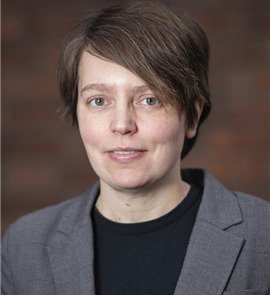
"In this particular project, we're trying to identify which patients are least likely to respond to the first line of treatment so that they can be prescribed the right medication," she says.
For her project, Dr Westerlind uses data from national registers concerning the patients' medical history, prescriptions, sociodemographic situation, and clinical records. Her group also has access to personal genetic data from genotyped blood samples.
"This gives us huge amounts of diverse data that we need to combine in some smart way," she says.
Traditionally, the researchers had used previous knowledge and built what are called "regression models", but with AI, they can use more data-driven methods.
"We let the AI determine which variables seem important without pre-feeding it with a hypothesis," she says. But variables must be prepared and treated, steps that affect the end results.
Risk of false results
This way of working also means that the researchers must be careful about how they interpret what AI uncovers.
"You have to distinguish between prediction and causality," says Dr Westerlind.
One major pitfall is "information leakage" when evaluating an AI model using data that has also been used in its training.
"It gives us nice but false results," she says.
This often happens unintentionally.
"It's easy to make the mistake of letting the entire dataset affect the model's choice of variables and then think that you're evaluating the model on independent data. What you need to do is use some parts of the data for training, and other parts for evaluating."
The research group uses an "iterative" method, improving their model step by step.
"We start from the bottom with simple models and then gradually add more complicated methods and more data types," Dr Westerlind.
The first study, using registry data only, was published in 2021 in ACR Open Rheumatology. The second, published this year in The Journal of Internal Medicine, combined registry data with genetic data.
"We saw that the AI models weren't necessarily producing better results than traditional models, but they allow us to work with much larger datasets and discover more complex, non-linear relationships," she says.
Dr Westerlind emphasises the importance of taking a multidisciplinary approach that combines expertise from medicine, statistics, mathematics and informatics. She herself holds a Master's degree in computer science.
"It's the reason why I have this particular view," she explains.
Using AI like this has multi-layered significance.
"When it comes to research, AI can, for instance, bring hypothesis-generating insights into biological relationships, by which I mean that it can help up find something that turns out to be worth exploring to understand more of a disease's underlying biology," says Dr Westerlind.
She hopes that their work will one day provide clinical decision support.
"The dream would be a tool that can aid rheumatology: which treatment will a certain patient have the best chances of responding to? And for the patient, it will ultimately mean getting faster and more effective treatment, and consequently a better quality of life."
Widely circulated AI research
The three KI researchers conduct all AI research that stands out internationally.
"Nowhere else in the world is anyone having AI examine all screening samples, so our studies and the findings we're reporting are unique," says Dr Dembrower.
Professor Lundin explains how the research on making medical diagnostics more widely accessible is the reason why he and his colleagues have been invited to work under the UN's Global Initiative on AI for Health.
"It's where global organisations cooperate on technical, ethical and regulatory guidelines," he says.
Dr Westerlind's work integrating different data modalities also has no equivalent anywhere else:
"Not only are our data collections unique both in terms of the number of individuals and of the amount of data, they're also incredibly difficult and time-consuming to set up," she says.
Text: Lotta Fredholm
Translation: Neil Betteridge
AI conference at KI
• The Advances in Artificial Intelligence conference was held at Karolinska Institutet on 2 December: AI@KI.
• The conference was made possible thanks to a donation from the Lundblad and Thelin families.
• AI@KI is an initiative that enables AI-related conferences and CPD courses to be held every term.
• The half-day conference included presentations of initiatives in the AI field and current research. It also hosted the annual "Advances in AI award".
• This year's prize-winner is Karin Dembrower, researcher at the Department of Medical Epidemiology and Biostatistics, KI, for for pioneering AI that makes breast cancer diagnostics and treatment safer and preciser.


