
European Commissioner Ekaterina Zaharieva (Startups, Research and Innovation) visited the Leiden Bio Science Park on 12 June to see how the Leiden life science & health ecosystem works. This sector is crucial to Europe's socio-economic development, healthcare and strategic position.
At the Leiden Bio Science Park (LBSP), researchers, entrepreneurs, investors, young start-ups, scale-ups and established companies work together within a single ecosystem. Leiden University and the LUMC form its backbone, not just through scientific research but also by educating the talent of tomorrow. Zaharieva was given a tour of these various components, accompanied by representatives from the Ministry of Economic Affairs and Climate and the Ministry of Education, Culture and Science.
Commissioner's portfolio
The tour aligns with Zaharieva's portfolio. She focuses on strengthening European research and innovation collaboration in sectors that are strategically important to the EU. Life sciences, and biotechnology in particular, are seen as key drivers of economic growth. The sector provides solutions to societal challenges such as the treatment of diseases.
To ensure the life sciences can continue to grow and remain globally competitive, Zaharieva aims to simplify regulations and improve access to venture capital. She is also committed to strengthening collaboration between research institutions and businesses, and to supporting start-ups and scale-ups.
Ecosystems like the LBSP are essential
Zaharieva's visit began at the Kadans Plus Ultra laboratories and offices, where companies and life sciences institutions collaborate and innovate. She then visited the Leiden Instrument Makers School and the university's Gorlaeus Building, home to the Faculty of Science. The tour ended at ProQR biotechnology company.
In a presentation, Esther Peters, LBSP Director, showed that the Netherlands and Europe perform well in life sciences in terms of collaboration, patents and scientific publications, but that international competition is increasing, particularly from the United States and China. 'It's becoming harder for us to attract funding and venture capital, so there's work to be done', she said.
She emphasised the importance of investing across the entire chain: from idea to application. 'We need ecosystems like the Leiden Bio Science Park. Globally, we see that that is where progress is made, especially in our sector. Europe has everything it needs: talent, knowledge, infrastructure and strong ecosystems. But we must take action and accelerate, because the time from idea to final product determines success.'
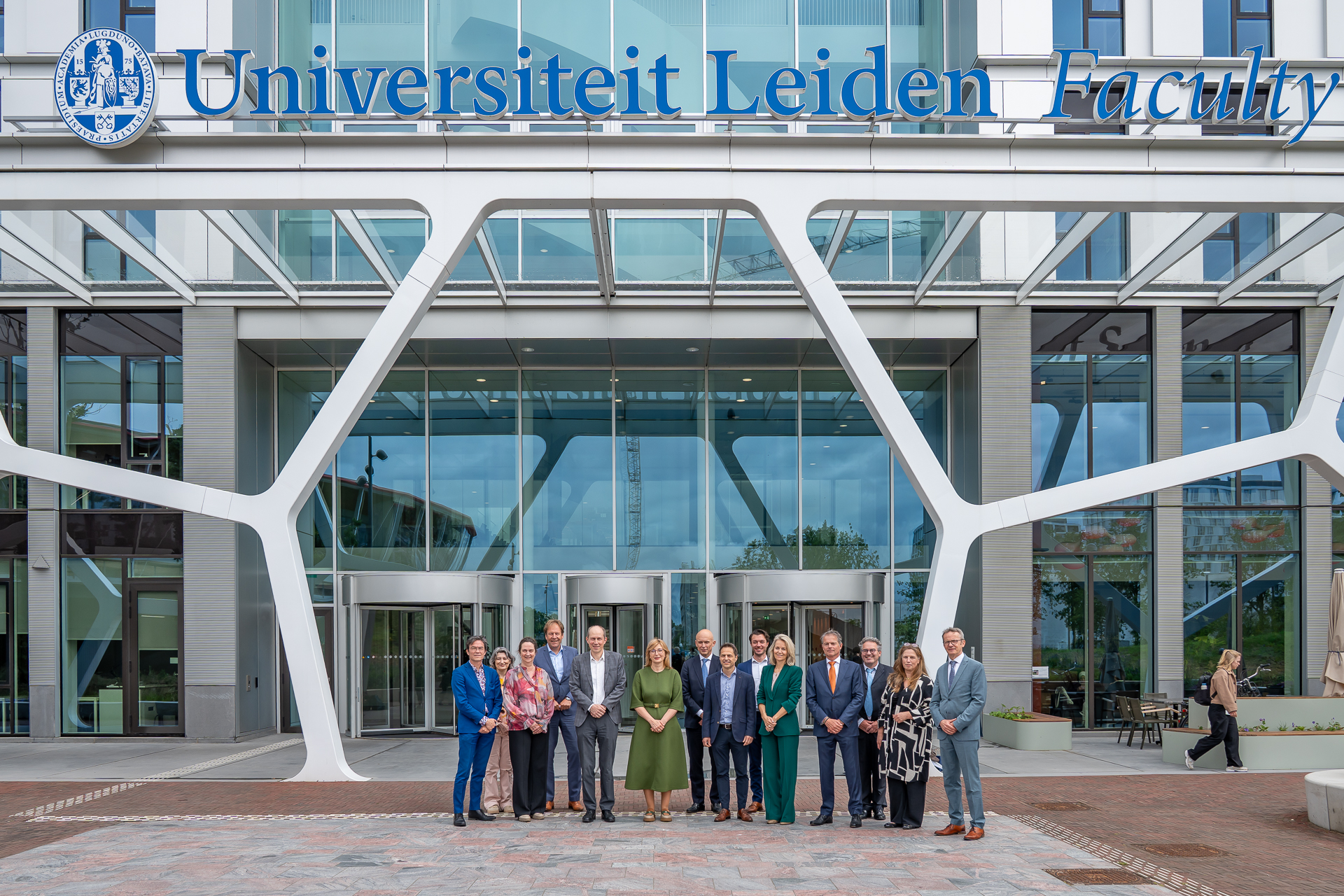
European Commissioner Ekaterina Zaharieva (green dress) was accompanied by representatives of the university, businesses, the LBSP and the Ministries of Economic Affairs, and Climate and Education, Culture and Science 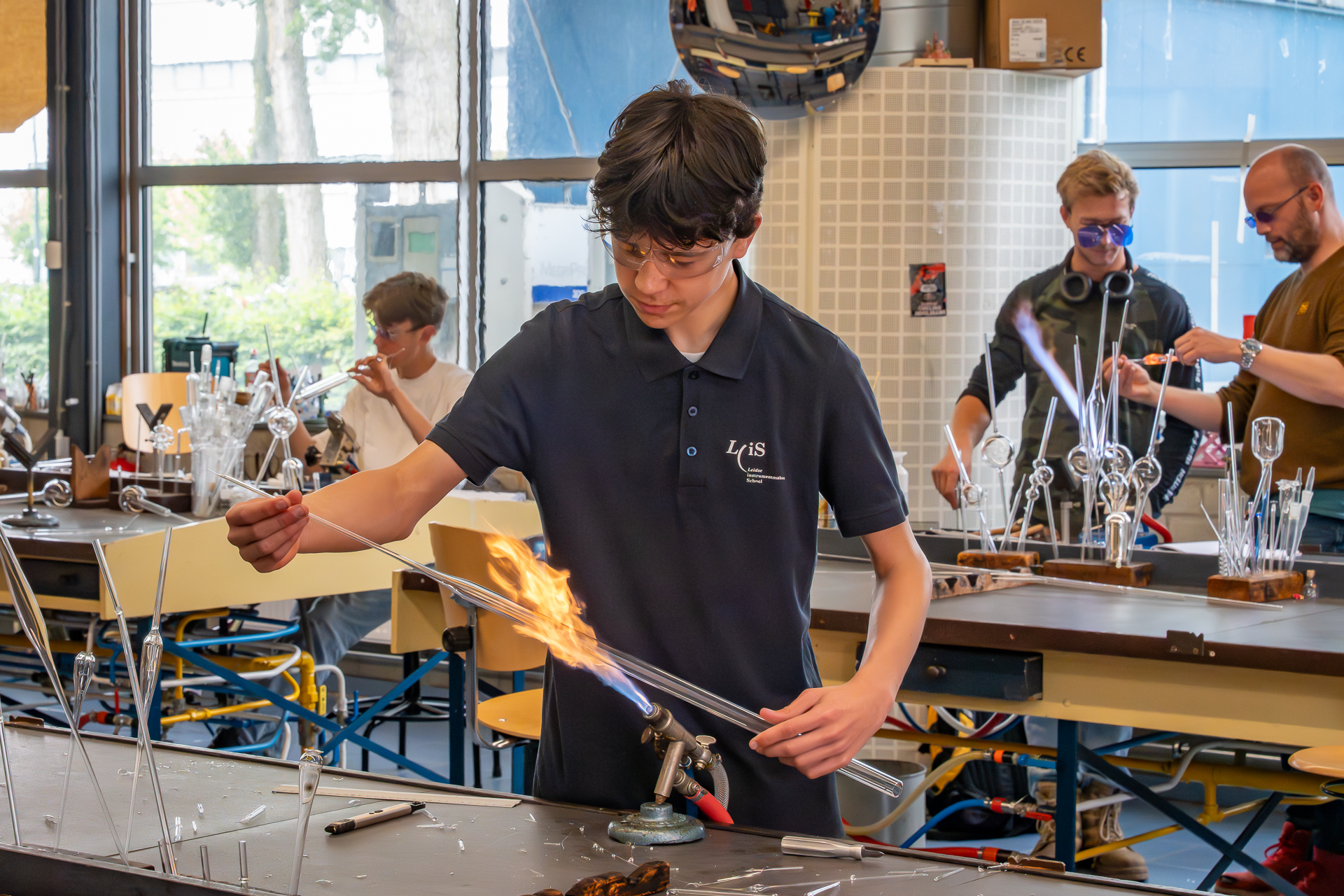
They also visited the Leiden Instrument Makers School. 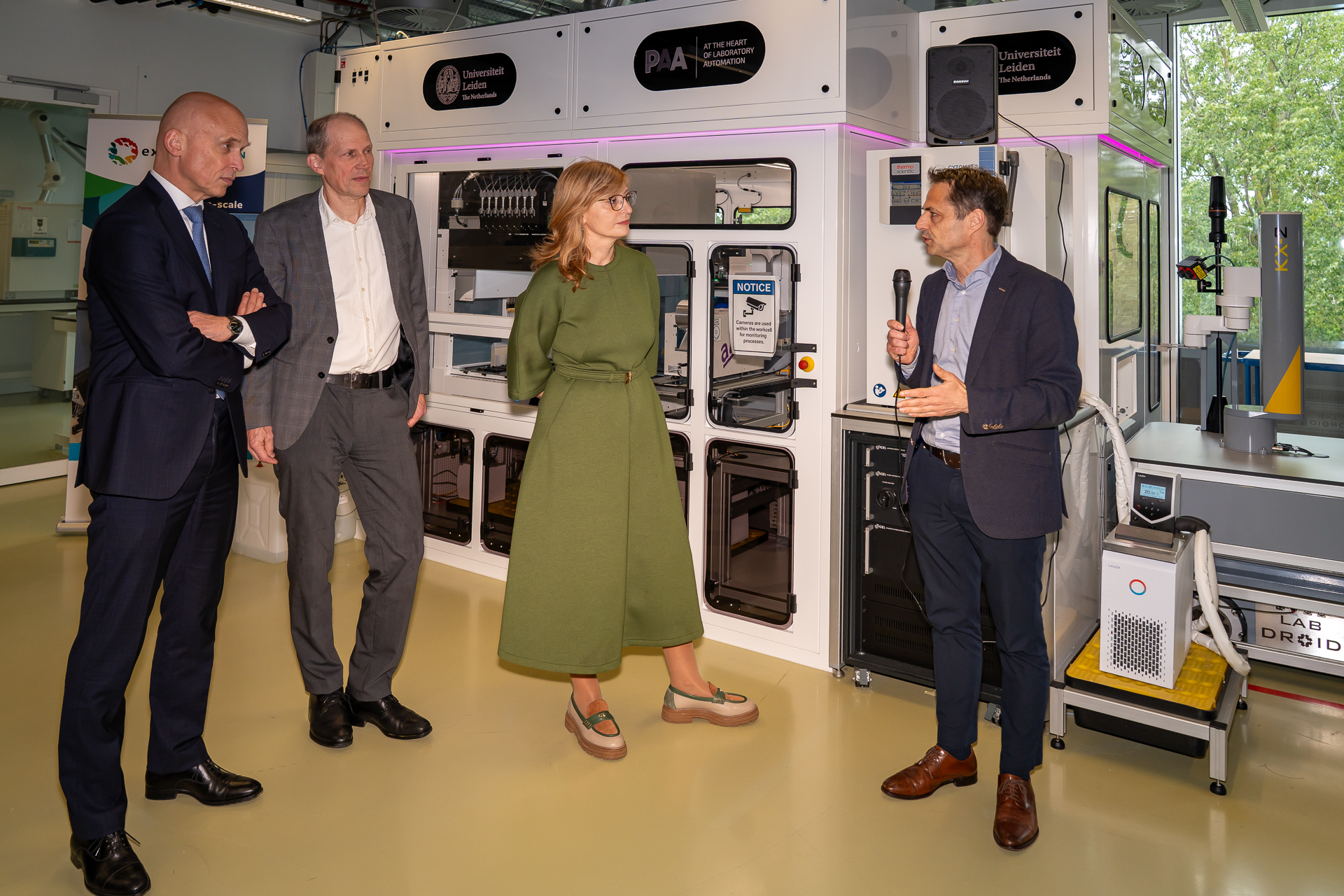
Thomas Hankemeier (right), Professor of Metabolomics and Analytics, spoke about his research.
Competitiveness
Luc Sels, President of the Leiden University Executive Board, also stressed the importance of collaboration. The university already works closely within alliances such as LDE (Leiden University, Delft University of Technology, Erasmus University Rotterdam). As these universities complement one another, they perform strongly and rank among the best in Europe. At the same time, he emphasised that European cooperation is essential, and that programmes such as Horizon Europe offer something that national programmes cannot: connection, effectiveness and competitiveness.
Risk of promising technologies disappearing abroad
Several start-ups and scale-ups at the event highlighted the importance of investment support for research and facilities. Companies conducting clinical trials or other research are turning to the US or China, where studies are conducted much faster or facilities are available that do not exist in Europe.
Thomas Hankemeier, Professor of Metabolomics and Analytics, conducts research using a high-tech robot to detect disease at an early stage. He noted that Europe excels in knowledge and innovation, but struggles to translate these ideas into businesses due to limited funding. As a result, there is a risk of promising technologies disappearing abroad.
Private investment
According to Zaharieva, Europe's main challenge lies not in public funding, but in the lack of private investment. She described this as risk-avoidant. While recognising that many projects may fail, she emphasised that a single success can have a real impact on society. That is why she aims to make investing more attractive through government and by offering incentives, simplifying rules and providing instruments such as guarantees and co-investments to reduce risks for businesses.
During the visit, Zaharieva also stressed that Europe's own complex rules and fragmentation can hinder its innovative capacity. She called for simpler programmes and a stronger focus on the substance of research and innovation rather than on procedures. She also underlined the importance of collaboration between universities and innovation clusters, as well as the need for sufficient investment at the European level. According to her, scale and speed are crucial to remaining competitive internationally.


