
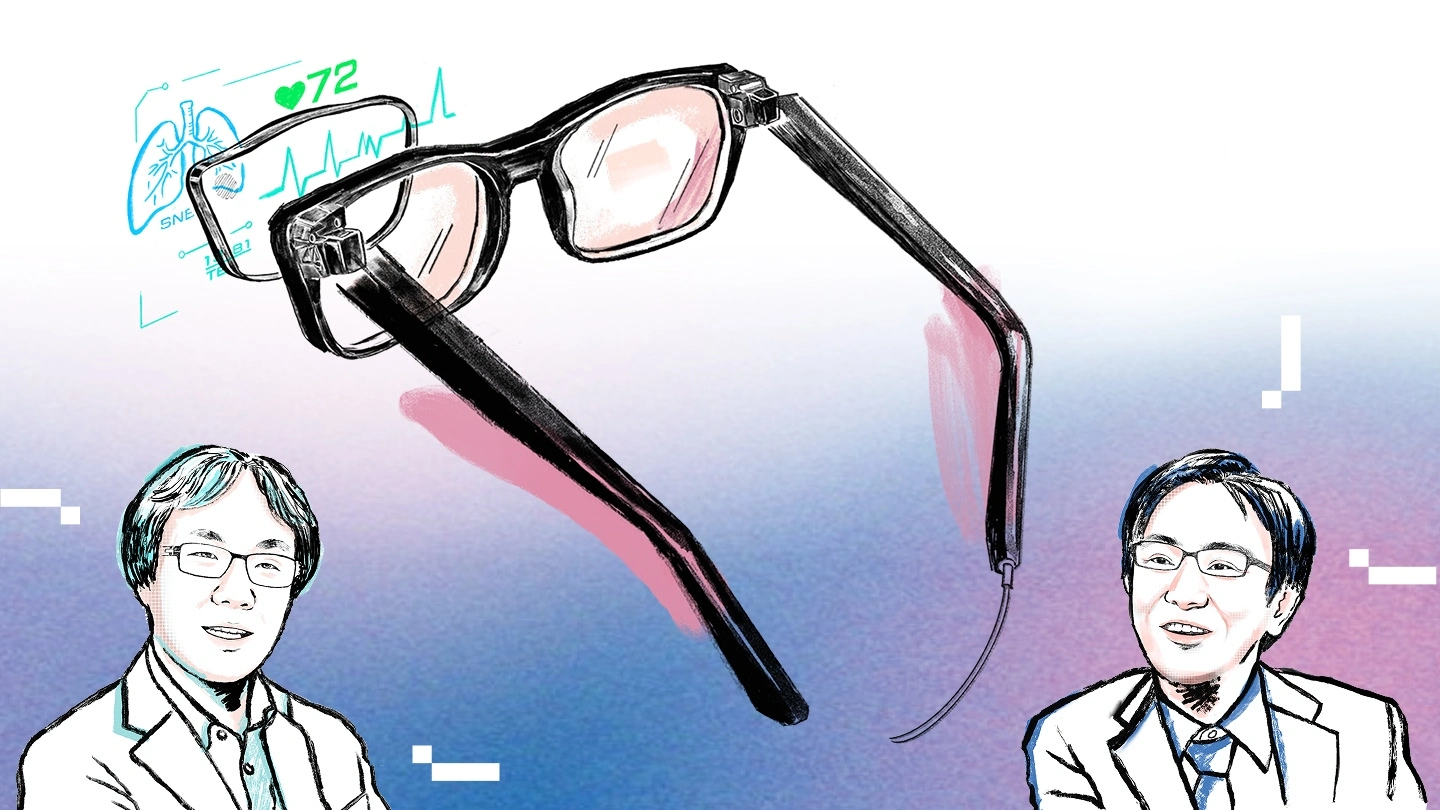
With the merger of two universities in 2024, the future development of collaborative research in medical and engineering fields is highly anticipated. The development of the world's first medical AR glasses is attracting particular attention. Associate Professor Tomohiro Amemiya from the School of Engineering and Associate Professor Soichiro Yoshida from the Graduate School of Medical and Dental Sciences spoke with us about the medical AR glasses that they are developing and researching.
Innovations in various fields of technology are driven by the development of devices that blend the strengths of industry and academia
Manufacturing requires knowledge and technologies from various fields. The technologies and accumulation of data generated in the process of developing devices will greatly contribute to the advancement of science.
Associate Professor Tomohiro Amemiya
Department of Electrical and Electronic Engineering, School of Engineering
In 2009, he completed the doctoral program in the Department of Electronic Engineering at the Graduate School of Engineering at The University of Tokyo. After serving as a JSPS Research Fellowship for Young Scientists, he was appointed as an Assistant Professor at the Quantum Nanoelectronics Research Center in Tokyo Institute of Technology in the same year. From 2016, he was an assistant professor at the Institute of Innovative Research in the institute, and he obtained his current position in 2023.

Aiming to enhance safety in medical settings and provide better healthcare
The purpose of this research is not to use technology, but to achieve quality healthcare. In order to meet the needs of clinical sites, we are gathering data and exploring the optimal design for AR glasses.
Associate Professor Soichiro Yoshida
Department of Urology, Graduate School of Medical and Dental Sciences
In 2010, he completed the doctoral program at Tokyo Medical and Dental University's Graduate School of Medicine. After working as a visiting researcher at the National Institutes of Health in the United States, he was appointed as an assistant professor in the Department of Urology at the Tokyo Medical and Dental University Medical Hospital in 2012. After serving as an assistant professor and lecturer in the Department of Urology in the Graduate School of Medical and Dental Sciences at the university, he obtained his current position in 2022.

What kind of AR glasses are needed in clinical settings? Aiming for digital tools that support medical safety
Amemiya Medical AR glasses are a wearable device in the form of glasses that allow hands-free access to patient information and other data even when the user's hands are occupied. A feature of AR (augmented reality) is that, unlike VR (virtual reality), information is displayed in the field of view while the real-world environment remains visible. What design is suitable for medical applications while taking advantage of those features? We are advancing our research and development through ongoing collaboration with Professor Yoshida, who is familiar with clinical sites.
Yoshida In commercially available AR glasses for entertainment, the projected images are the main focus, but in medical settings, the main focus should be the patient in front of you. Therefore, the information obtained through AR glasses should be auxiliary and must not interfere with the procedure.
Amemiya Therefore, we adjusted the display position of the visuals so that information is only visible when the gaze is shifted. This is one of the features of medical AR glasses. Additionally, in order to achieve the optimal design by collecting data on the eye movements of physicians, we are also developing special structures within the lenses and performing microfabrication using semiconductor clean rooms.
Yoshida Medical AR glasses have a wide range of potential applications, not only during surgery but also for checking patient information in outpatient and ward settings. The long-term goal is for this medical AR system to become a standard tool that supports healthcare safety and is routinely used by all medical professionals. To achieve this, we are also working on making it lightweight with long-term use in mind.
Collaborative research accelerated by the integration of medicine and engineering at two universities
Amemiya I have been working on developing devices with optical semiconductor technology by collaborating with researchers from various fields. The start of this research was around the summer of 2024. Anticipating the merger of the two universities, I began by reaching out to Professor Yoshida, who was researching the surgical application of VR technology, to explore the possibility of developing medical optical devices specialized for healthcare.
Yoshida I am a urologist, and through a professional connection formed by my research on the clinical application of 3D imaging technology, I was approached by Professor Amemiya. Medical devices are indispensable in the healthcare field; however, there are not many physicians who are actively engaged in research on mechanical systems. Moreover, repurposing commercially available AR glasses for medical use is not easy, which is why this endeavor is to develop AR glasses specifically for medical applications from the outset.
Amemiya While the use of AR glasses in the medical field has always been highly anticipated, from the perspective of development, there is a significant challenge in having the prototype devices tested in clinical settings. With the integration of the two universities, collaboration with clinical sites has become easier.
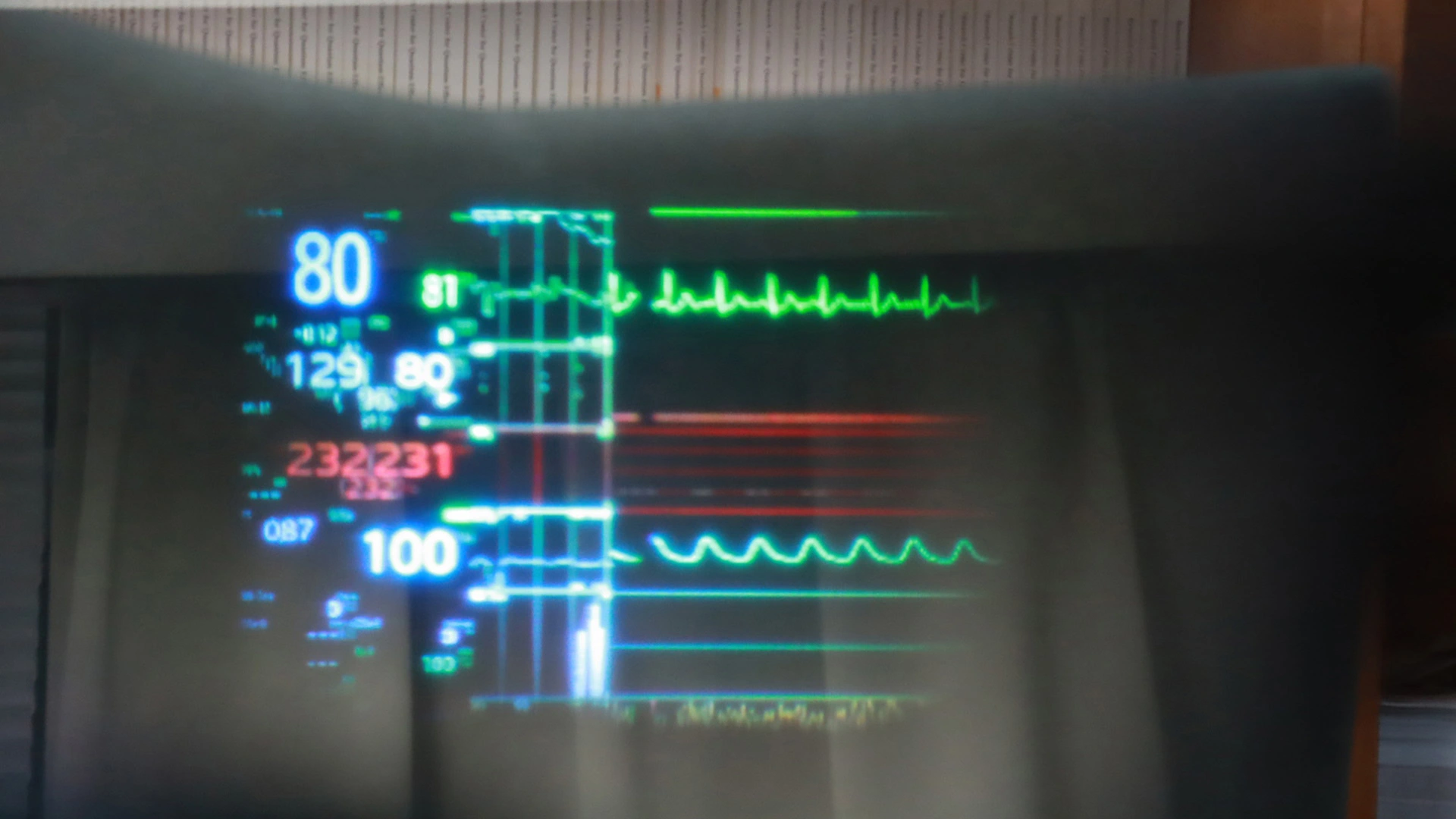
Bringing together diverse expertise to broaden the scope of research. Collaborating with companies to tackle production
Yoshida Within the university, I receive cooperation not only from my specialty, the department of urology, but also from various other departments within the hospital. Recently, the "XR[1] Hospital Initiative" was launched, bringing together doctors from ophthalmology, cardiovascular surgery, pediatrics, and other fields to explore its on-site applications.
Amemiya Creating new things requires technologies and knowledge from various fields, making multifaceted technological collaboration with external companies essential. The development of medical AR glasses is being undertaken through a collaborative framework involving two companies and one university. First, lenses developed by Mitsui Chemicals, Inc. are fabricated using the semiconductor technology and equipment of the School of Engineering, which is then incorporated by Cellid, Inc. into eyewear devices. The process involves trials and data collection at the university hospital.
Yoshida During the development process, we often encounter a variety of opinions from both within and outside the university, which often lead to the discovery of new ideas and needs.
- [1]
- XR: A general term for technologies that integrate the real world and the virtual world, such as AR (augmented reality) and VR (virtual reality).


