
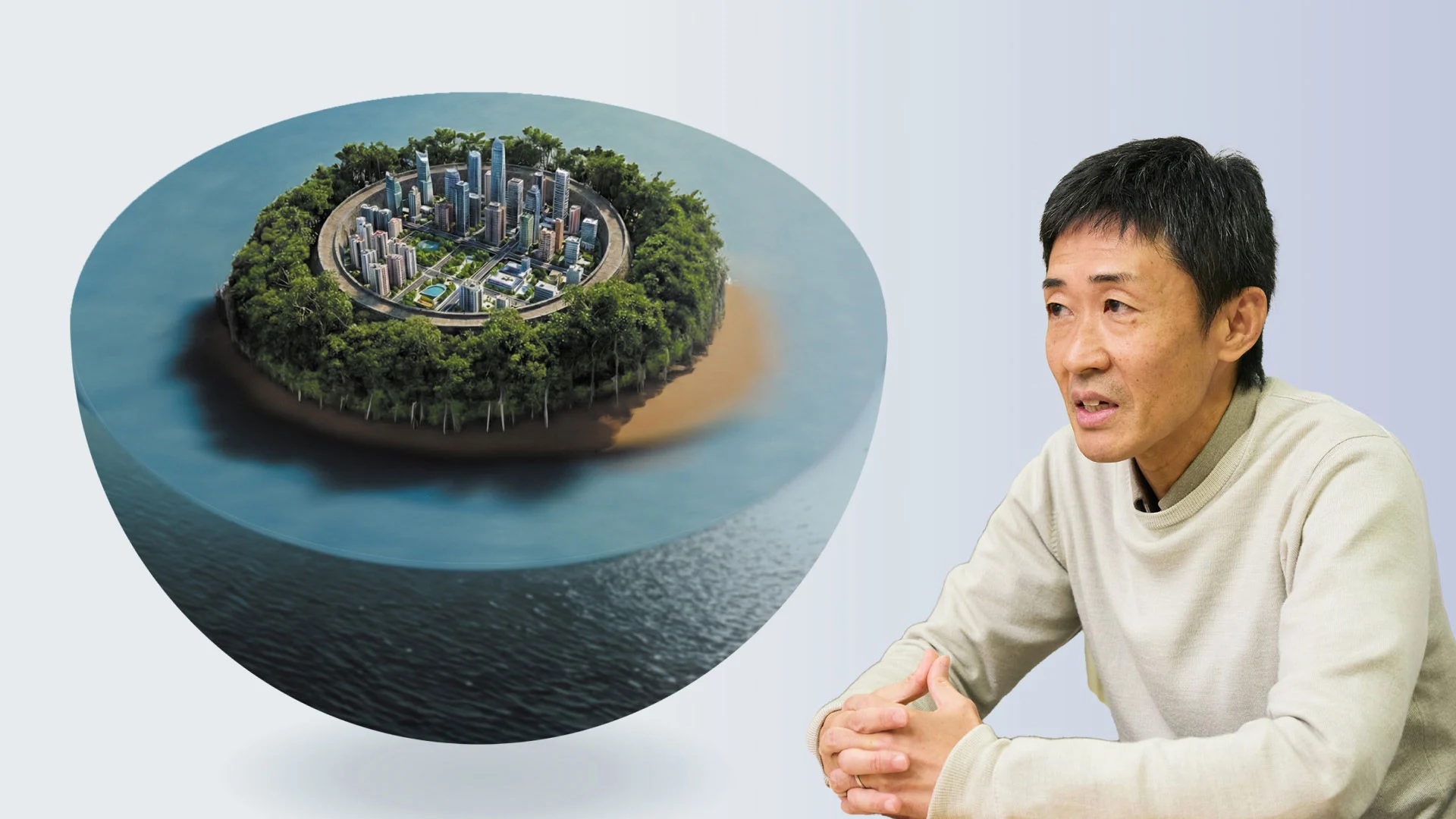
Professor Hiroshi Takagi is addressing coastal hazards - such as tsunamis, storm surges, and rising sea levels - further exacerbated by the effects of ongoing environmental changes. He is employing hybrid engineering solutions to enable coastal vegetation such as mangroves to grow as nature-based coastal protection through community engagement. This technology has the potential to support sustainable coastal management in developing regions with weak financial foundations. In addition, he proposes high value-added technologies for disaster-resilient regions, including Japan, such as movable seawalls using tidal power generation systems.
Professor Hiroshi Takagi conducts research on utilizing mangrove forests along tropical coasts as natural dikes to save lives. Mangroves serve two important functions: they absorb and store carbon dioxide, helping to combat global warming, and they provide physical protection against sea level rise and high waves. Unfortunately, mangroves are rapidly disappearing mainly due to economic development. Meanwhile, reliance on gray infrastructure[1], such as large concrete embankments, has reached its limits. This traditional hard approach compromises both the ecosystem and the landscape. In addition, maintaining artificial structures along all coastlines is financially and technically unsustainable, even for advanced nations.
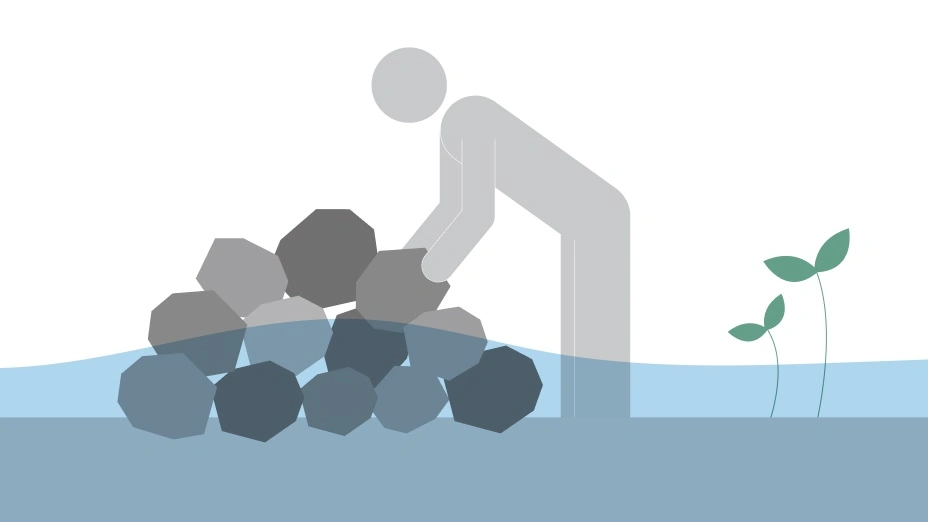
The ideal direction for disaster prevention engineering is the realization of "hybrid disaster prevention," which goes beyond conventional engineering approaches. This can be achieved by combining the disaster mitigation functions of green infrastructure[1] - leveraging natural capabilities as much as possible, such as those of coastal vegetation like mangrove forests - with minimal engineering strategies. The ultimate goal of this integrated approach is to minimize human intervention and incorporate natural resilience, thereby building a sustainable disaster prevention system. Specifically, the effects of vegetation in reducing the energy of high waves are quantified and subsequently combined with simple, low-cost engineering technologies to maximize the ecological functions of the vegetation. For example, during the initial stage of tree planting, portable reefs (Figure 1: manually movable breakwaters) will be installed to protect the mangrove seedlings from waves. Once the trees have matured enough to provide effective disaster mitigation, the portable reefs will be removed. Ultimately, the planted area will become an autonomous system in which nature protects itself as well as existing infrastructure systems.
This concept is not only environmentally friendly but also provides a community-based disaster management framework for developing coastal areas with limited financial support from central and local governments. The framework emphasizes self-reliance (individuals) and community cooperation[2] (communities), with residents playing central roles in implementing, managing, and maintaining the system, while researchers provide the necessary technologies. Through an interdisciplinary perspective and a strong commitment to implementation, his research team will advance next-generation disaster prevention technologies and help build sustainable and resilient coastal communities.
Pick up
- Existing dike
- Sustainable strategies are being explored to prevent disasters by integrating hard infrastructure with soft (natural) solutions. Studies will propose methods for maintaining and extending the lifespan of aging coastal dikes.
- Artificial beach nourishment
- The minimum area of beach needed for coastal vegetation planting is reclaimed, and local residents install simple wave-dissipating structures. After a period for plant establishment, these structures are moved further offshore. As tree-planting areas gradually expand and integrate with existing dikes, maintenance of hard infrastructure becomes unnecessary.
- Urban coastal greenbelt
- Local residents plant mangroves and deploy portable wave-dissipating reefs for one or two years to prevent the young seedlings from being washed offshore. As the trees grow and adapt to their environment, they become integrated with the existing dikes. While these forests may not completely block high waves, they can mitigate wave impacts to non-life-threatening levels.
"Empowering residents with locally manageable technologies enables community-based disaster mitigation that does not rely solely on government intervention"
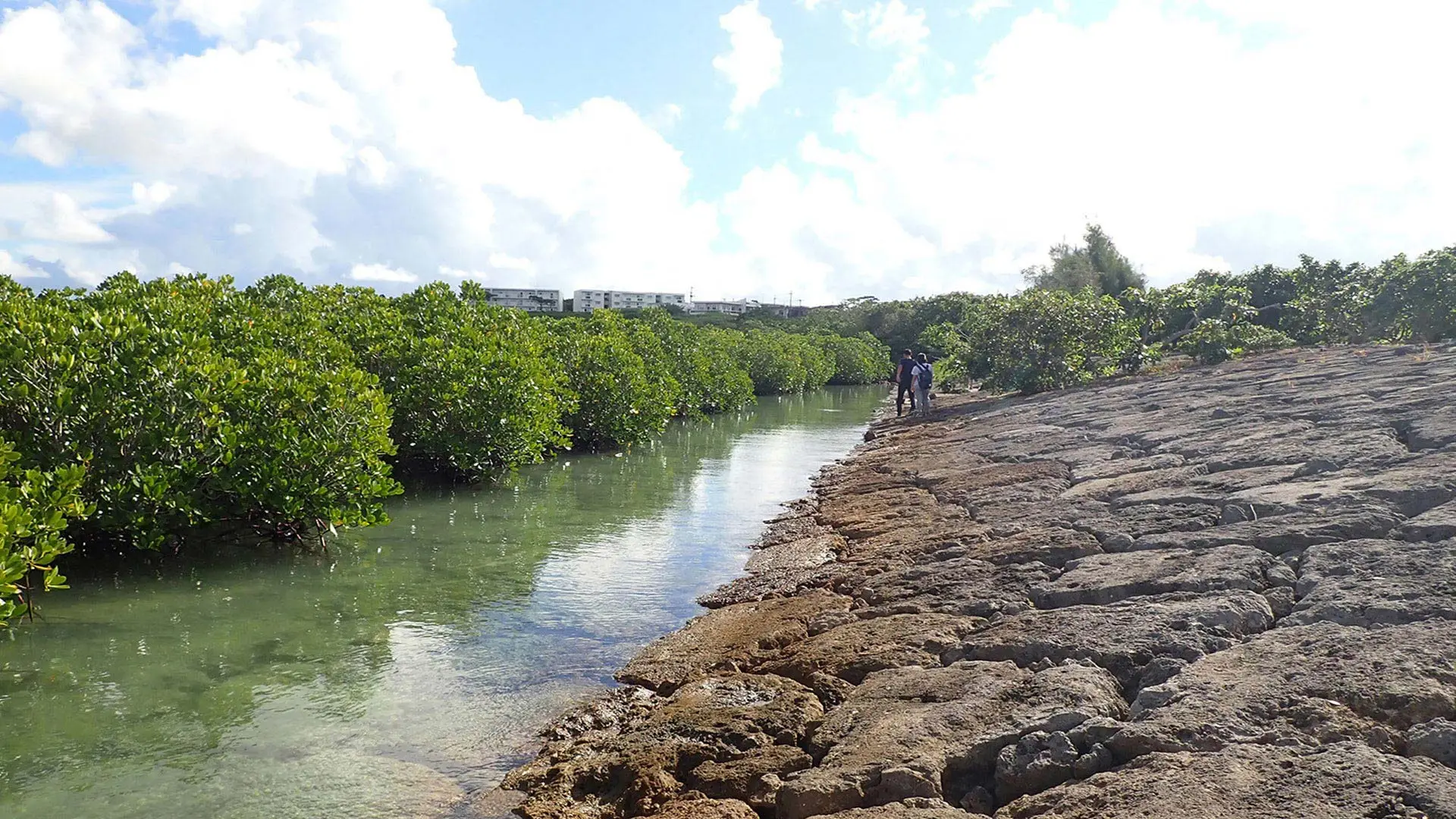
Portable wave-dissipating reef: An intermediate technology for science-based disaster prevention incorporating mangrove forests
The key challenge is to scientifically validate the capacity of mangrove forests to attenuate waves and to establish design criteria for their implementation in urban coastal areas. While mangroves thrive in natural environments without external disruptions, the success rate of mangrove planting in coastal areas facing land subsidence or subjected to intense waves is alarmingly low, at just 10%. To effectively utilize mangroves for disaster prevention, this success rate needs to exceed 90%, supported by engineering measures that promote their robust growth.
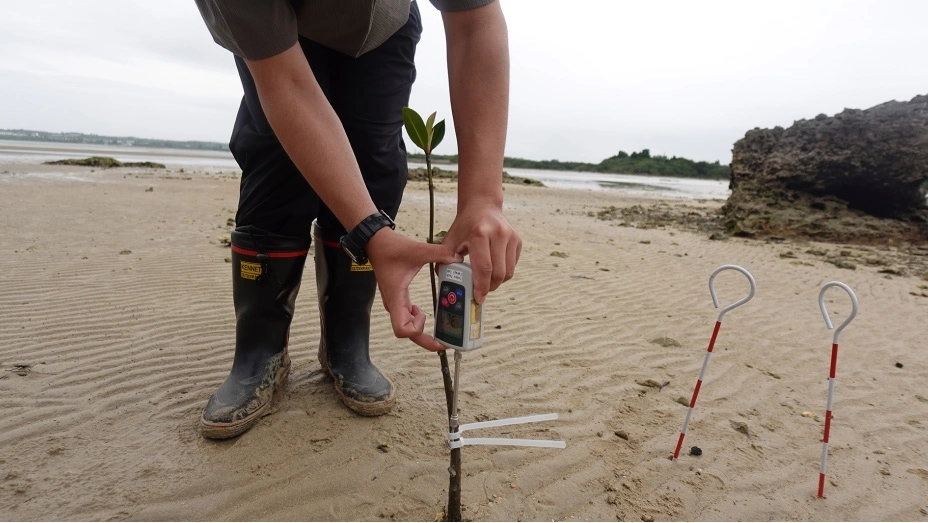
To this end, we conducted plant growth tests through greenhouse experiments on our Tokyo campus and field investigations on Amami Oshima and Miyakojima Islands, and further examined the young mangroves' resistance to high waves using a large-scale wave flume. Specific analyses included examining root growth under different soil types and assessing their response to wave forces. We also quantified the growth of mangroves in artificial environments and compared it to that of mangroves grown in natural settings. Currently, we are jointly developing an optimized portable wave-dissipating reef with a company that produces tetrapods to significantly improve the mangrove planting success rate. This intermediate technology utilizes a structure with minimal size and strength to provide temporary protection for mangrove seedlings during their initial growth period. We are pursuing this approach because conventional permanent embankments are too large to permit the natural expansion of mangroves. In contrast, portable reefs serve their purpose for only a few years until the mangroves can establish themselves, after which they can be removed or relocated to avoid hindering natural expansion.
We will first propose the design methods to determine the minimum size, geometry, and materials, such as stone mounds, bamboo piles, and PVC pipes. Next, we aim to facilitate the practical application of these structures through "community cooperation," allowing residents and communities in developing nations to participate in their installation and management using low-cost and simple techniques. Once established, this technology will enable disaster countermeasures that leverage natural systems, empowering citizens to take the initiative in these efforts rather than relying solely on governments, thereby contributing to the development of disaster-resilient communities. After successfully implementing the technology in developing regions in Asia, we will also explore its application in remote islands in Japan for the life expansion of aging coastal structures.
Resistance tests of young mangroves
Artificially planted mangroves are generally less structurally stable than natural mangroves. To better understand the properties of artificially planted mangroves, we conduct resistance tests and numerical simulations aimed at developing a theory regarding the oscillation of young mangroves when subjected to wave action. Additionally, we propose a novel theoretical framework that accounts for the flexible deformation and response of young mangroves to waves, in contrast to rigid structures such as steel and concrete.
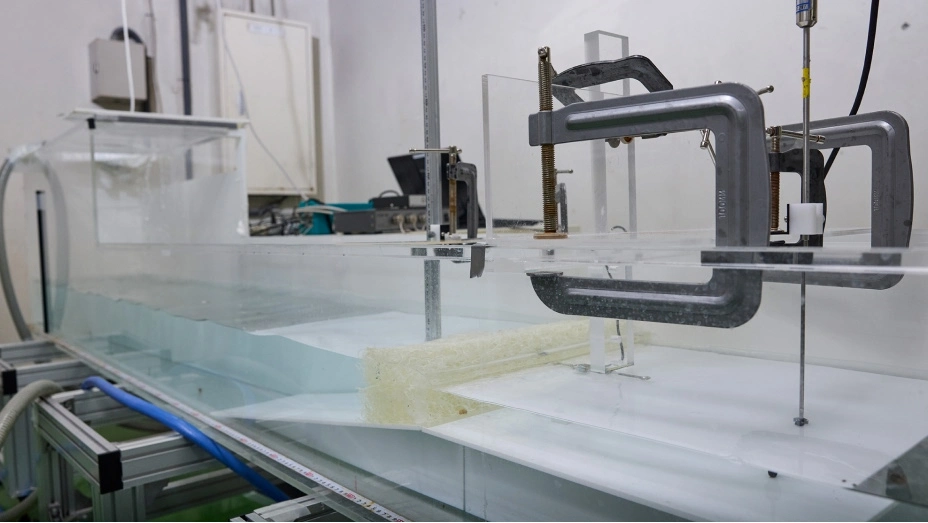
Experimental setup simulating urban coastal protection forests
We evaluate the extent to which wave force is mitigated by a forest-like buffer zone as circulating water flows in the apparatus. The load on the dikes is measured and analyzed using a current meter and a load cell.
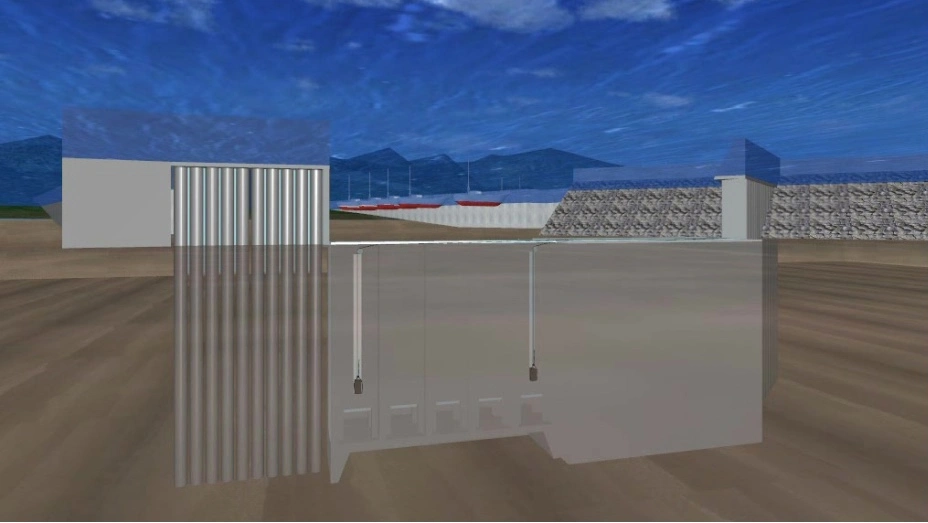
A proposal for the world's first movable seawall harnessing sustainable tidal energy
In addition to our mangrove research, we are addressing complex disaster prevention challenges in Japan and other advanced nations. One such challenge involves a study on a movable seawall powered by self-generated electricity. Learning from the serious damage around port areas caused by the 2011 Great East Japan Earthquake, we proposed a concept for a movable gate that can completely seal the port opening to prevent tsunamis from entering the port. This technology has the potential to reduce tsunami heights to approximately one-third. However, there is a critical limitation: the gate would not operate during a power outage caused by an earthquake.
To address this issue, we focused on tidal power generation using tidal level differences[3] on both sides of the gate. The concept involves using seawater flowing through small gate gaps to generate power using turbines. This power can be used to remotely control emergency power generation and support nearby communities. According to our calculations, this power generation could provide dozens of times the energy needed to operate the gate at a large port. This technology not only meets the social demand for renewable energy but also promotes the commercial application of underutilized tidal power.
Self-powered movable seawall
The gate is raised immediately after an earthquake to block tsunamis. This apparatus will be installed to protect not only ships and port facilities but also the lives and livelihoods of local residents.
"In pursuing research on disaster prevention, we inevitably extend beyond our respective areas of specialization"
Transdisciplinary approach to tackle multi-faceted challenges
My research activities originated from the multi-faceted challenges faced in Asia, a region that experiences frequent coastal disasters and has the highest number of disaster victims in the world by far. Within Asia, there is a mix of countries with advanced disaster prevention measures, such as Japan, and those lacking sufficient public support. Additionally, multiple factors - including coastal erosion, land subsidence, and rising sea levels - are occurring simultaneously, increasing the region's vulnerability to disasters. When implementing countermeasures, it is crucial to adapt them to the local socio-economic realities; therefore, Japan's successful models cannot always be applied without modifications.
I have been integrating my long-standing expertise in civil and coastal engineering with the social science perspectives I gained through my experience with the Japan International Cooperation Agency and through extensive field investigations in developing coastal regions. This approach enables me to oversee a comprehensive cycle of tasks, from conducting disaster risk assessments that emphasize local conditions to developing affordable countermeasures and ensuring their practical implementation. Within my research cycle, it is essential to incorporate newly identified disaster patterns from on-site investigations into risk assessments, continuously verifying the effectiveness of countermeasures. This transdisciplinary research approach transcends individual fields and encompasses multiple domains, bridging the boundaries among science, engineering, and social sciences. It aligns with the mission of the Department of Transdisciplinary Science and Engineering at the School of Environment and Society, Institute of Science Tokyo. For developing nations, I focus particularly on creating low-cost, simple technologies for disaster prevention, with mangrove nature-based solutions serving as a symbolic example. Many international students eager to join my research laboratory have enthusiasm for studying disaster prevention measures applicable to their home countries, which in turn drives the localization of our research.
Glossary
- [1]
- Gray/green infrastructure:Sustainable infrastructure promotes the dual goals of implementing disaster prevention and mitigation measures while protecting the environment. This is achieved through the integration of artificial structures (gray) and natural functions (green).
- [2]
- Community cooperation:Regional residents and neighbors collaborate to support one another. This concept encompasses community-led activities for disaster-related assistance and countermeasures in collaboration with neighborhood and other associations, but without relying on public support.
- [3]
- Tidal power generation using tidal level differences:This power generation method harnesses the differences in sea levels caused by the ebb and flow of the tide. It is a renewable energy source that utilizes the movement of water flowing in and out of an embankment installed in a bay to spin water wheels, converting the potential energy of seawater into electricity.


