
Researchers have identified more than 600,000 microbial proteins capable of breaking down natural and synthetic plastics, revealing a far broader biodegradation potential across microbes than previously known. The study, which presents the Plastic‑Degrading Clusters of Orthologous Groups (PDCOG) database, shows that more than 95% of prokaryotic microbe species carry at least one gene with the potential to degrade plastic polymers.
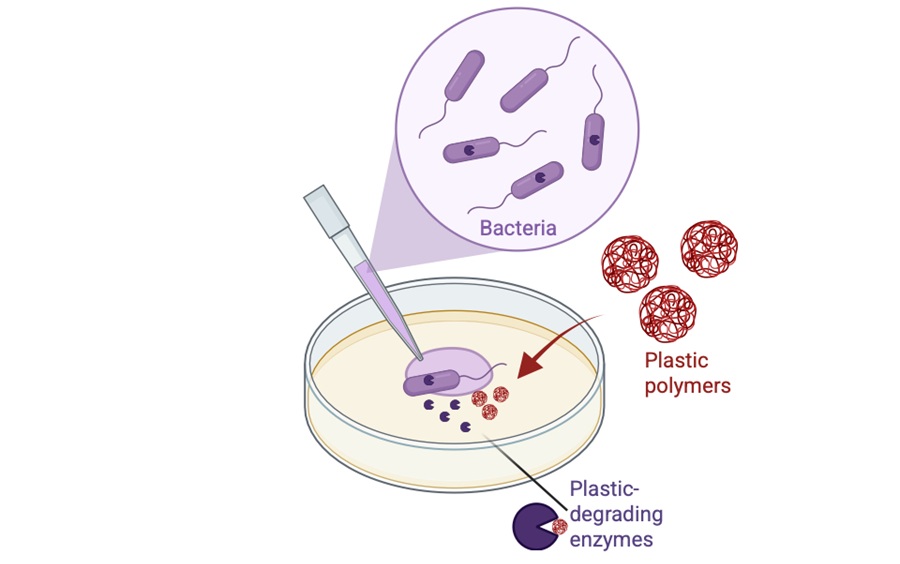
Plastic pollution poses a growing environmental threat, particularly as micro- and nanoplastic particles accumulate across marine, freshwater, terrestrial and even polar ecosystems. Although hundreds of plastic-degrading enzymes have been described in individual microbial species, the global distribution and evolutionary conservation of these proteins have remained unclear.
A new study from an international group of researchers from the University of Turku in Finland and two Catalan universities—the Autonomous University of Barcelona and University Ramon Llull—as well as the Institute of Science Tokyo in Japan shows that more than 95% of prokaryotic microbe species carry at least one gene with the potential to degrade natural or synthetic plastic polymers, highlighting an unexpectedly widespread ecological capacity to respond to plastic pollution.
"Our results show that the potential for plastic biodegradation is not limited to a few specialized microbes – on the contrary, it is nearly universal. This suggests that microbial communities worldwide may already possess the molecular toolkit needed to respond to plastic pollution," says Dr Pere Puigbò from the University of Turku and Autonomous University of Barcelona, co‑senior author of the study.
The international MicroWorld project, where the new study was conducted, has created the most comprehensive resource to date on microbial plastic biodegradation. The researchers introduce the Plastic-Degrading Clusters of Orthologous Groups (PDCOGs), which is a database of 625,616 putative plastic-degrading proteins classified into 51 orthologous protein groups. This global catalogue provides an unprecedented view into how bacteria and archaea may contribute to the degradation of microplastics and nanoplastics across diverse ecosystems.
Environmental adaptation shapes the microbes' capacity for degrading plastics
The PDCOGs classify plastic‑degrading proteins associated with 11 natural and 28 synthetic polymers. The global distribution of these polymers across 23 environments—from deep‑sea sediments and soils to hot springs and polar regions—reveals that biodegradation potential is strongly influenced by local ecological conditions. Some habitats, such as soils and endolithic ecosystems, are particularly enriched in plastic‑degrading enzymes, suggesting local adaptation or ecological selection.
"Microbial plastic‑degrading capacity is not only widespread, it is clearly shaped by the environment, with many habitats showing strong enrichment in specific enzyme families," says Professor Kari Saikkonen fromt the University of Turku, a co‑author of the study.
From a materials and applications perspective, these findings highlight how environmentally-driven microbial adaptation can inspire new technological approaches. By revealing which enzymes thrive in specific habitats and under particular ecological pressures, the PDCOGs provide a roadmap for developing materials and biotechnological solutions that are optimized for local environmental conditions.
"This resource provides a global view of the biodegradation potential encoded in nature. By understanding how microbes adapt to their local environments, we can begin to design new materials and biotechnological solutions that align with natural microbial processes," concludes co‑senior author of the study, Dr Miho Nakamura from the University of Turku, University Ramon Llull and the Institute of Science Tokyo .
Article: Mustari S, Pham LT, Saikkonen K, Nakamura M, Puigbo P (2026) «Plastic-degrading clusters of orthologous groups reveal near-universal biodegradation potential in prokaryotes». Environmental Technology & Innovation. https://doi.org/10.1016/j.eti.2026.104872
The PDCOGs database is freely accessible at:
https://phylobone.com/microworld/PDCOG


