
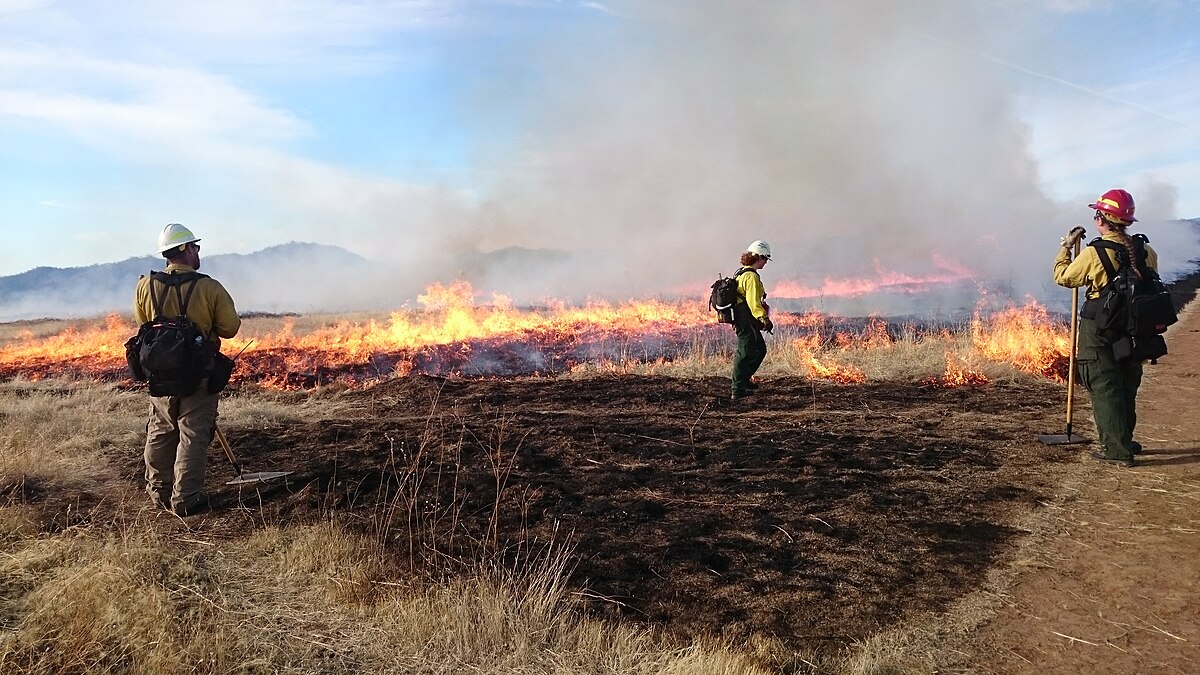
Prescribed burnings in Lower Table Rocks, Medford, Oregon.
While much of the west may be behind on its annual fires, the southwest is facing the opposite problem. Human-started wildfires have spurred a fire surplus in shrublands and chapparal ecosystems, especially in Southern California. I
"You're getting more fire than you would have historically, which can even threaten resilience," Hansen said. "These shrubland ecosystems might not be able to regenerate if the fire is too frequent."
Parts of Cascadia are also in a fire surplus due to climate change increasing extreme temperatures and droughts, both of which help set the stage for blazes.
"I was a little bit surprised to see these signals of climate change-driven surplus already," said Hansen. "I'd expected that would be something we would see in the next decade or two instead."
Contributed by Riley Thompson
Abstract information:
Thursday, 18 December, 11:45 - 11:55 Central Time
Room 265-266 NOLA Convention Center
AGU's Annual Meeting (#AGU25) will bring more than 20,000 Earth and space scientists to the Ernest N. Morial Convention Center in New Orleans, LA from 15-19 December. Members of the press and public information officers can request complimentary press registration for the meeting now through the end of the conference. Learn more about the press AGU25 experience in our online Press Center.
AGU (www.agu.org) is a global community supporting more than half a million professionals and advocates in Earth and space sciences. Through broad and inclusive partnerships, AGU aims to advance discovery and solution science that accelerate knowledge and create solutions that are ethical, unbiased and respectful of communities and their values. Our programs include serving as a scholarly publisher, convening virtual and in-person events and providing career support. We live our values in everything we do, such as our net zero energy renovated building in Washington, D.C. and our Ethics and Equity Center, which fosters a diverse and inclusive geoscience community to ensure responsible conduct.


