
Stills and video here: https://dams.wwf.org.au/resourcespace?c=6753&k=5784a9a45e
The story of an echidna on Tasmania's Lungtalanana Island, feared to be Australia's loneliest, has had more twists and turns than a snake with an itch - but it turns out this spikey monotreme is not alone.
However, the journey to confirming this good news has had quite a few shocks and surprises. It started last year when Pakana Rangers released a trail camera image of the first echidna seen on Lungtalanana in Bass Strait in decades.
The story went viral amid concern it was possibly the island's sole surviving echidna.
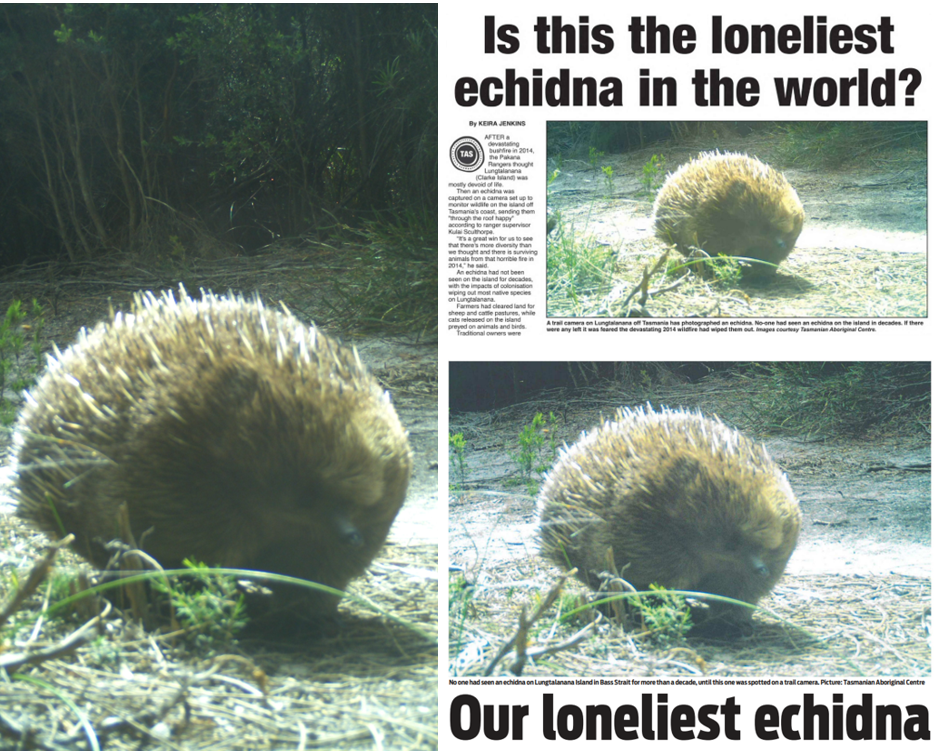
The first echidna seen or photographed on Lungtalanana in decades went viral
The Tasmanian Aboriginal Centre is leading a bold project to restore the island and return culturally significant native species such as the Bennett's wallaby, long-nosed potoroo, and the Bass Strait Islands wombat.
Before Lungtalanana was returned to Aboriginal ownership in 2005, European colonisation had wiped out most native species on Lungtalanana. So when the Pakana Rangers saw that first image of a "trimanya", which means echidna in palawa kani, they rejoiced, determined to find out if there were others.
The original echidna was recorded in the west in tea-tree scrub in August and November 2023. Boosted trail camera surveillance recorded an echidna in October 2025 and January 2026 more than 4km to the east in thick reeds next to a lagoon.
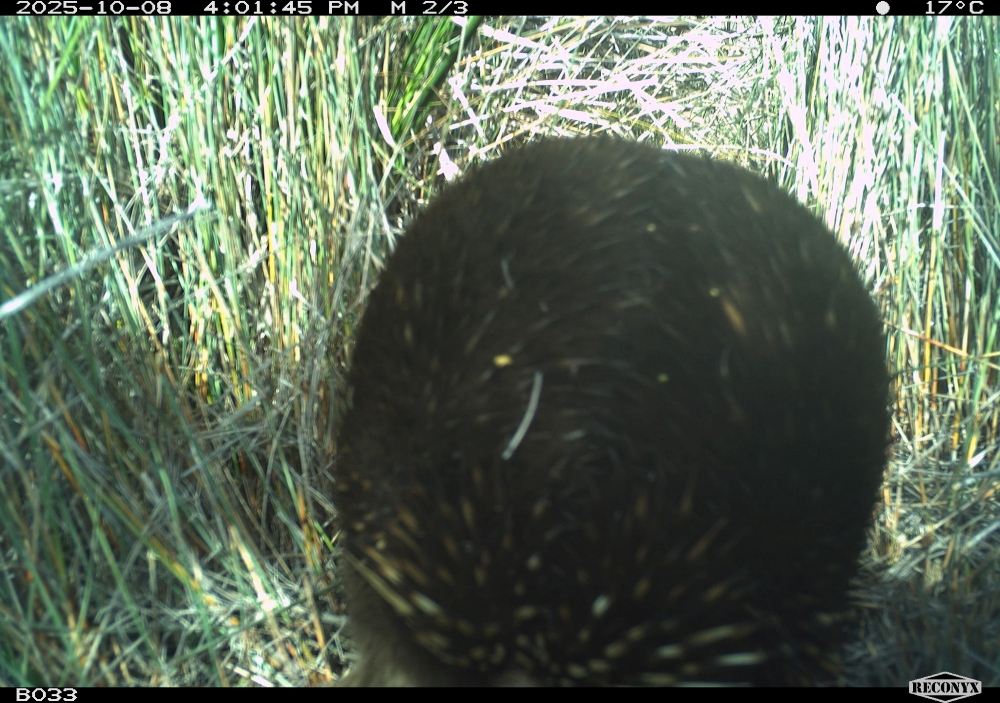
A trail camera photographed an echidna in thick reeds beside a lagoon
But it couldn't be determined if it was the same echidna that had moved or a different individual.
Then on 19 September 2026, also in the lagoon area, the first one-on-one encounter between a ranger and a trimanya happened when it walked into a cage used to capture feral cats.
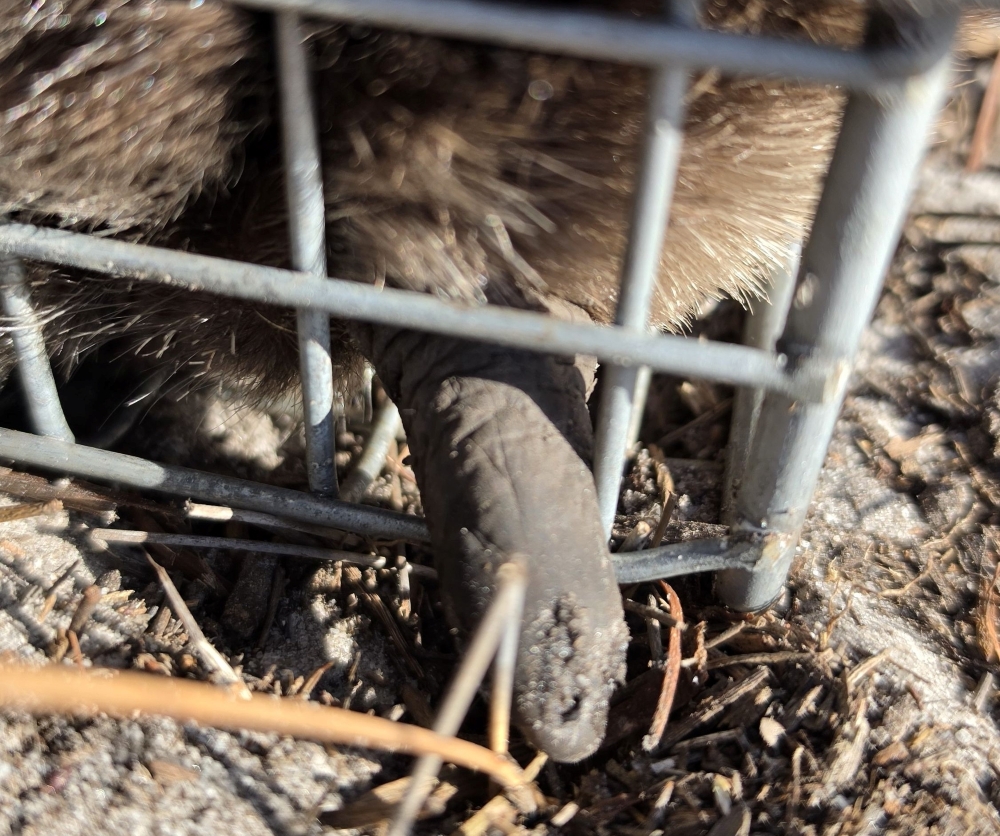
An echidna wandered into a cage used to trap feral cats
A shock for Healthy Country Ranger Tasha Cooper who said:
As I was getting close I thought 'here we go again another raven' (They seem to love this cage). Then oh my God it was so exciting to come face to face with possibly the only trimanya/echidna on Lungtalanana.
It seemed calm and went into its natural defensive stance with quills up.
I propped open the door of the cage with a stick for it to come out in its own time and set off on my other duties.
A few hours later it was still in the cage so I ushered it out with a bit of gentle persuasion. It then started digging into the sand to protect its underbelly.
Recently, rangers going through trail camera images found an echidna was photographed near the airstrip on 23 August 2026, and another was detected on 20 October 2026 at Rebecca Bay in the island's south, about eight kilometres away.
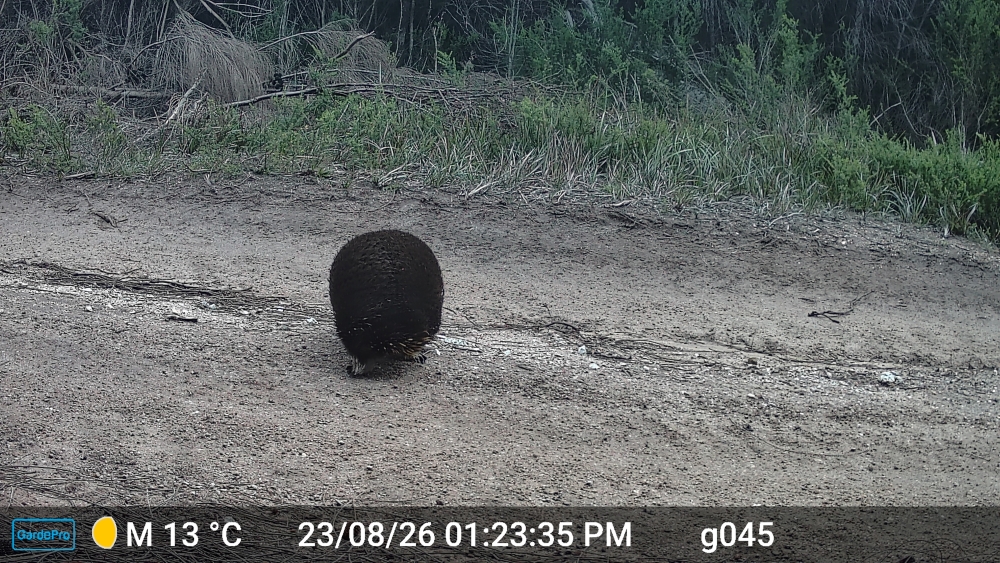
An echidna near the island's airstrip
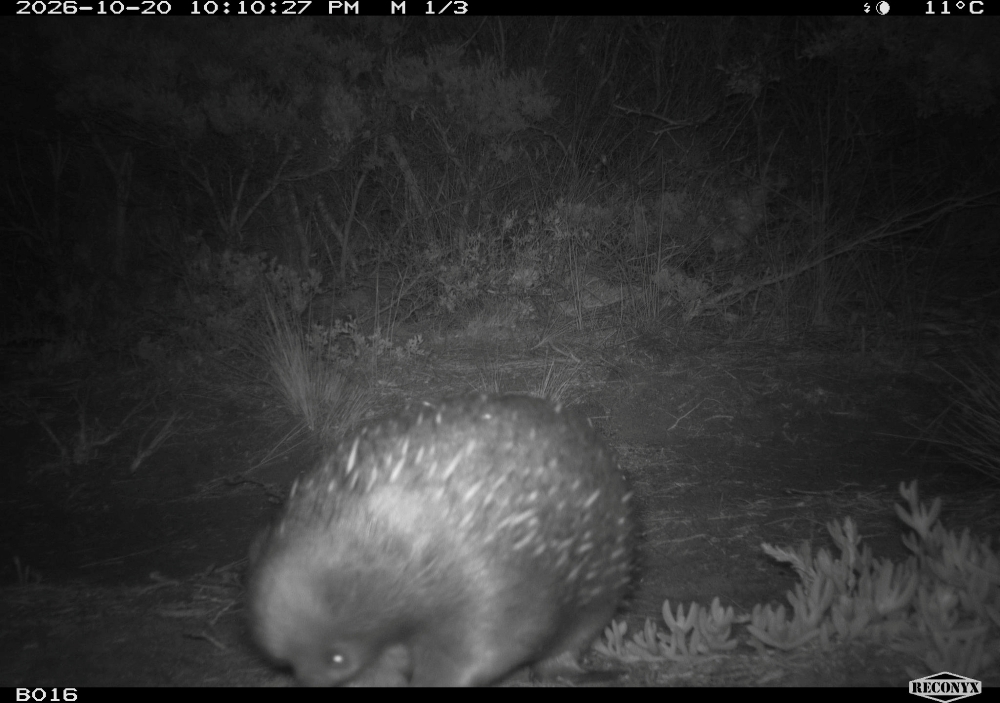
An echidna at Rebecca Bay in the south of the island.
Echidna expert Associate Professor Stewart Nicol, from the University of Tasmania, said:
We calculated home range sizes in the Tasmanian southern midlands and males had 90% of their movements in an area of 60 hectares, and females 35 hectares.
Echidnas can easily cover several kilometres in a night and males will walk further during the breeding season, but even so I think it is very unlikely that you are seeing the same echidna. I would guess there may be many more echidnas there that you haven't seen.
Echidnas now join Tasmanian pademelons as the largest mammals known to have survived European colonisation and the 2014 fire that devastated the island.
The World Wide Fund for Nature-Australia supported the Lungtalanana project with seed funding, the provision of trail cameras, and continues to support ranger-led monitoring across the island. WWF's Eyes on Country program has empowered Indigenous groups across Australia to monitor wildlife using a blend of Traditional Knowledge and modern conservation technology.
The rangers have been painstakingly working through hundreds of thousands of images. Aside from trimanya, highlights include multiple bird species and the first image of a rakali - previously known as Australia's 'water rat'.
Nicholas Hammersley, Healthy Country Ranger said:
"I just asked my grandfather (Smokey Beeton), and he used to work over there in the early 2000s, and he said he's never seen an echidna over there.
"I love seeing grey shrike-thrushes on cameras. They're really intrigued; they want to know what's going on. Brush bronzewings, you don't realise how beautiful they are until you see them up close.
"At the end of the day, we want to be mentors as well. We want to tell people what we've done and let them follow our footsteps. We're the ones who are going to make the mark on people's futures coming through."
Joel Williams, Ranger Coordinator said:
"We must continue to help guide Country to better health, because that's what Pakana have always done. We always give more than we take."
"Think about our old people going back all those generations, think of what they used to do. Caring for Country and all that sits within it. One generation before us, they marched the streets, speaking up and fighting to have the amazing roles we have now. Have a look at the amazing work you all do. The present day community are all so proud and the next generation after you, they're going to talk about Pakana Rangers and the great work that you have all done for Country and for them."
Tamara Styles, Administration & Cultural Activities Coordinator said:
"The photos have opened my eyes on how much life is still out there on Lungtalanana. Waiting to see native animals start to use areas being restored will be very rewarding, and every new image helps us understand the Country better.
"Having Rangers on the island full time means we can actively care for Country, manage the threats like feral cats and build that knowledge over time.
"For me, it's more of a holistic approach, as well as my love for protecting animals, it's also about Aboriginal people being back on Country, strengthening our connection, learning from Country and passing this knowledge on to generations to come.
"My hope is that we can restore this island back to being healthy Country where native wildlife can thrive and future generations can continue that connection. The cameras, including what we are seeing with the bird life, are helping us see and understand things we could potentially miss if we weren't using them."
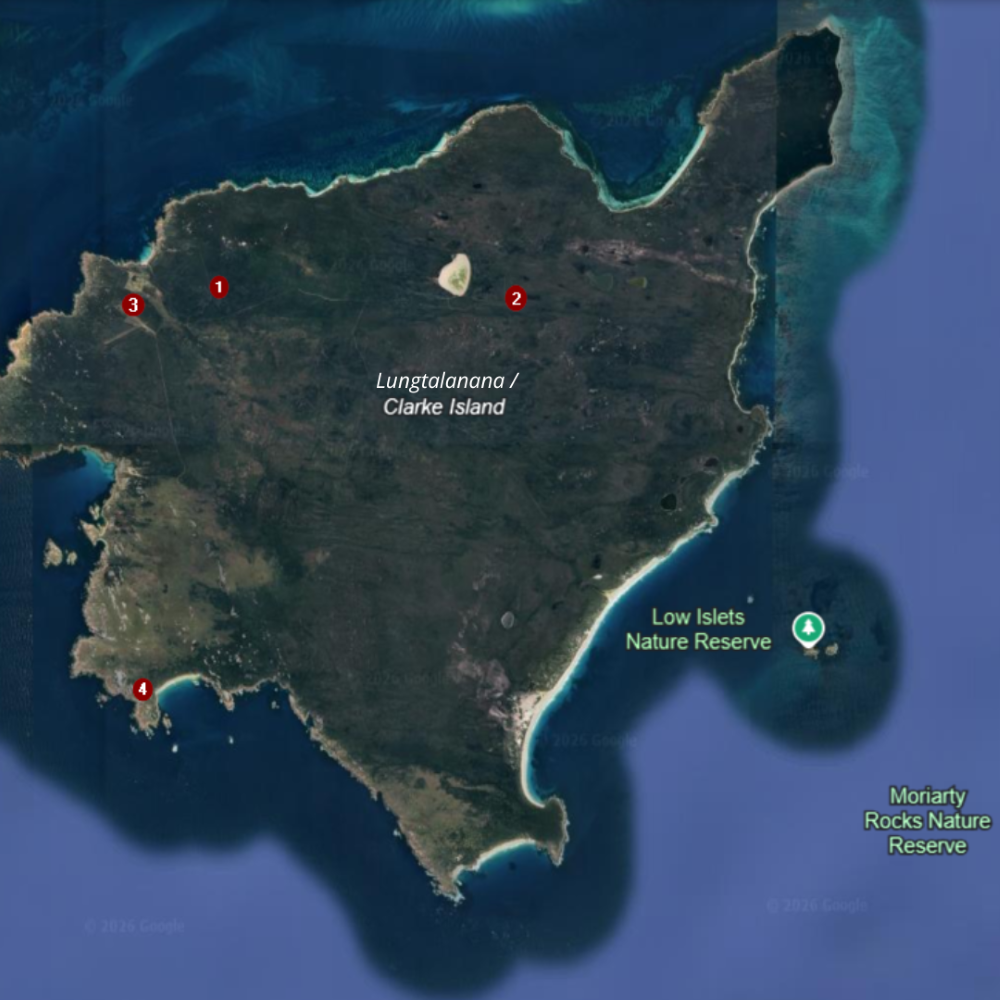
The locations and order in which trail cameras have recorded echidnas on Lungtalanana


