
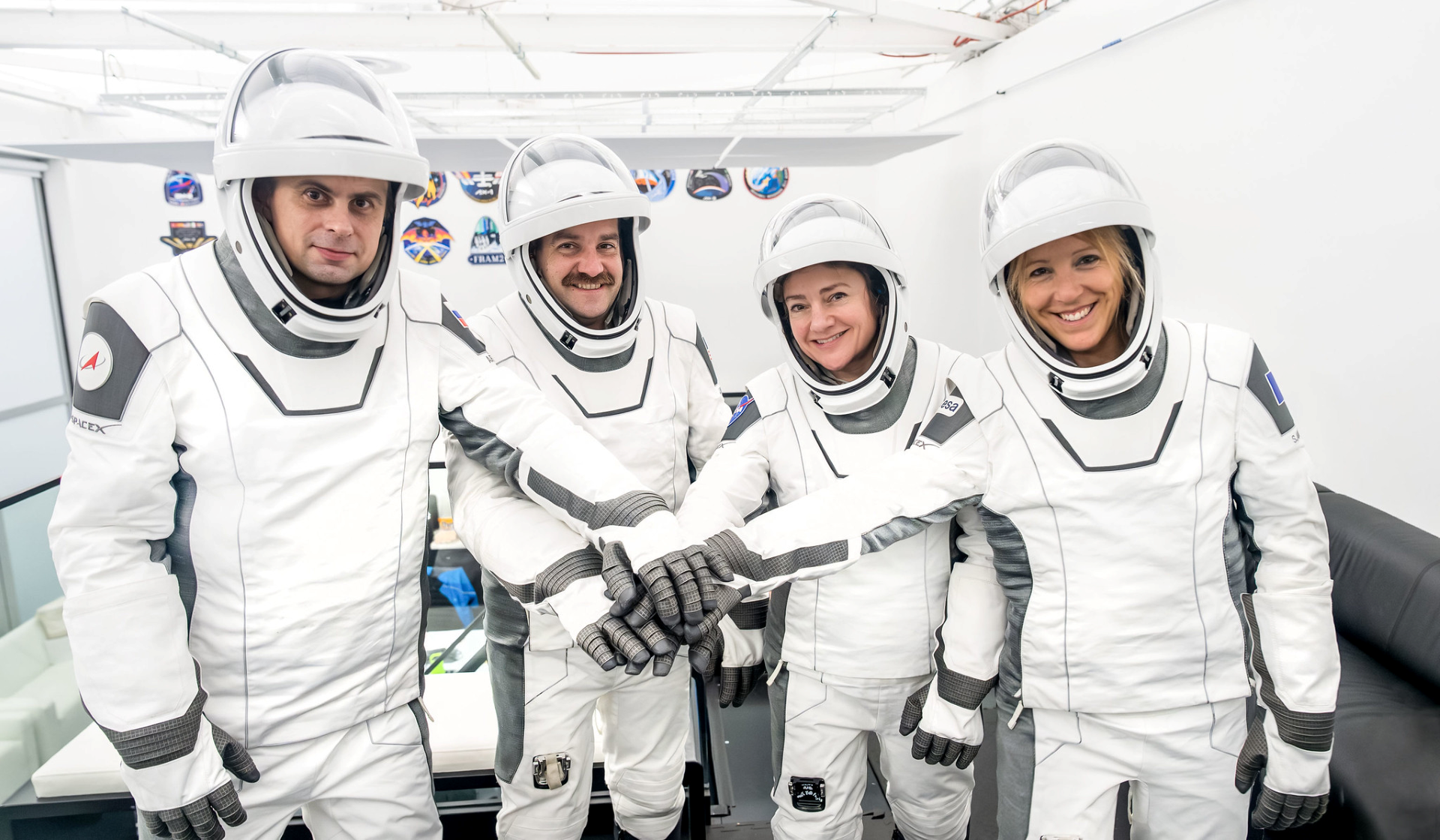
NASA's SpaceX Crew-12 mission is preparing to launch for a long-duration science mission aboard the International Space Station. During the mission, select crew members will participate in human health studies focused on understanding how astronauts' bodies adapt to the low-gravity environment of space, including a new study examining subtle changes in blood flow.
The experiments, led by NASA's Human Research Program, include astronauts performing ultrasounds of their blood vessels to study altered circulation and completing simulated lunar landings to assess disorientation during gravitational transitions, among other tasks. The results will help NASA plan for extended stays in space and future exploration missions.
The new study, called Venous Flow, will examine whether time aboard the space station increases the chance of crew members developing blood clots. In weightlessness, blood and other bodily fluids can move toward the head, potentially altering circulation. Any resulting blood clots could pose serious health risks, including strokes.
"Our goal is to use this information to better understand how fluid shifts affect clotting risk, so that when astronauts go on long-duration missions to the Moon and Mars, we can build the best strategies to keep them safe," said Dr. Jason Lytle, a physiologist at NASA's Johnson Space Center in Houston who is leading the study.


