
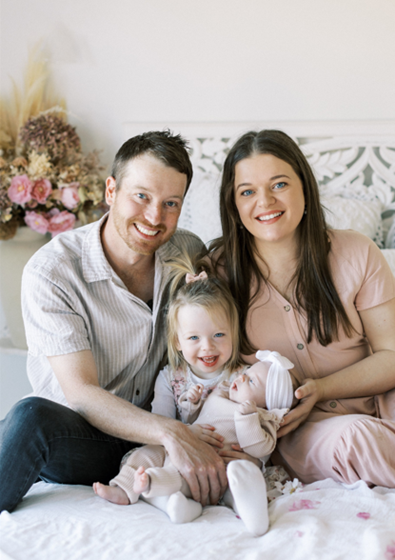
Just one day after giving birth to her second baby girl, Chloe Weir noticed something was not right with her vision.
Despite voicing her concerns at the hospital, the 31-year-old was sent home with baby Ida. Before making the hour-long journey home, Chloe was encouraged to visit an optometrist. That decision would prove life changing.
"The optometrist was amazing, they carried out lots of tests and were very concerned. They sent me straight back to the Emergency Department with an urgent referral," Chloe said.
After spending three nights in the ED with her two-day-old baby, an MRI finally confirmed Chloe had experienced a stroke.
"It all feels like a blur looking back. I remember being told I'd had a stroke and just sitting there in shock, I couldn't believe it," she said.
"My husband was at the hospital, helping look after Ida, while our 2-year-old was at home with her grandparents.
"I was healing from a caesarean, breastfeeding a tiny newborn and trying to process what had happened all at the same time."
Thankfully, Chloe's vision returned to normal, and she was finally sent home to enjoy her new baby. It's been just over a year since Chloe's stroke, now she's bravely sharing her story to support Stroke Foundation's annual fundraising challenge, Stride4Stroke.
"I didn't want that experience to overshadow the joy of welcoming my beautiful baby into the world. But if sharing my story helps even one person recognise the signs of stroke or seek help sooner, then it's worth talking about," she said.
"This month, I'll be walking and doing pilates to raise awareness that strokes can happen to anyone."
Stroke Foundation Chief Executive Officer Dr Lisa Murphy commended Chloe's efforts and encouraged all Australians to get moving this September.
"Chloe's story shows us that stroke does not discriminate. Young people and even children and babies can have strokes. An Australian has a stroke every 11 minutes," Dr Murphy said.
"For many people, strokes can be prevented. One way of lowering your stroke risk is by getting regular check-ups with your GP, and making healthier changes such as exercising regularly, quitting smoking, eating a healthy balanced diet and reducing your alcohol intake.
"Just 30 minutes of exercise five times a week can reduce your risk of stroke by 25 per cent, and every dollar raised goes towards vital stroke prevention, research, recovery programs and advocacy."


