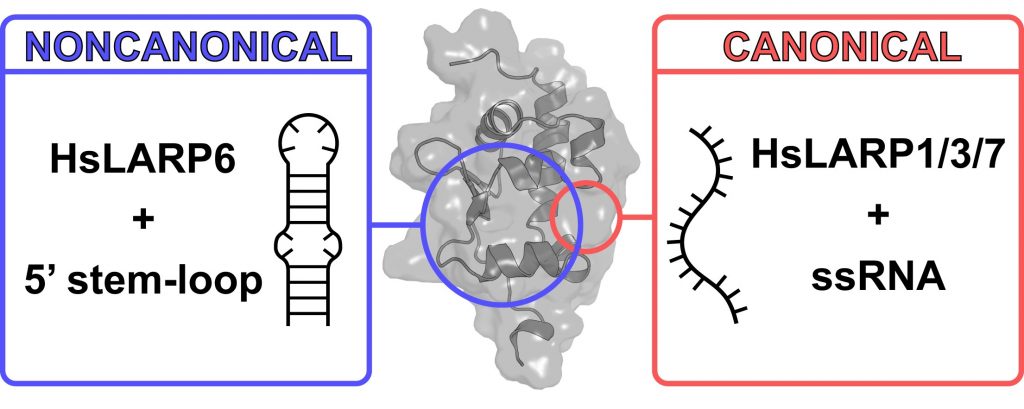
A research team at Florida State University's Institute of Molecular Biophysics and Department of Chemistry and Biochemistry has discovered how a protein found in the human body interacts with RNA in a way that could lead to new treatments for tissue scarring also known as fibrosis.
The researchers studied a special protein called LARP6, which plays a role in how our bodies produce type I collagen, a key building block in tissues like skin and bones. This protein is important because it's linked to diseases where too much collagen is made, such as fibrosis.
They discovered a new part of the protein that helps it recognize and stick to the RNA very precisely, like two puzzle pieces fitting perfectly. The study gives scientists a clearer picture of how LARP6 might be targeted in treatments for diseases involving collagen overproduction.
The work was published in Nucleic Acids Research.
"In the simplest terms, we're trying to figure out how two molecules, just like LEGO pieces, fit together," said principal investigator Robert Silvers, an assistant professor in the Department of Chemistry and Biochemistry. "But it's obviously much more complicated than that, because we're not just considering the structure of the LEGO pieces and how they fit together, but also how different parts of the LEGO pieces move around, and that all ties directly into functionality."
LARPs, or La-related proteins, are a superfamily of proteins common in all plants and animals. They bind RNA, the molecule that carries genetic information, helps build proteins and regulates the function of DNA. LARP6 is one of five main human LARP proteins and is involved in the regulation and biosynthesis of collagen. Compared to other LARPs, there has been very little research into how LARP6 interacts with RNA on a molecular level.
"Our new 'LEGO piece' uses a different kind of interaction with its RNA," said Silvers. "It utilizes a different set of rules and the protein uses a different RNA binding site altogether."
The team was introduced to this unusual LARP by Branco Stefanovic, a professor in the FSU College of Medicine, who has spent much of his career researching fibrosis. They attempted multiple methods of observing the protein, such as X-ray crystallography, before landing on NMR spectroscopy.
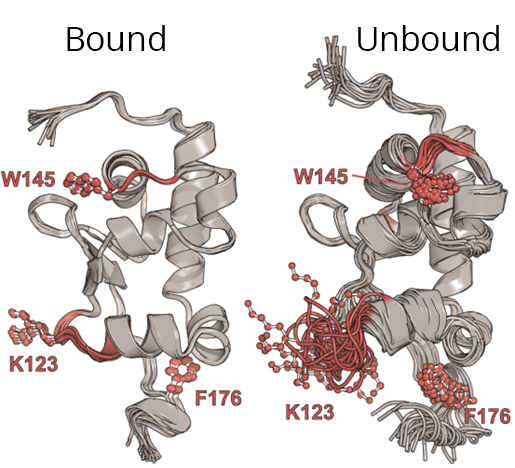
"In NMR spectroscopy, we can look at the complex in solution close to its natural environment under physiological conditions," said Silvers. "NMR spectroscopy is ideal as we can study the dynamics of a molecule as well as its structure."
NMR spectroscopy is a method that uses the magnetic properties of certain nuclei to reveal a molecule's detailed structure and properties. It proved especially useful because LARP6 is unstable until it binds with RNA.
Using NMR spectroscopy, the researchers found that the way LARP6 binds to RNA is directly involved in the biosynthesis of type I collagen, the protein involved in fibrosis. This discovery could help scientists develop a treatment for fibrosis in the future.
"Because of its function, the complex between LARP6 and RNA is something that we potentially can develop a drug for, to work against fibrosis," said Silvers. "There is currently no drug, to my knowledge, that can slow down or stop the progression of fibrosis."
This research was funded by the National Institutes of Health.