
- Perseverance Home
- Science
- News and Features
- Multimedia
- Mars Missions
- Mars Home
Written by Tasha Coelho, Mastcam-Z Student Collaborator at Arizona State University
Nov. 1, 2026
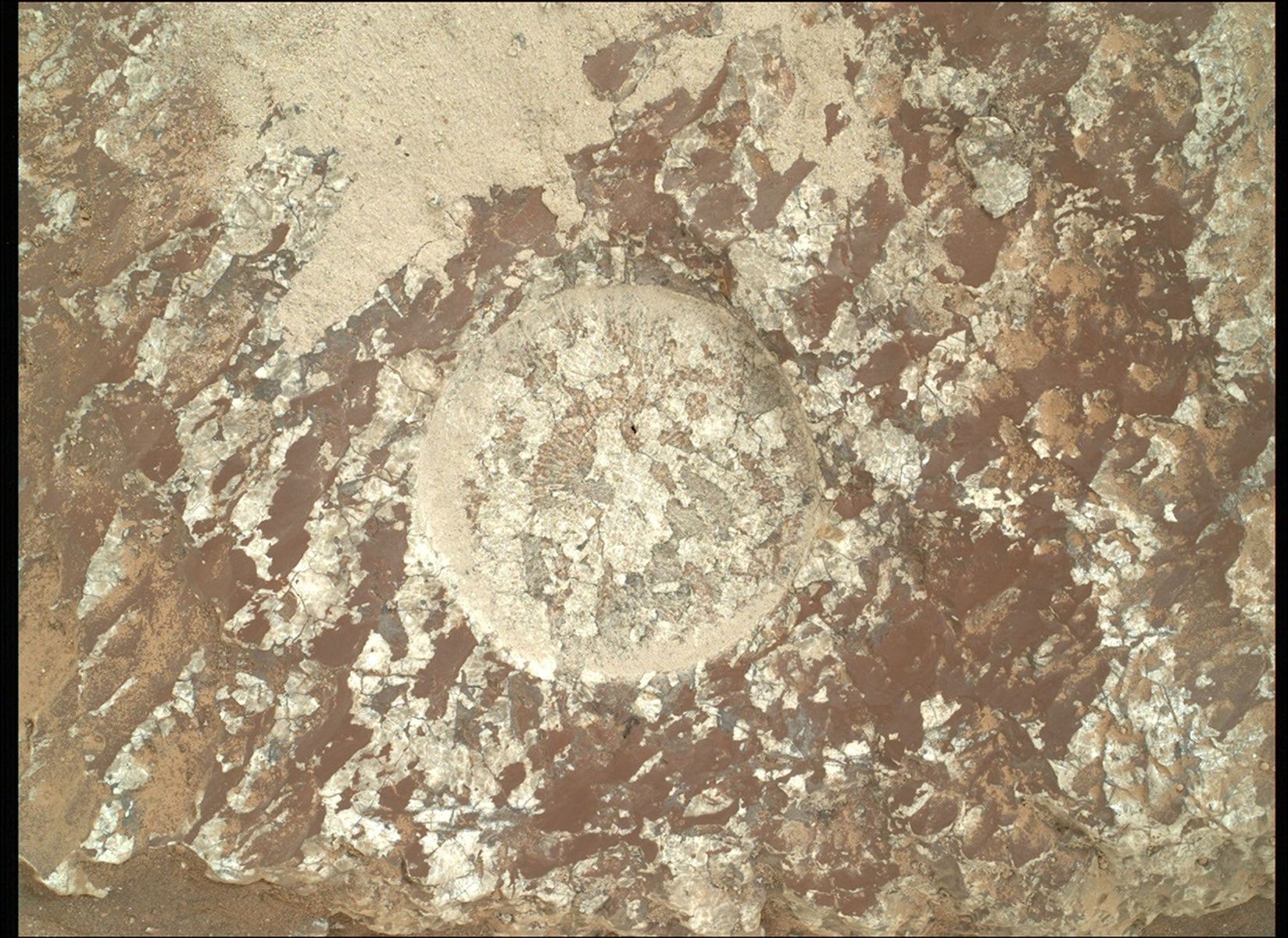
Perseverance's most recent abrasion "Pumbe" bears a striking resemblance to an earlier abrasion, "Badger Peak." That's no coincidence. As previously reported, that rock had a hardness too high to core. However, the team felt strongly that it was worth the effort to add a gabbro, an igneous rock made mostly of calcium-rich plagioclase feldspar and pyroxene crystals, to Perseverance's sample collection. In search of a new local gabbroic candidate to sample, Perseverance traveled about 100 meters (330 feet) to a different patch of light-toned rocks. Indeed, visual and chemical data from the light-toned rocks in the new workspace revealed a composition similar to that of "Badger Peak."
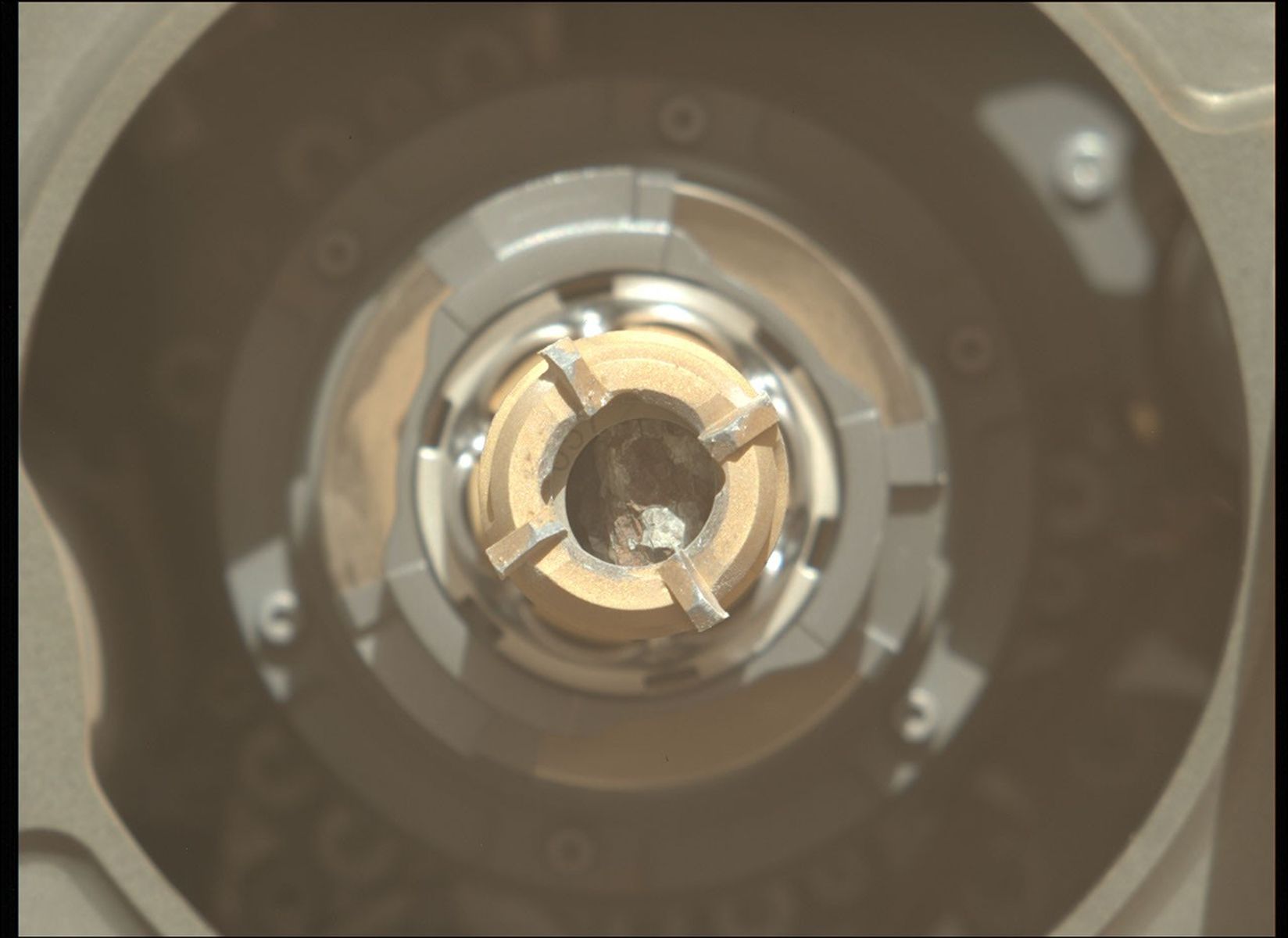
To improve the odds of collecting a sample this time, the team made prudent decisions: choosing a neighboring rock with a flatter surface better oriented for the drill stabilizers to press against, and using a coring bit with less wear. At last, in a display of the rover's namesake quality, the drill made it about 3.1 centimeters (1.2 inches) into the rock. Sample acquisition activities followed, making "Singita" the rover's first sample in more than a year. While Singita is the newest sample, it may be among the oldest rocks in Perseverance's collection. Textures in the rock suggest that it likely formed deep in the crust and was modified and excavated by at least one, and possibly multiple, large impact events.
Perseverance has now completed its 66th successful abrasion and collected an intriguing new sample alongside it. The latest mission status report opens with "Perseverance remains healthy and stable on Mars" and lists "Spacecraft Status: Nominal." Translation: the rover remains capable of continued fruitful exploration, with many more abrasions to come.


