
A James Cook University PhD student's late-night solo survey has led to the first recorded sighting of a microwhip scorpion in the Daintree Rainforest.
JCU entomologist and taxonomist Matthew Connors works at the university's Daintree Rainforest Observatory as a demonstrator and rainforest tour guide for visiting groups.
"One of the activities these visiting groups tend to enjoy the most is spotlighting at night in the rainforest, where I take them out on a short guided walk to see what wildlife we can find," said Mr Connors.
He said one night in March 2025 he decided to go back into the forest alone after the tour was over to see what else he might discover.
"Around 10pm, after an hour of walking very slowly through the forest inspecting all the tiny critters around me, I lifted up a small rock and saw something I had never seen before.
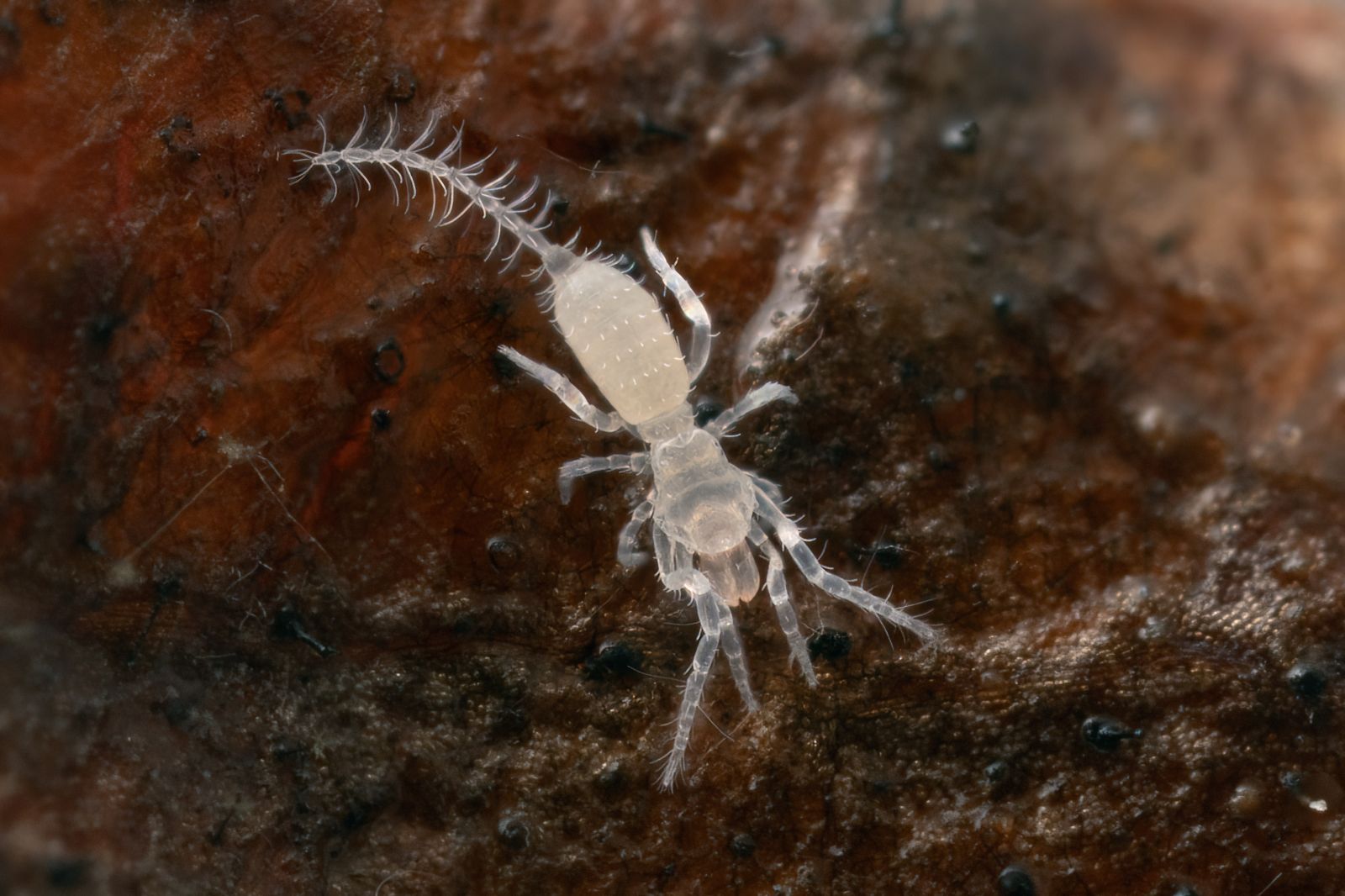
"I immediately recognised it as a palpigrade – a microwhip scorpion. I had never seen one in the wild, and I later discovered none had been found in the Daintree before."
With the help of award-winning photographer, science communicator and spider expert Caitlin Henderson, Mr Connors later returned to the site and had the tiny animals photographed.
"Palpigrades are extremely small, with most species reaching a total length of 1-1.5mm. They have no eyes, no pigment, most species have no respiratory organs and their exoskeleton is very soft. They are harmless," said Mr Connors.
He said the animal was from a previously unknown species of palpigrade, with the only previous record of any palpigrade in north Queensland being a single specimen found in the Cairns region in 1945.
Mr Connors said his lifelong interest in nature led him to pursue a PhD on the taxonomy and systematics of the Australian Leaf Katydids.
"In Australia it's estimated that two thirds of our invertebrates are yet to be formally named and documented, and we continue to find new species. On most of the Daintree night tours I run we find something that was previously unknown to science, even if it's something more common like a new beetle or ant."
He said JCU's Daintree Rainforest Observatory was critical to the discovery.
"The very fact that it enables students to conduct research right within the Daintree Rainforest provides an unparalleled opportunity for serendipitous discoveries such as this."


