
From a police station in Germany to the UN Mission in South Sudan, Stephanie Königs has been talking to UN News about her journey to becoming a peacekeeper - and the importance of trust and empathy in the field.
The United Nations Mission in South Sudan ( UNMISS ) was established in 2011 to protect civilians, facilitate the delivery of humanitarian aid, monitor human rights, and support the implementation of peace agreements crucial to the stability of the world's youngest nation, amid increasing violence .
The Mission includes personnel from over 70 different countries around the world.
Returning home after a year and a half with UNMISS, the winner of this year's Woman Police Officer of the Year Award shared what it takes to have an impact and emphasised the need for more woman in the field.
"Doing the right thing, trying to do the right thing, this is the reason why I became a police officer: to help people and to help those who need help.
My parents are also police officers. So, I'm not sure if it's maybe in the DNA or something, but of course, there as a child, you grow up with role models like your parents, and then you want to follow them.
My biggest motivation is that we can have an impact on the ground. That our presence as police officers really makes a difference. It makes a difference in the small interactions during patrol activities, for example, which is really satisfying.
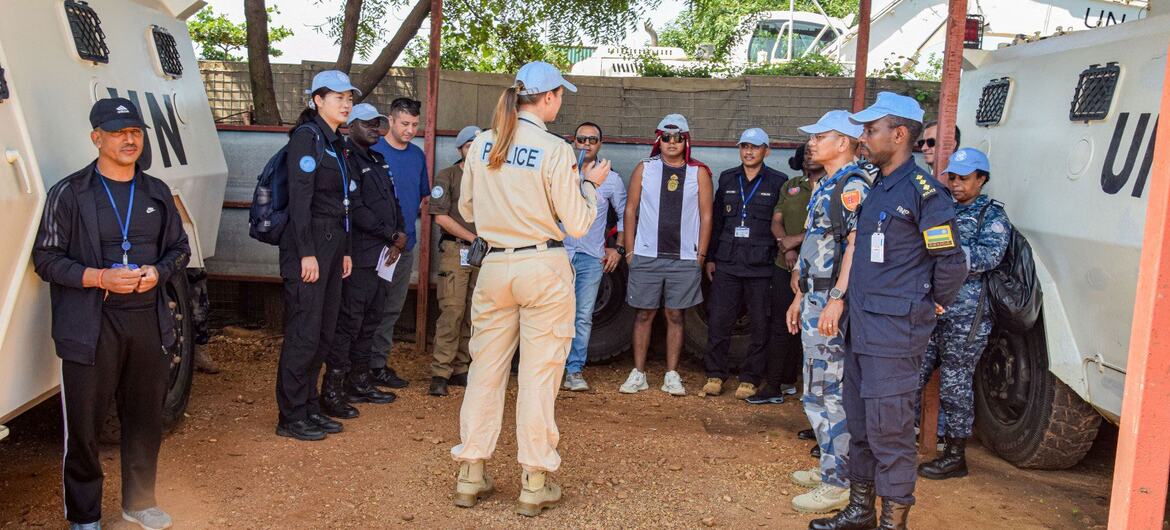
Colleagues from across the world
Personally, to work with colleagues from all over the world is inspiring, and it's a big support that I experience in the Mission.
It's an experience which showed me that the world is very big, but we are very similar. And we have so many things in common that we should focus on the things we have in common.
The things you don't see
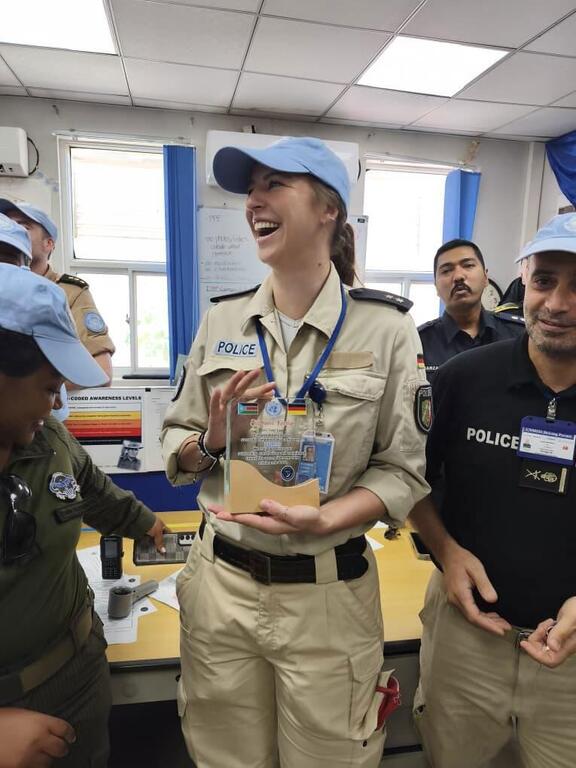
It's the small things which are not seen, that we can have an impact on. I had engagements with young women, for example, who were afraid first to talk to us. But through the engagement, they opened up and they even shared and they were honest.
They said, 'We were not too sure if we should talk to you, but you gave us this good feeling.' So, thank you for that. And this is what I think most of the people don't know about peacekeeping, that we do these small engagements.
It's patience and listening. And this is only possible if you're really interested in the stories and in the view of the local community.
Listen and understand, or at least try to understand, because we are not walking in their shoes. And patience, of course, we need to build trust. Without trust, we cannot listen to anything because nothing will be shared.
The goal is to build reliable relationships and to have the trust in the local community from their side towards the UN police, that they feel comfortable with sharing their concerns.
'Every day is different'
Every day is different, and every day you wake up and start your duties, you don't know what will happen. You don't know about the changes throughout the day. There's no typical day, and that's what it's about - this mindset you need to have.
You don't know what will happen. You don't know who you will meet in the patrol, you don't know what they will tell you, you don't know about the security.
More women at the table
Being a patrol officer in the Mission, it was very good to have this female approach. So, I was able to connect with the women in the communities, with children, but also with men.
In the United Nations, it is nothing new that women are working as police officers. However, despite all the policies we have in place in the United Nations, in the operations, there are not enough women around the table.
So, the meetings, for example, I was attending during my time in the Mission, I would have loved to see more women with me around the table, as I was many times the only one."


