
Kylie Swenson suffered from a rare autoimmune condition that, beginning as a teenager, started with muscle weakness, followed by double vision, overwhelming fatigue and slurring speech. Eventually, the condition worsened to the point that she had difficulty swallowing and even breathing.
Doctors tried a long string of treatments over the years: prednisone, azathioprine, mycophenolate mofetil, eculizumab and intravenous immunoglobulin, or IVIG.
None seemed to work.
In 2022, at wit's end, she turned to Oregon Health & Science University to consider joining a new clinical trial.
Swenson, who lives in the Southern Oregon community of Central Point, became the first OHSU patient with a condition known as myasthenia gravis to be treated with a burgeoning form of cellular therapy extending the leading edge of biomedical science.
"I had this disease since I was 16 and I was just declining, declining," she said. "I was desperate. If it didn't work, I truly believe I wouldn't be alive today."
Swenson benefited from a type of immunotherapy initially developed and clinically approved by the Food and Drug Administration barely a decade ago for the treatment of cancer. Dozens of OHSU patients are participating in the rapidly expanding field of cellular therapy — and Swenson's positive response to the treatment experience is not unique.
CAR-T, or chimeric antigen receptor T-cell therapy, is the most notable form of cell transplant therapy. Initially developed as a way to genetically engineer immune cells to target certain forms of cancer, the therapy is now being used to treat autoimmune conditions such as lupus and rare disorders like Swenson's.
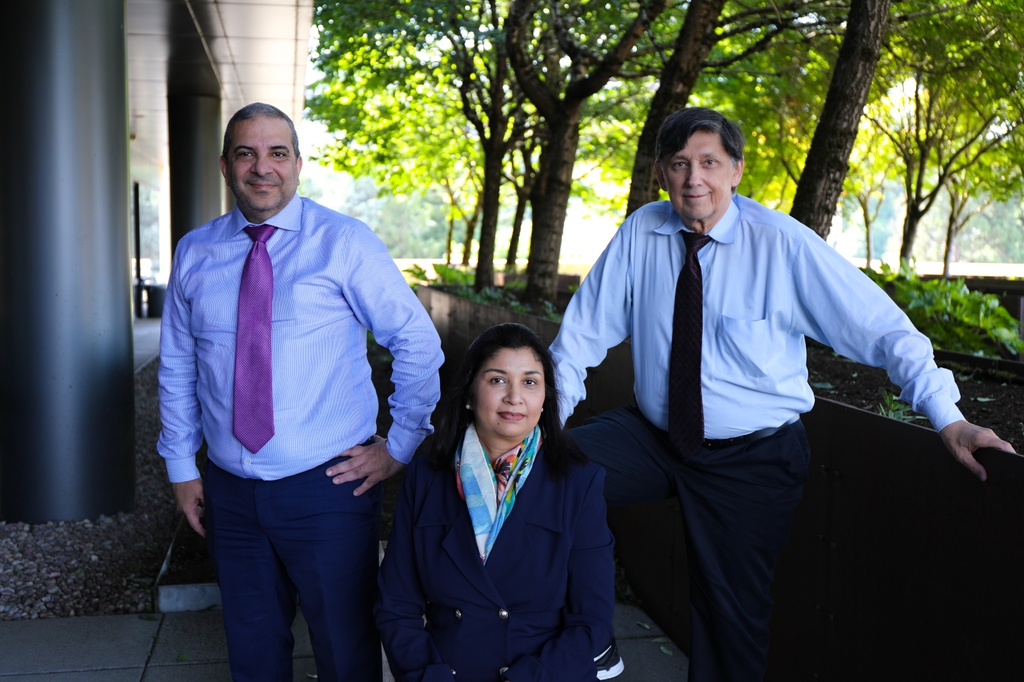
"Application and usage are just exploding before our eyes," said Richard Maziarz, M.D., an OHSU professor of medicine and hematologist-oncologist who has been at the forefront nationally in advancing CAR-T cell therapies. "It's been surprising how fast and how dramatic these responses can be."
Maziarz has collaborated with other pediatric and neurological specialists to build OHSU's capacity to conduct clinical trials involving the transplantation of modified cells.
'We're shifting natural history'
It represents a massive leap in medical science, he said.
"Fifteen or 20 years ago, cardiovascular disease or stroke was the leading cause of death in the United States," he said. "With the development of stents for heart conditions, people are surviving into their 60s and getting cancer. Now, with what we're doing with cell therapy and small-molecule therapies, people are surviving their cancers.
"We're shifting natural history. Neurodegenerative disease is the next big frontier."

Vijayshree Yadav, M.D., chair of neurology in the OHSU School of Medicine, agrees.
"OHSU is one of the few sites in the country and even the world involved in clinical trials for new cellular therapies targeting multiple sclerosis and autoimmune disorders like myasthenia gravis," she said. "These treatments are available to these patients only because of OHSU's expertise in hematology, transplant and cell therapies."
OHSU is participating in four multisite trials for neuromuscular conditions alone.
"We have many patients who come to OHSU from across the Northwest who have run out of options — and they're eager to participate in these clinical trials." said Nizar Chahin, M.D., associate professor of neurology in the OHSU School of Medicine who specializes in neuromuscular disorders. "These patients had severe disease and failed many different immunotherapies. It is surreal to see their conditions improve and maintained without the need to keep taking daily prednisone or other immunotherapy that could have caused serious side effects."
Swenson, now 42 years old, says she's never felt better.
Four years after her treatment, she says she's stronger than ever and attests to the fact that the treatment appears to be durable.
"I think CAR-T is a magic miracle," she said.
'Total life-changer'
Portland resident Jennifer Schwartz has experienced a similar life-altering turnaround after participating in a clinical trial using CAR-T therapy to treat a debilitating autoimmune disorder known as dermatomyositis.
The condition, which causes severe skin rash and muscle inflammation, came on abruptly around her 43rd birthday in October of 2022. The impacts were severe.
An enthusiastic hiker who loves the Oregon outdoors, Schwartz's condition rapidly worsened starting with weakness in her legs and a facial rash. The disease then seemed to travel up her body, attacking the skin and muscles of her upper legs, hands, arms, neck and shoulders. The rash quickly turned into ulcerated wounds with scalp inflammation that caused most of her hair to fall out.
Yet, that was only the beginning.
Next, she couldn't lift her arms above her head. Eventually, it got to the point where she couldn't swallow and had to be hospitalized with a nasal feeding tube. After a series of therapies, doctors stabilized her condition with regular infusions of IVIG, yet she still had the severe rash and weakness.
In November of 2024, she enrolled in an open-label CAR-T clinical trial at OHSU.
"It's been a total life-changer for me," Schwartz said. "The beauty of CAR-T is to get off those other drugs, so that I'm treatment-free and not tethered to an infusion clinic."
After barely being able to walk down the street, just three months after receiving CAR-T therapy at OHSU she celebrated her recovery with a hiking trip including Joshua Tree National Park in California and the "mighty five" national parks across Southern Utah. Over the past year, her strength has continued to rebound dramatically, and the rash has all but vanished.
For her part, Swenson said she can feel the transformation right down to the cellular level within her body. While others may be uncomfortable with the idea of cellular therapy, she is grateful to have her life back.
"I think it's rad," she said. "Science is cool. If it didn't work, I wouldn't be alive so I think it's awesome."


