The future of the alligator species could come down to a one- or two-degree temperature difference, according to new research from the University of Georgia.
A small change on the thermometer could determine whether a gator develops as a male or female. And that could have huge ramifications for alligator populations as temperatures rise.
Typically, incubations at cooler temperatures (think 86 to 88 degrees Fahrenheit) and hot spells (97 degrees and above) result in more female gators. Moderate temperatures (90 to 92 degrees) yield more males.
But these trends largely reflect controlled experiments in laboratories in which alligator eggs are incubated under constant temperatures.

Nests in the wild don't experience constant temperatures, instead fluctuating due to heat waves or just going from day to night.
The present study gives scientists a better understanding of real-world nest conditions.
"For population health and stability, I think it means that those small differences are really important," said Benjamin Parrott, senior author of the study and an associate professor in UGA's Savannah River Ecology Laboratory and Odum School of Ecology. "Whenever a population is out of balance, it can impact population growth. Whenever you start to lose females, then the population can really get in trouble."
Hotter weather could skew gator hatchlings female
The researchers collected 146 alligator eggs from seven nests in South Carolina. They incubated the eggs under five different temperatures, averaging 86 to 93 degrees, with small daily fluctuations (around 5 degrees) to simulate realistic nest conditions. They then identified the resulting sex of the alligators and used that to create a new model which connects offspring sex with incubation temperature.
Their new model closely matched previous sex outcomes at cooler temperatures. But at higher temperatures, even a change of one or two degrees made a big difference in whether alligator embryos developed as male or female.
"We know from monitoring nests that these temperature cycles fluctuate. But we also know that a small difference can lead to mostly males or mostly females being produced," Parrott said. "That's really relevant for how the environment is going to be changing in the near future. If temperatures are biasing sex ratios, that's a big issue."
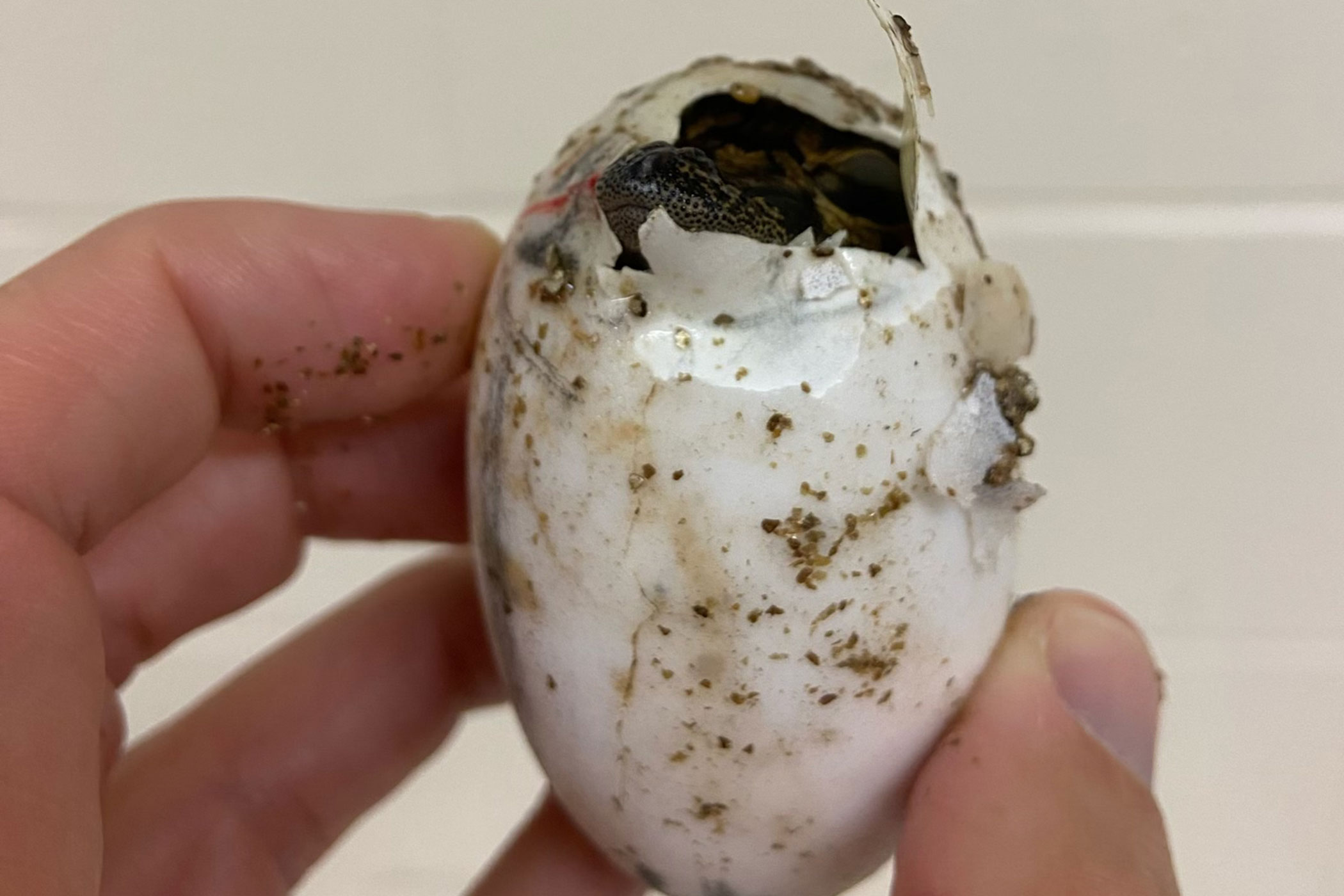
The egg's swap back to a female outcome actually occurred at a lower temperature threshold than anticipated. Whereas some previous models expected the flip to happen around 97 degrees, the new model suggests that sex was more likely to be female starting at 93 degrees. Temperatures between the two female-producing ranges still produce mostly males.
Previous studies also found temperatures above about 94 degrees could hurt alligator embryos, with survival oftentimes limited at 97 degrees. The present study, however, found that not only did short spurts of high temperatures (up to 96 degrees) not harm the embryos, but they increased the likelihood of embryos developing as females rather than males.
"This work is important because it's trying to ensure that we have an accurate tool to be able to say, 'Okay, here's a nest temperature. What sex will the alligators from this nest most likely be as a result?' We're able to know better what to expect," said Karin Ebey, lead author of the study and a doctoral student in the Odum School.

New model helps predict sex more accurately, easily
The model is the first of its kind to predict how incubation temperatures determine a creature's sex while accounting for daily temperature fluctuations. By better reflecting natural weather patterns, it could help researchers more accurately predict alligator sex ratios in the wild. Researchers say the method could also eventually be applied to other critters.
"Alligators are predators, but they are also ecosystem engineers. They're important to the environments they reside in," Ebey said. "Alligators are an abundant and well-studied species, allowing them to serve as a model for other crocodilian species.
"We're hoping what we learn in alligators can also inform conservation efforts for other species of crocodile."
Understanding how temperature impacts these reptiles is increasingly important as global temperatures change.
"It's one step forward, and it's a great tool, but we still need so much more research to be able to properly predict sex ratios in populations of sea turtles, alligators, crocodiles or freshwater turtles," Parrott said. "How are those populations going to respond to different environmental conditions? We still have a long way to go."
This study was published in Journal of Experimental Biology and was co-authored by Christopher Smaga, a graduate of the Odum School, and Thomas Rainwater.