
The Organisation for the Prohibition of Chemical Weapons (OPCW) has concluded its annual Basic Analytical Chemistry Course for Women Chemists , bringing together participants from Member States with economies that are developing or in transition. Held from 24 to 27 March 2026 at the OPCW Centre for Chemistry and Technology, the training equipped participants with practical skills to detect and analyse chemicals relevant to the Chemical Weapons Convention.
The course forms part of the OPCW Women in Chemistry Initiative in the International Cooperation and Assistance Programme, launched in 2016, which has become a leading platform for strengthening the role of women in the peaceful uses of chemistry. Through its combination of a symposium and hands-on training, the initiative supports the participation and empower the role of women chemists in Convention-related work while building sustainable capacity in peaceful application of chemistry in Member States.
Being the practical component of the initiative, the Course has significantly expanded the pool of qualified women chemists engaged in activities related to the Chemical Weapons Convention. This growing network of women working in STEM (Science, Technology, Engineering and Mathematics) is helping Member States institutionalise high-quality laboratory practices and improve the accuracy and reliability of chemical analysis, while fostering a more inclusive and diverse scientific community.
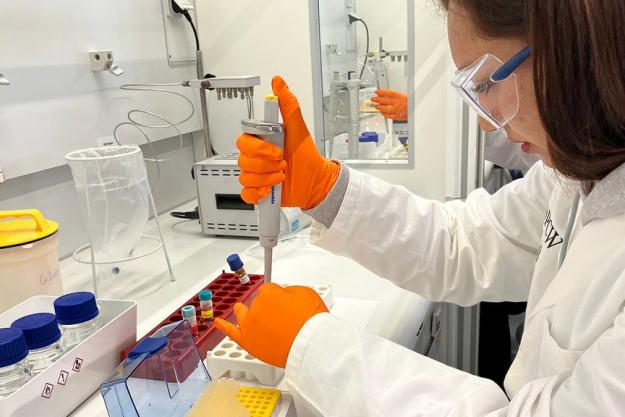
The OPCW Women in Chemistry Initiative in the International Cooperation and Assistance Programme, launched in 2016, has become a leading platform for strengthening the role of women in the peaceful uses of chemistry.
Over four days, participants engaged in intensive laboratory work and lectures covering the fundamentals of analytical chemistry as well as advanced techniques and portable detection technologies. The programme also addressed scheduled chemicals and the application of internationally recognised laboratory practices and quality standards.
By investing in both technical excellence and gender equity in chemistry, the OPCW continues to strengthen international cooperation and ensure that chemistry is only used for peaceful purposes.
Promoting gender equity in chemistry
Despite progress, women remain underrepresented in many technical and laboratory roles, particularly in areas related to chemical analysis and verification.
"In many countries whose economies are developing or in transition, the representation of women in the scientific community remains limited. I found this course particularly impactful as it was tailored to support female chemists by fostering an inclusive learning environment and addressing this gender gap," said Roshani Sunar, Assistant Chemist at the Customs Department at the Government of Nepal and participant in the workshop.
"Beyond technical skill development, the program emphasised mentorship, confidence-building, and professional networking, all of which are essential for empowering women to advance in their careers," she highlighted.
Roshani highlighted that international organisations such as the OPCW have a key role to play in promoting gender equity in chemistry: "By creating opportunities for women chemists from various regions, they contribute to building a more inclusive, balanced, and representative global scientific community."
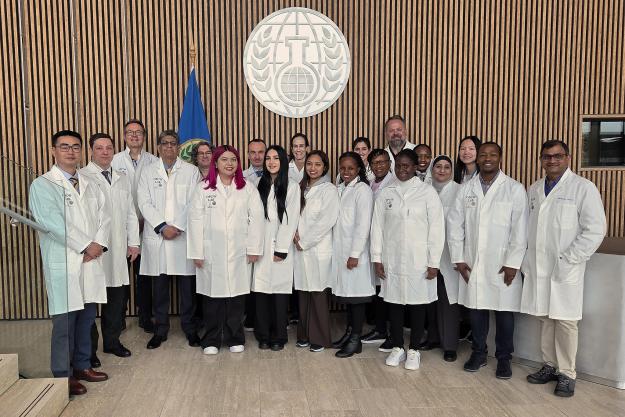
Through this course, the pool of qualified women chemists engaged in activities related to the Chemical Weapons Convention.
Background
As the implementing body for the Chemical Weapons Convention, the OPCW, with its 193 Member States, oversees the global endeavour to permanently eliminate chemical weapons. Since the Convention's entry into force in 1997, it is the most successful disarmament treaty eliminating an entire class of weapons of mass destruction.
In 2023, the OPCW verified that all chemical weapons stockpiles declared by the 193 States Parties to the Chemical Weapons Convention since 1997 - totalling 72,304 metric tonnes of chemical agents - have been irreversibly destroyed under the OPCW's strict verification regime.
For its extensive efforts in eliminating chemical weapons, the OPCW received the 2013 Nobel Peace Prize.


