
Penguins living along the Patagonian coast of Argentina can serve as living monitors of their environment by using small, chemical-detecting leg bands, according to a study from the University of California, Davis, and the State University of New York at Buffalo.
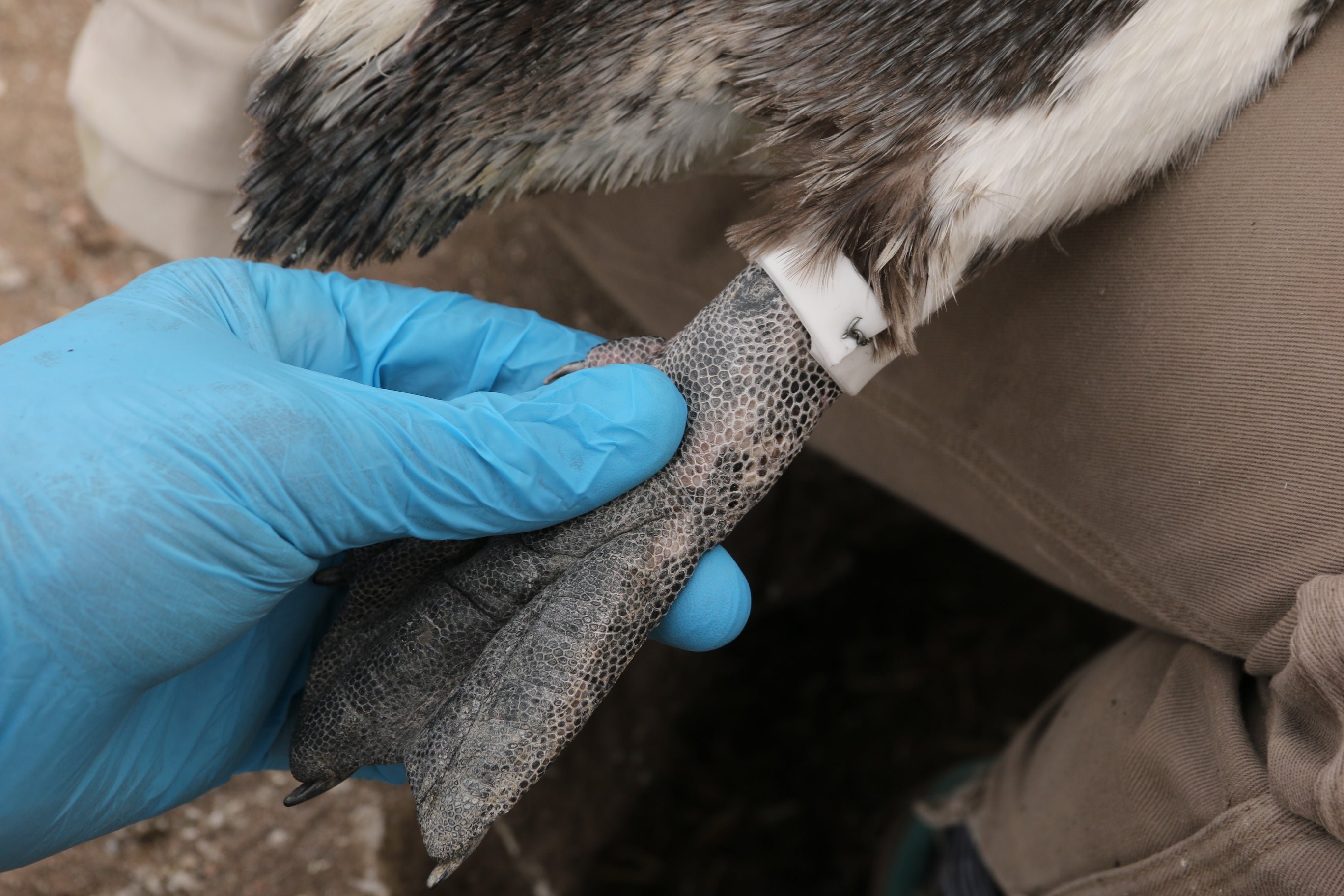
For the proof-of-concept study, published in the journal Earth: Environmental Sustainability, UC Davis scientists outfitted 54 Magellanic penguins with silicone passive samplers placed gently around their legs for a few days during the 2022-24 breeding seasons. The sensors safely absorbed chemicals from the water, air and surfaces the penguins encountered while the unwitting "toxicologists" foraged to feed their chicks.
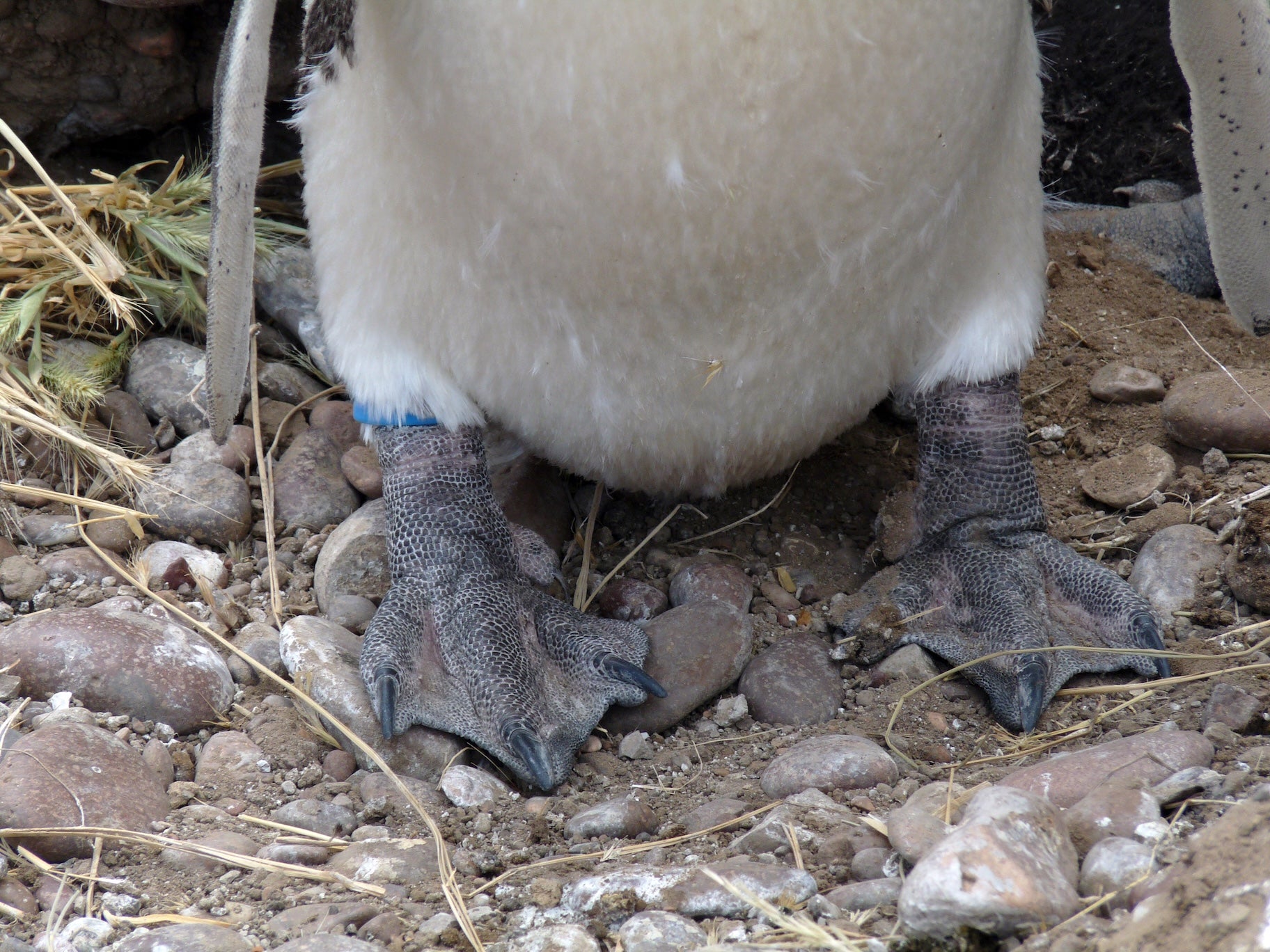
Once retrieved, the samplers were sent to University at Buffalo-SUNY for testing, which revealed that per- and polyfluoroalkyl substances (PFAS) - often called "forever chemicals" - were detected in more than 90% of the bands, even in this remote region.
"The only way we've had of measuring pollutant exposure in the past is by getting blood samples or feathers," said co-corresponding author Ralph Vanstreels, a wildlife veterinarian with the Karen C. Drayer Wildlife Health Center within the UC Davis Weill School of Veterinary Medicine. "It's exciting to have something that is only minimally invasive. The penguins are choosing the sample sites for us and letting us know where it's important to monitor more deeply. As the animals go about their business, they're telling us a lot about the environment they're experiencing."

Testing revealed a mixture of older legacy pollutants, as well as chemicals that replaced phased-out PFAS.
"By using a non‑invasive sampling approach, we were able to detect a shift from legacy PFAS to newer replacement chemicals in the penguins' environment over time," said senior author Diana Aga, a SUNY distinguished professor in the Department of Chemistry at University at Buffalo. "The presence of GenX and other replacement PFAS - chemicals typically associated with nearby industrial sources - shows that these compounds are not staying local but are reaching even the most remote ecosystems. This raises important concerns that newer PFAS, despite being designed as safer alternatives, are still persistent enough to spread globally and pose exposure risks to wildlife."

Chemicals and conservation
The study provides an efficient, practical means of tracking the locations and times of chemical exposure, particularly in hard-to-sample aquatic environments. The authors envision the method being used to identify pollution exposure from oil spills, shipwrecks and other industrial sources.
"Moving forward, we'd like to increase our environmental detectives by expanding to different species," Vanstreels said, adding that they next plan to test the method on cormorants, which can dive to depths of more than 250 feet.
"By turning penguins into sentinels of their environment, we have a powerful new way to communicate issues relevant for wildlife health and more broadly for the conservation of marine species and our oceans," said co-author Marcela Uhart, director of the Latin America Program within the UC Davis Karen C. Drayer Wildlife Health Center.
Additional co-authors include first author Paige Montgomery and Katarzyna Kordas from University at Buffalo-SUNY; and Luciana Gallo, Gabriela Blanco and Flavio Quintana from Consejo Nacional de Investigaciones Científicas y Técnicas in Argentina (CONICET).
The study was funded by the Houston Zoo.


