
Philippine authorities disregarded the rights of residents who were removed from a small island in Pampanga province for a flood control project and relocated to a site with chronic flooding and few livelihood opportunities, Human Rights Watch said today.
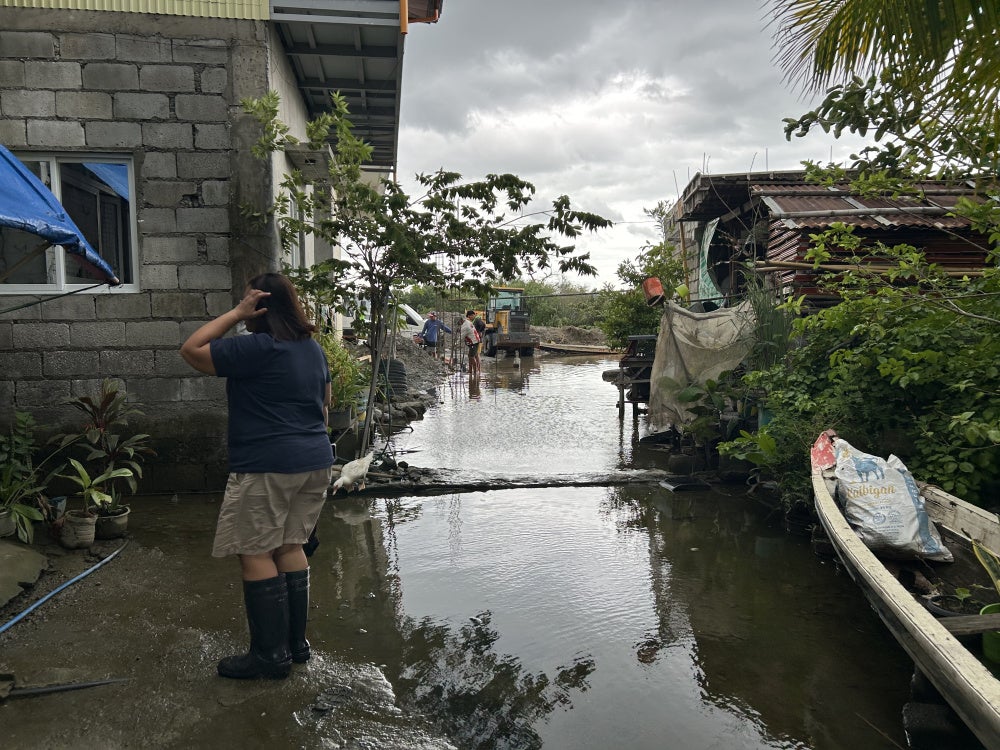
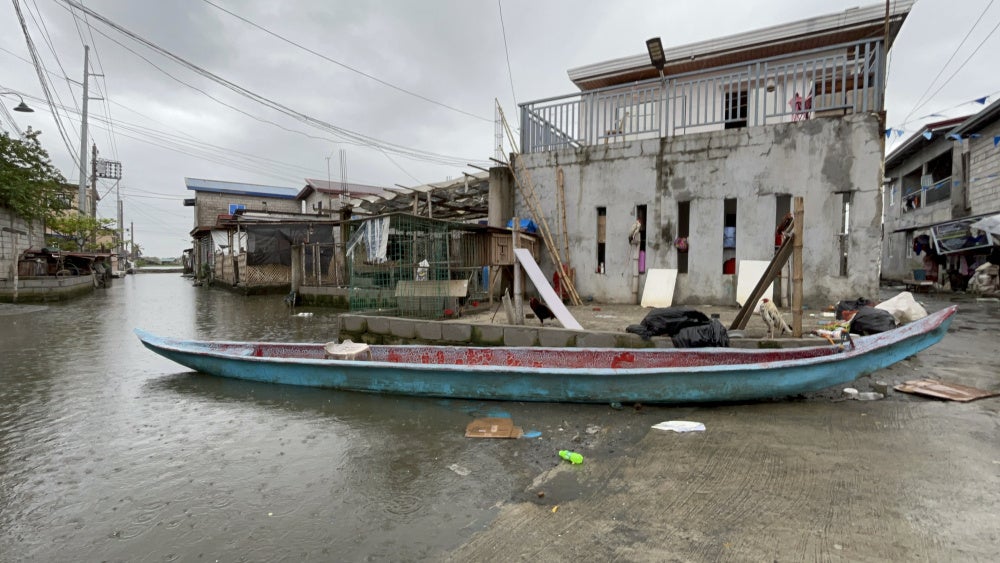
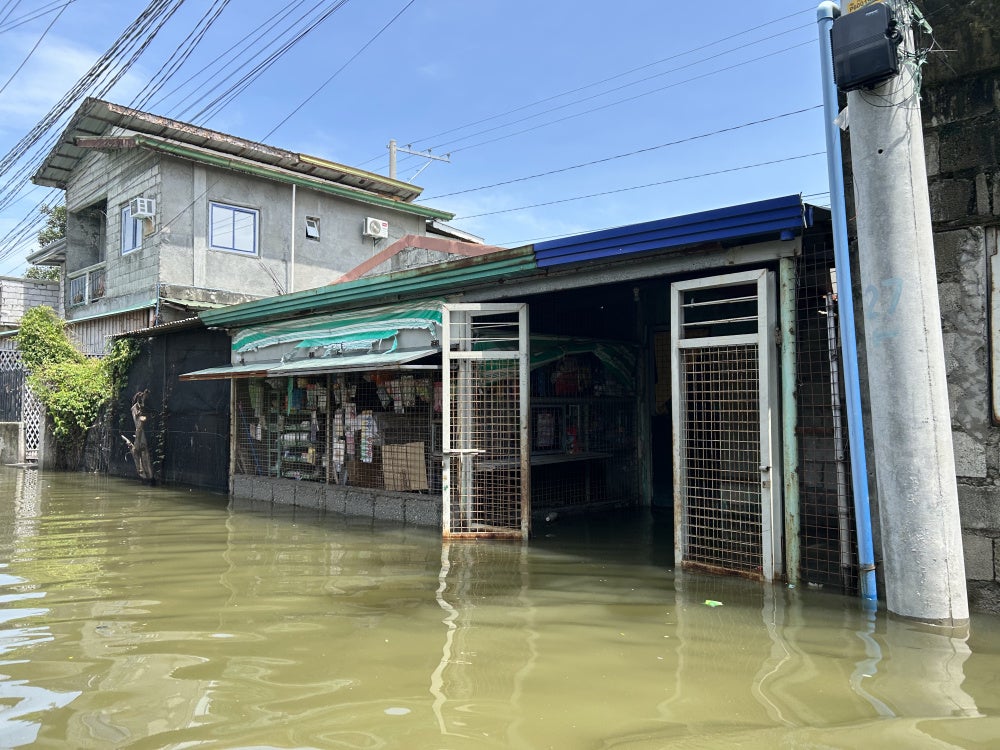
In 2022, the Macabebe, Pampanga government relocated 90 families without adequate consultation and information from Pulo Island on the Pampanga River. The relocation site, in the town of Macabebe, is a low-lying area that was formerly a fish pond that floods throughout the year, causing residents to struggle to access services and work. Although the Pulo community wanted to stay together, some family members have since left because of the effects of the flooding on their lives and livelihoods.
"Philippine authorities in Pampanga have threatened the safety and livelihoods of Pulo Island residents by relocating them to a low-lying area as part of a flawed flood control project," said Lian Buan, Southeast Asia researcher at Human Rights Watch. "The Philippine government should consult the community to find a better solution and ensure that future relocations related to flood control projects respect affected people's rights."
Pampanga province in the Philippines' northern island of Luzon experiences the country's most severe flooding, which is exacerbated by storms, sea-level rise, and limited dam capacity, and is likely to worsen as climate change accelerates. From 2015 to 2025, floods and sea-level rise displaced 6.6 million people in the Philippines.
The Philippine government has adopted a national policy for moving entire communities, called planned relocation or resettlement. However, the authorities responsible for moving the Pulo Island community did not follow national or international standards to protect affected people's rights. Planned relocations, according to the United Nations Guidance on Protecting People from Disasters and Environmental Change through Planned Relocation, should be a measure of last resort to protect life and health, and based on consultation with affected communities or at their request.
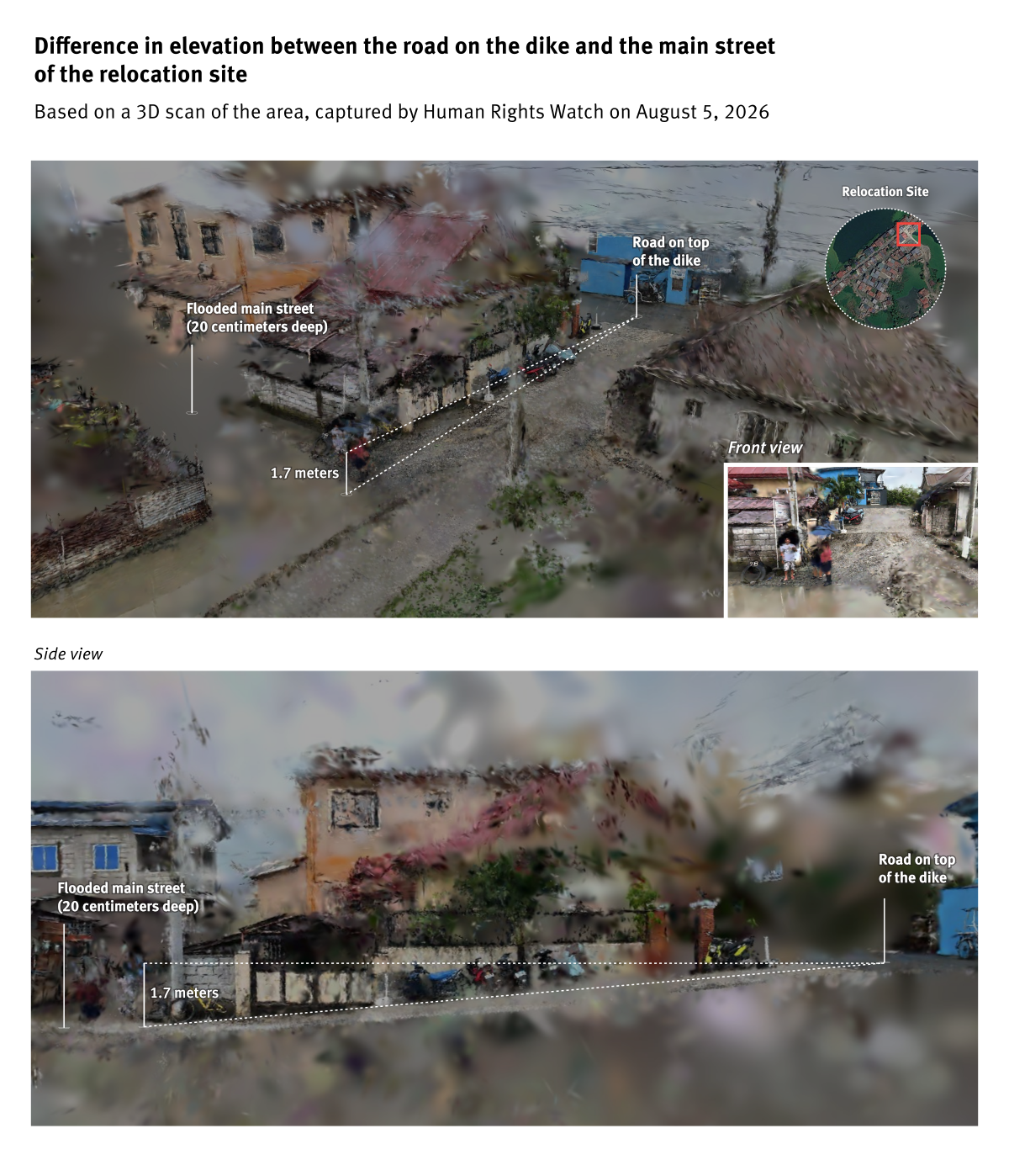
Human Rights Watch interviewed 35 residents of the Pulo relocation site in Pampanga's Barangay Candelaria, Macabebe, between July and August 2026, as well as 9 authorities in Pampanga, and climate change experts. Human Rights Watch also analyzed satellite imagery of Pulo Island and the relocation site, and employed photogrammetry-using a camera to obtain precise measurements-to determine the difference in elevation between the relocation site and the dike.
Between 2020 and 2023, the Pampanga municipal government and the Department of Public Works and Highways (DPWH) dredged Pulo Island and relocated the island's residents. Human Rights Watch found that the relocation did not involve adequate consultation, access to information, or the selection of a suitable site. "They removed us [from Pulo Island], and they put us in a place where we feel we were thrown here like trash," said a 48-year-old mother of two children.
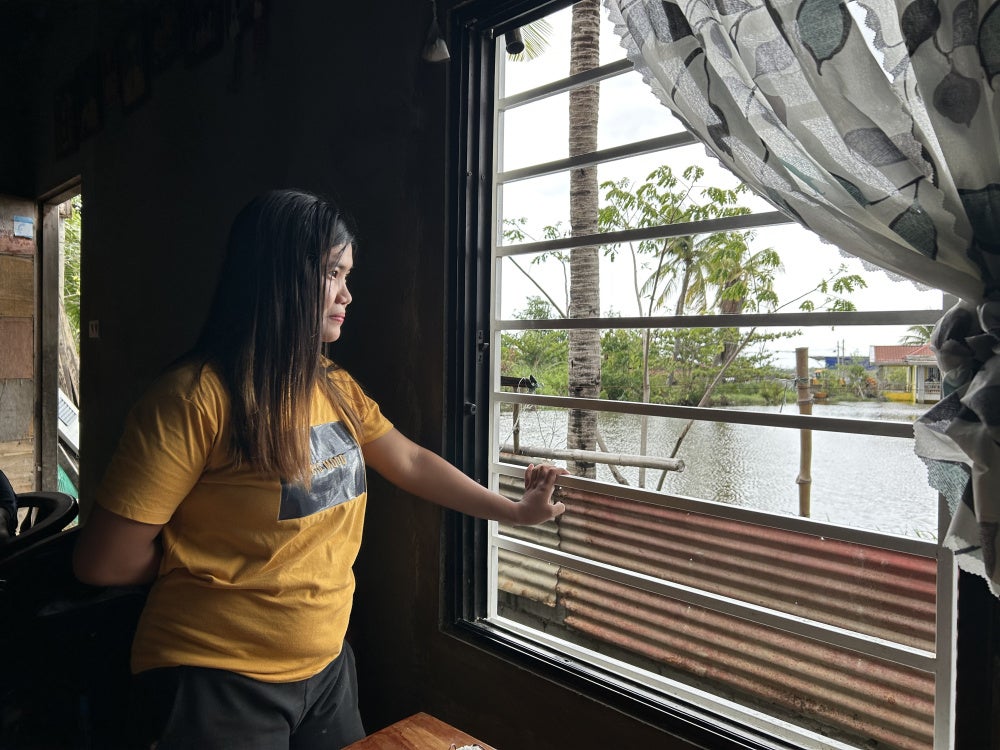
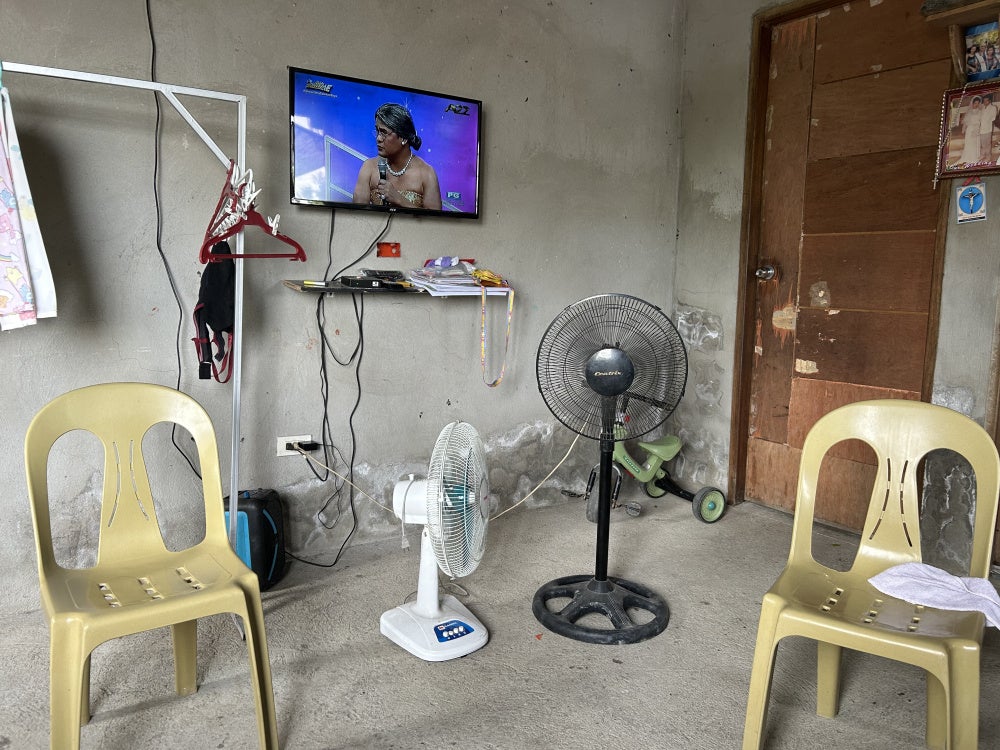
Public works department engineers told Human Rights Watch that the late mayor of Macabebe, Anette Balgan, had requested the dredging-excavating sediment, soil, and other material from the bed of the Pampanga River-and to relocate the community. They said that removing the island would increase the river's capacity and prevent flooding in the area, making the relocated residents and communities along the river safer.
Beginning in 2018, government officials held several meetings with the affected families, some in the local Kapampangan language. None of the residents interviewed by Human Rights Watch felt they were given a choice about the relocation.
Community members said they were informed about the relocation site in 2021, and expressed concerns about its suitability during meetings with authorities. The relocation site is below a dike, an elevated ridge built parallel to the river bank to prevent floodwaters reaching nearby residential areas. A road runs along the top of the dike beside the relocation site and serves as the main route to the town.
"They did not present any other solutions," said the 48-year-old mother. "There were no options."
Longtime residents said they felt pressured to move without understanding the reasons, or the compensation and assistance being provided.
Residents were required to demolish their own homes to receive compensation. Many feared that if they did not demolish their houses quickly enough, the funding allocated would run out, based on rumors spread in the absence of official information. Some said they felt intimidated by the authorities.
"The personnel on site were slightly harassing us too, telling us that we are obligated to leave, that we have no choice, and that they will tell on us to higher authorities," said a 57-year-old farmer.
Many of the families are related and wanted to stay together. The UN Guidance provides that planned relocation should "maintain social cohesion and kinship ties."
A massage therapist, 44, said an official became angry when she posed questions about the suitability of the relocation site: "The engineer pointed at me and said they studied engineering and would not risk their licenses over the project [if it weren't suitable]."
Community members said that in response to their concerns, local authorities told them the site would be raised to the same height as the road dike to protect them from flooding. However, the embankment works never reached that elevation, and the site remains below the dike. One engineer who worked on the relocation said that the road dike design does not allow raising the site to the same level.
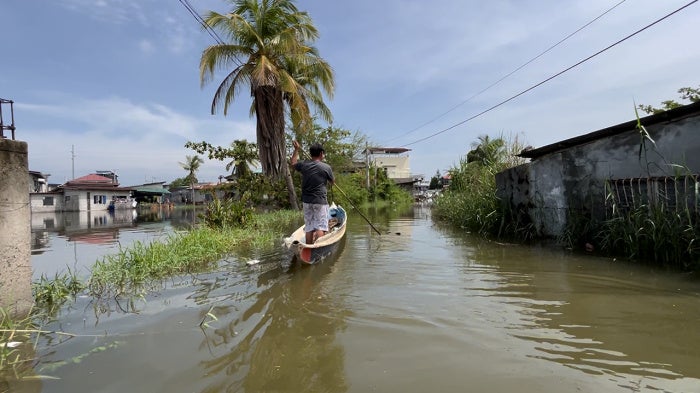
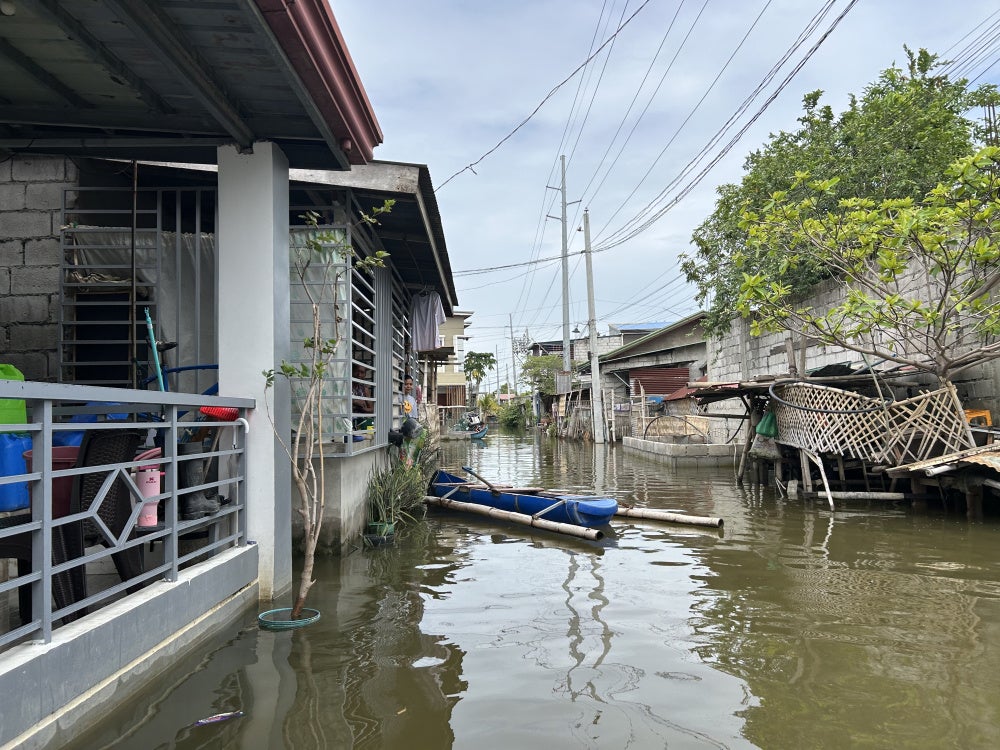
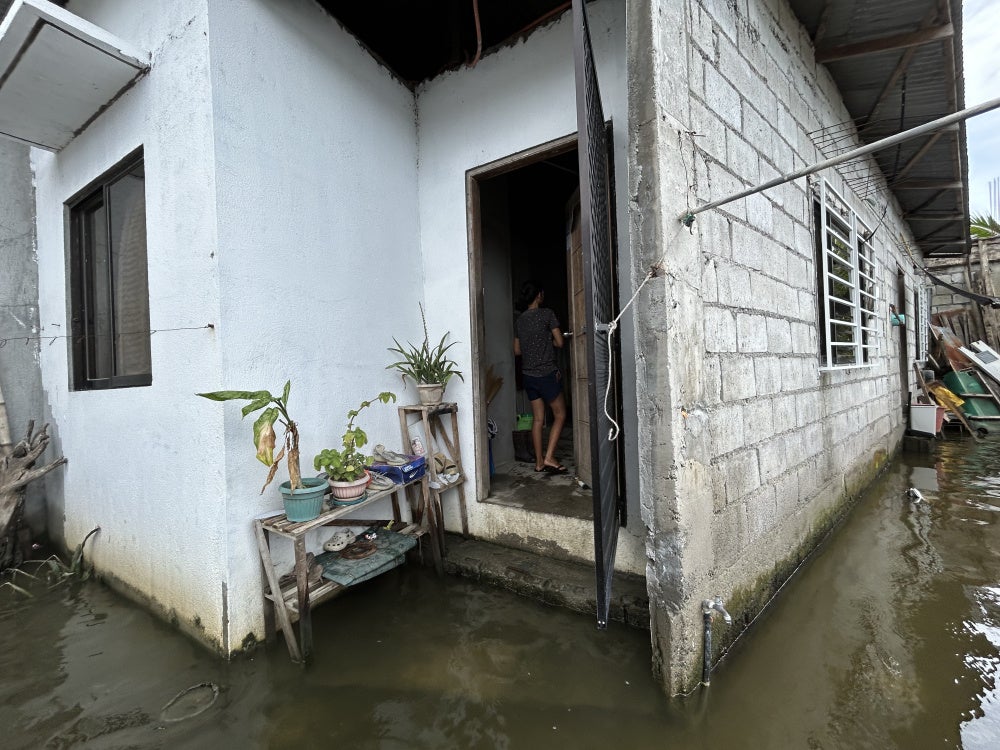
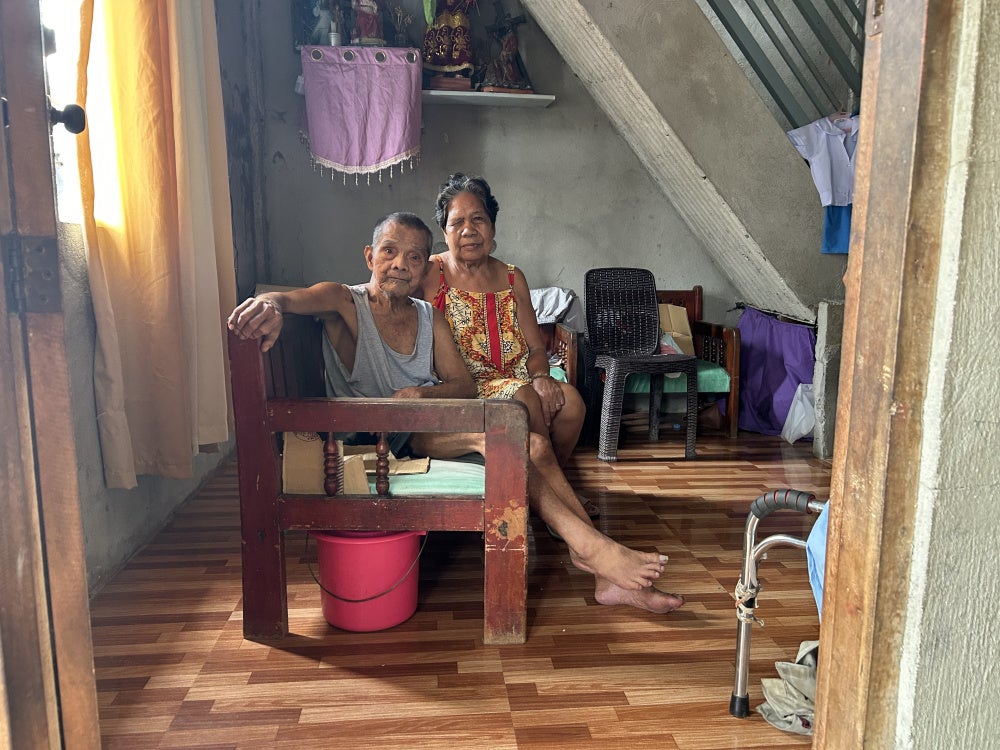
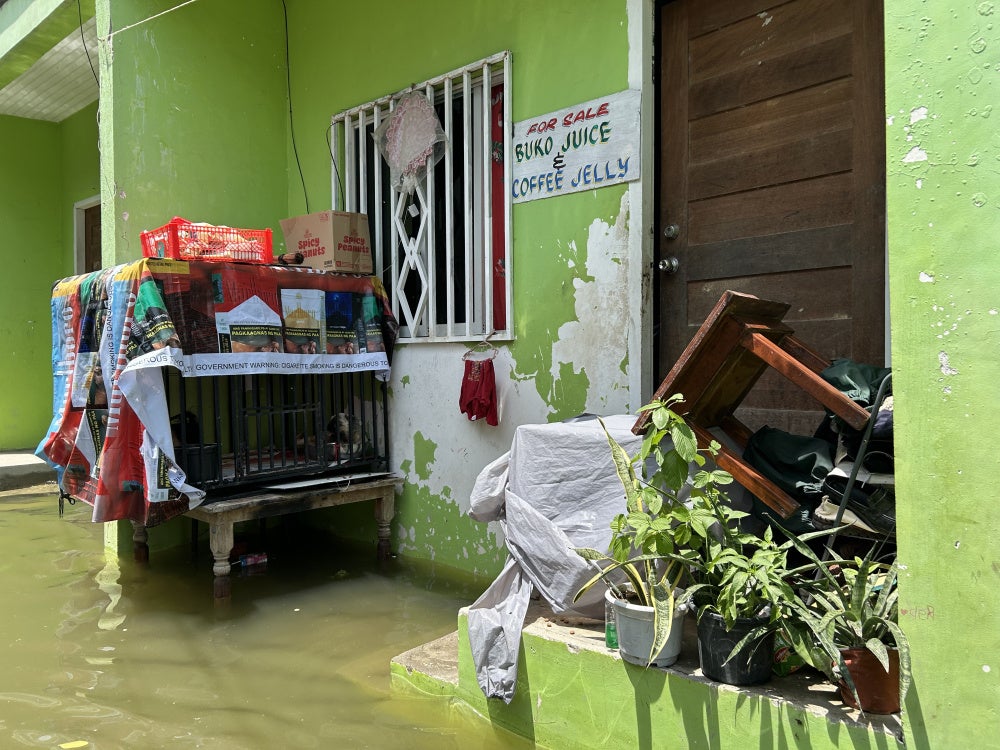
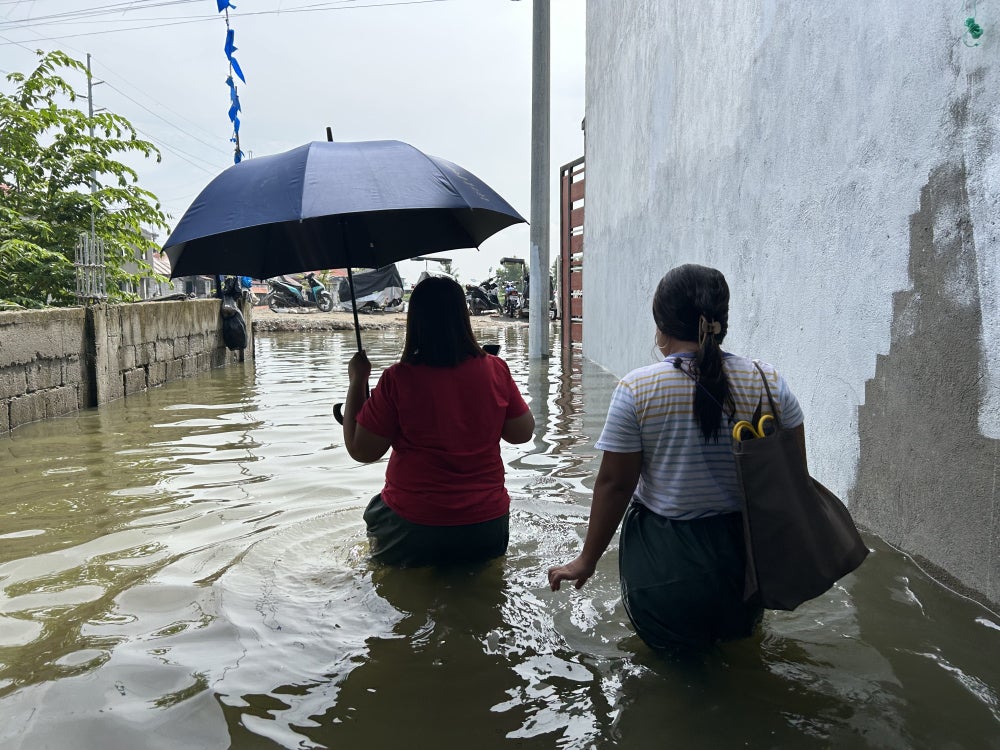
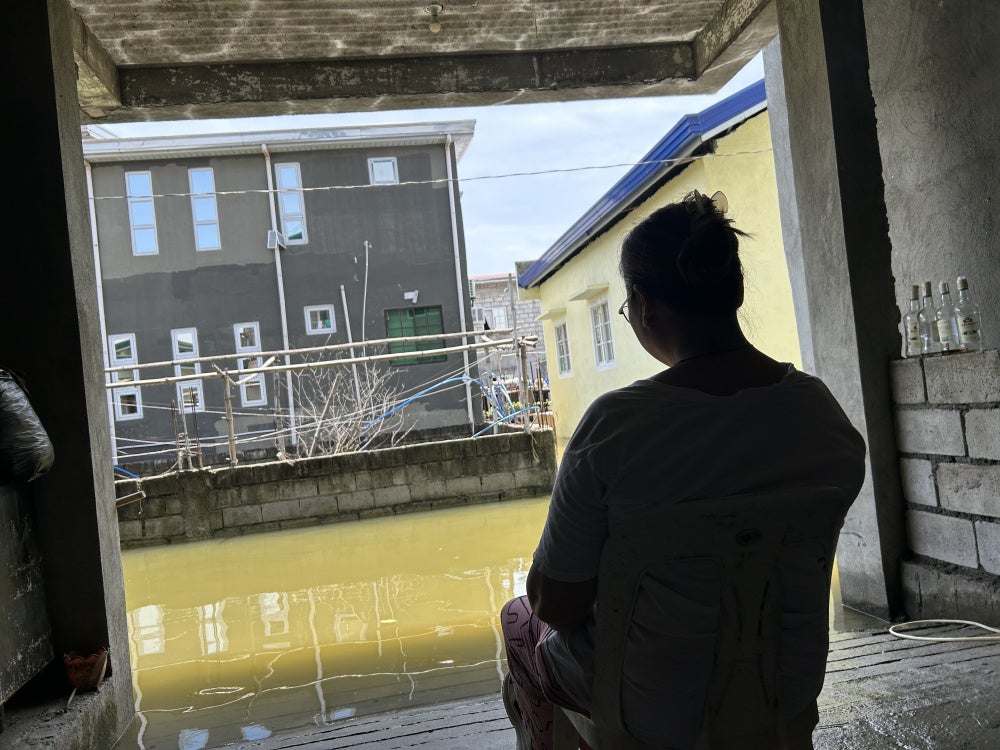
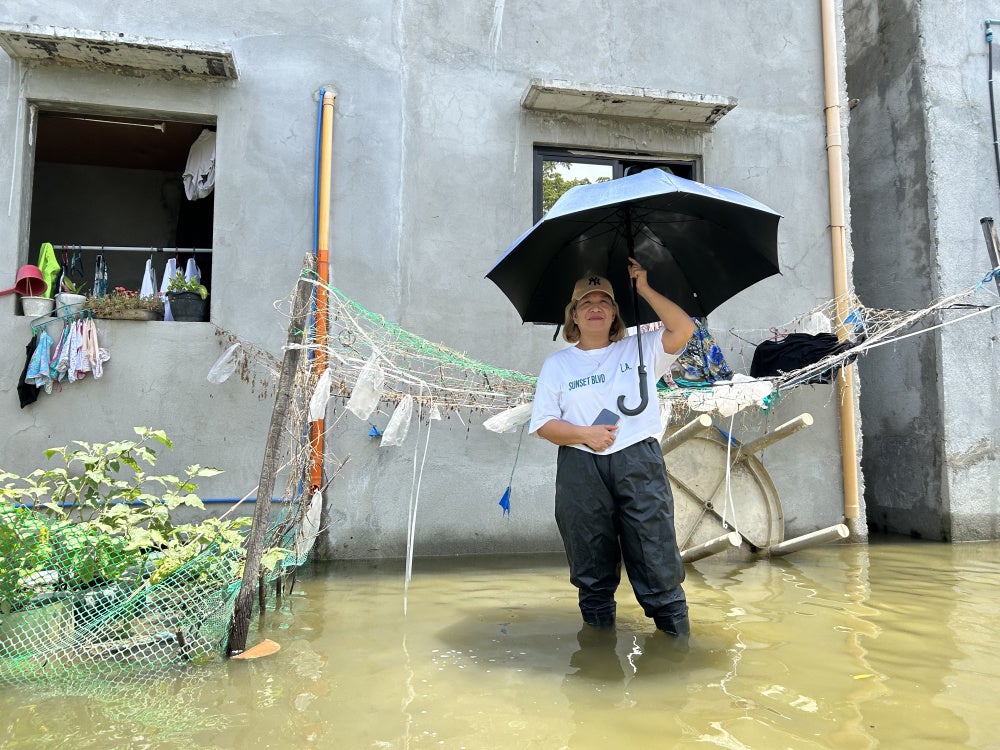
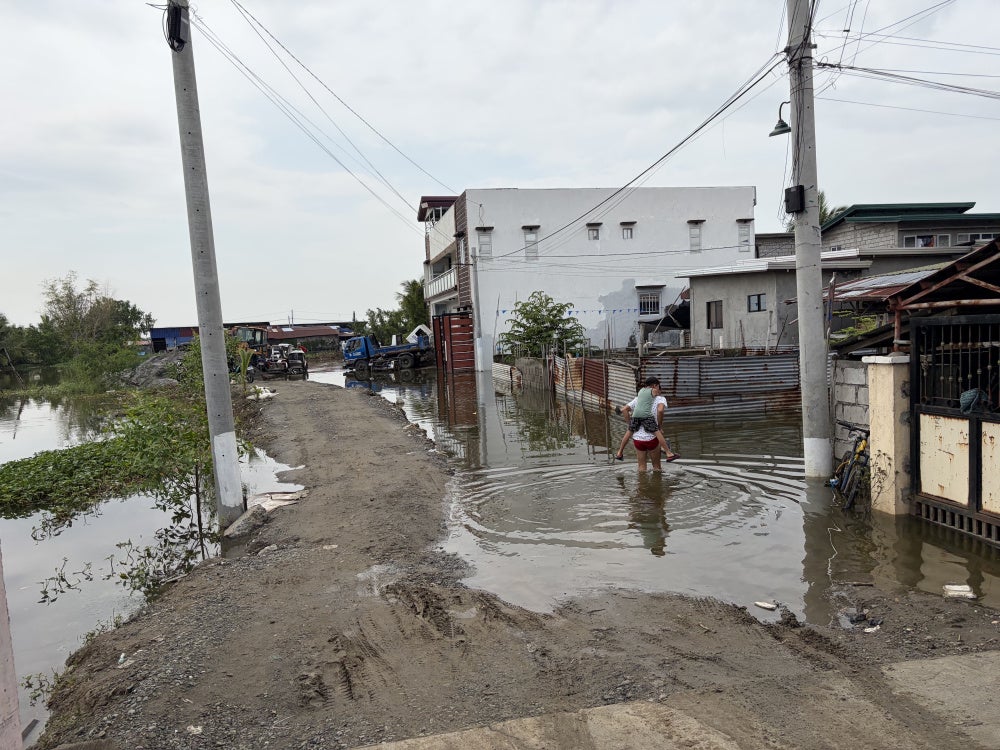
Human Rights Watch visited the relocation site from July 12 to 14, at the beginning of the rainy season, when at high tide the floodwater was knee- to thigh-deep. Human Rights Watch observed children wading through floodwaters, and older people who could not leave their homes while they were flooded. Residents, who described similar flooding year-round, needed to wade through flooded areas to reach the dike road.
The Department of Human Settlements and Urban Development, which would normally have been involved in the relocation project, told Human Rights Watch that, pending further on-site assessments, the "reported physical characteristics of the site raise concerns regarding its suitability for permanent housing."
The Philippines is obligated under international human rights law to respect, protect, and fulfill everyone's economic, social, and cultural rights. This includes protecting people from reasonably foreseeable climate change risks, including flooding and other impacts. The relocation of Pulo Island residents was inconsistent with international standards as reflected in the UN Guidance.
The Commission on Human Rights told Human Rights Watch that had the project been referred to them, they could have helped ensure that rights-based processes were followed. The commission also said it will conduct a fact-finding investigation into the matter.
"Communities in the Philippines living in flood-prone areas are already facing the consequences of climate change and shouldn't have to suffer further from botched government relocations," Buan said. "Donors supporting the Philippine response to the effects of climate change should press the government to ensure that every aspect of relocation meets international human rights standards."
For more details and accounts about the planned relocation in Pampanga, please see below.
Relocation from Pulo
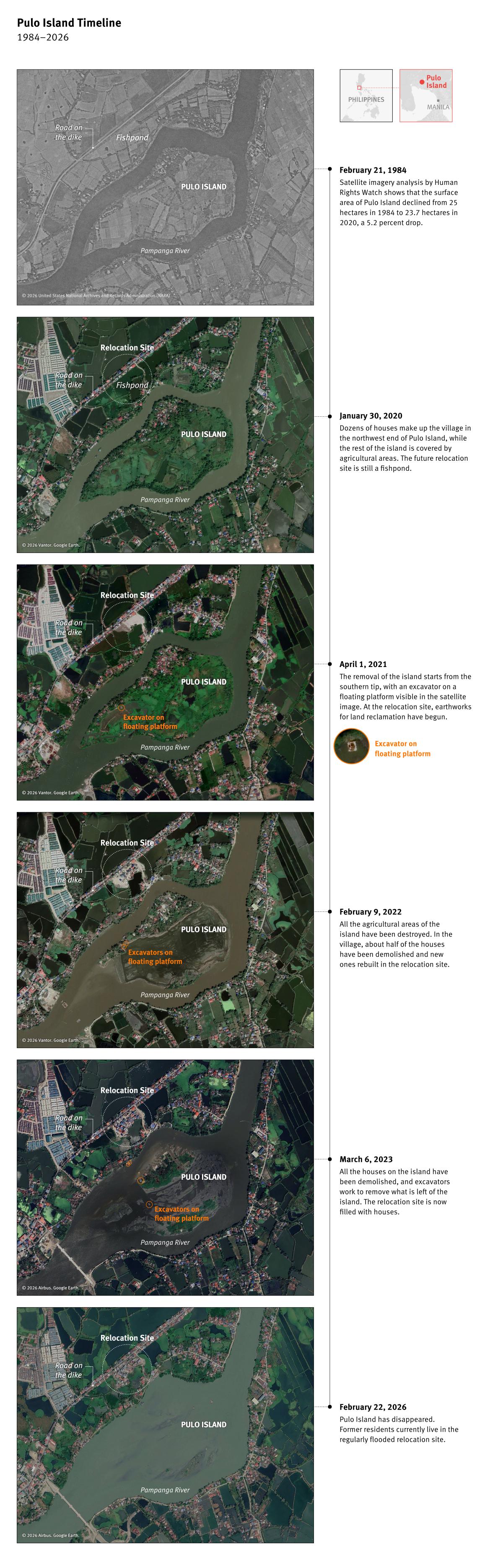
Few owned the land on which their houses stood, but many were farmer tenants or "share tenants," for whom the landowner provides the capital and the tenant provides labor, and both share in the harvest. Residents did not pay rent, but they paid the property tax that the local government collected annually on residential lands. Under the Philippine Right-of-Way Act, those without legal claims on the land are still entitled to compensation for their structures.
Macabebe is part of the Pampanga Delta, the portion of Pampanga, Bulacan, and Bataan provinces composed of low swampy lands prone to flooding. In the early 1990s, the Japan International Cooperation Agency funded the Pampanga Delta Development Project Phase I (PDDP I/Delta I), under which 1,851 households were to be resettled, but the project was never completed. The Pulo Island residents opposed being relocated by the project and remained.
Two engineers from the flood control cluster of the Department of Public Works and Highways (DPWH), Tomas Edison Olalia and Alvin Diaz, told Human Rights Watch that the removal of the island was "already long overdue" because it had been proposed under the earlier project.
Since 2011, the Philippine government has spent Php 1.93 trillion (US$30 billion) on flood control projects across the country through the department. Almost one third, or Php 545 billion ($8.7 billion), was spent between July 2022 and May 2025, during the administration of President Ferdinand Marcos Jr., amid allegations of massive corruption in flood control projects.
At least 45 public officials have been charged in the anti-graft court in connection with various flood-control projects, most of them DPWH officials.The officials interviewed have not been implicated, nor did Human Rights Watch investigate corruption in the Pulo Island project.
In 2019 and 2020, the department's flood control cluster awarded two contracts worth Php 157 million ($2.6 million) to remove Pulo Island through its yearly flood mitigation program, according to contracts and budget line items. DPWH officials told Human Rights Watch that the project was initiated by then-Mayor Balgan.
In separate letters sent by the former mayor to the agency and the agency to the residents, the community was termed "informal settler families" who needed to be removed from a "danger zone." Under Philippine law, informal settler families occupy land without consent, or live in places considered "danger areas."
Olalia and Diaz, the engineers involved in the project, said Balgan requested the island's dredging under a 2017 policy that instructs local government to "immediately commence the removal of illegal structures in all danger areas," and communicated directly with now retired DPWH project manager Isabelita Manalo. Danger areas included "river banks, shorelines, creeks, waterways, esteros (estuaries) ... which when occupied for residential purposes actually pose danger to the life, safety and property of either the concerned residents, or of the general community."
Other Philippine agencies were not involved in the project, based on interviews with officials and written responses sent to Human Rights Watch by the Department of Human Settlements and Urban Development and the Commmission on Human Rights.
"This was an isolated case," said Olalia, referring to the lack of involvement by other government departments. "We just responded to the request of the LGU [local government unit] because it had a valid reason; the island was in a danger zone."
The Department of Human Settlements and Urban Development is normally the lead agency for planned relocation, along with the National Housing Authority, which are responsible under the National Resettlement Policy to check the feasibility of the relocation site and can provide financing for new houses.
When informal settlers are affected by a resettlement, the Presidential Commission on Urban Poor should monitor the situation, according to the Department of Interior and Local Government's resettlement guidelines. The Commission on Human Rights also has an oversight role in such cases, as its internal rules require the agency to "ensure strict compliance to the Commission on Human Rights Advisory on the Right to Adequate Housing and Humane Treatment of Informal Settlers." In addition, the interior department's resettlement guidelines require oversight by a local inter-agency committee or a local housing board.
Human Rights Watch sent right of reply letters outlining the findings on September 21 and received responses from the human settlements department and the Commission on Human Rights. The DPWH, the municipal office in Macabebe, and the Presidential Commission on Urban Poor did not reply.
"There was no check and balance," said Ferdinand Zambrano, the project development officer at the local Department of Human Settlements and Urban Development office.
The current mayor, Leonardo Flores, is Mayor Balgan's brother. Flores' office referred Human Rights Watch to Jomel Cruz, the disaster risk reduction officer, who was the municipal administrator during that time. Cruz said that there are no documents pertaining to the project among the files turned over by the former administration.
The relocation site may be further affected by the planned Pampanga Delta Development Project Phase II (PDDP II or Delta II), which is undergoing feasibility studies, according to plans seen by Human Rights Watch that show Macabebe within the PDDP II project area.
Key Human Rights Issues Relating to Planned Relocation
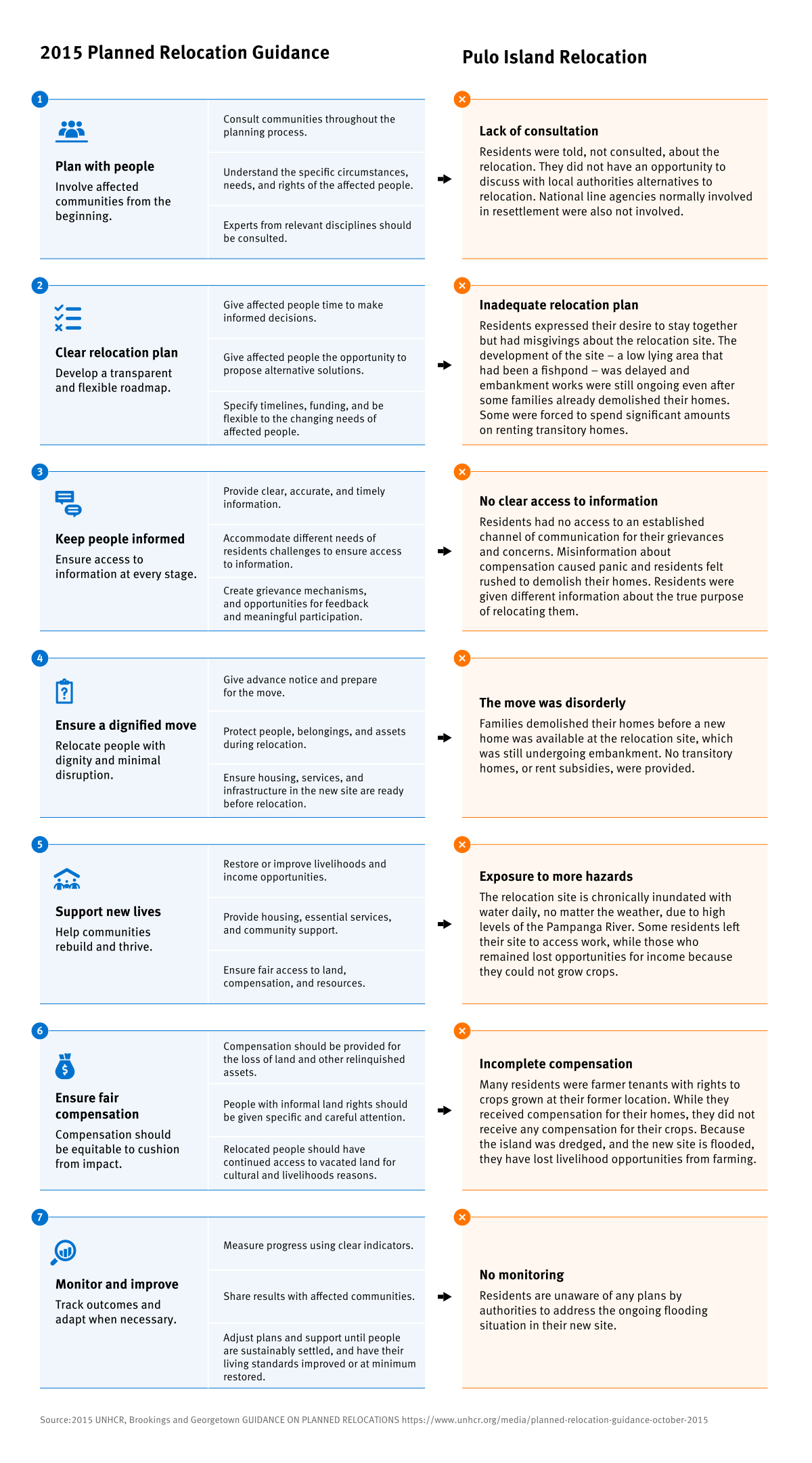
International human rights law on planned relocations derives from various human rights treaties that the Philippines has ratified, notably the International Covenant on Economic, Social and Cultural Rights. It is also reflected in international standards and guidance, such as the UN Guidance on Planned Relocation and the UN special rapporteur on internally displaced persons Report on Planned Relocation, to help governments plan and carry out relocations of communities at risk in a rights-respecting manner.
Consultation
Under international human rights law, planned relocation and other government action that directly affects protected economic and social rights-particularly housing, land, relocation, eviction, water, or livelihoods-needs to be preceded by meaningful, informed, and participatory consultation with affected communities as an important procedural safeguard. Such consultation requires timely and accessible information, an opportunity to express views, and genuine consideration of those views. UN guidance and human rights standards establish that national and local governments need to ensure that planned relocation is a measure of last resort, and ensure that affected communities are meaningfully involved in decisions about a potential move. The UN Guidance says there needs to be some "flexibility to accommodate persons who may choose not to participate in the relocation," and an opportunity for affected residents "to propose alternative options."
All members of the relocated community interviewed by Human Rights Watch said their concerns and questions about relocation were not given due consideration. What happened was not consultation but an "imposition," said an 81-year-old woman.
During meetings held by officials, including in the local language, residents said their opposition was merely noted. "They simply gave out forms for us to sign and promised us a relocation," said Jenny Datu, 50.
DPWH officials acknowledged that their staff did not conduct detailed consultations with residents, saying that their role was limited to technical assistance on the project.
Pulo Island's former residents said they ultimately agreed to move because officials said they could have a relocation site that would allow the community to stay together.
In 2021, residents received "Agreement to Demolish and Remove Improvements" forms that were in English, which is not their preferred language. Some residents said they were frustrated that they received no assistance from anyone, such as a lawyer, to discuss the form. "We had no choice," said Mary Grace Liguid, 38. "People just arrived measuring our houses, our lands. We had no choice but to agree, because you can't be left there."
Right to Information
The right to receive information, set out in article 19(2) of the International Covenant on Civil and Political Rights, is a core component of a human rights-based approach to planned relocation. Information should be provided in a clear and accessible manner, and should include anticipated disaster and climate risks as well as the social, physical, and economic impacts of the relocation. The UN Guidance provides that adequate, advanced, up-to-date, and accessible information on the rationale for relocation, as well as alternatives considered, is essential to minimize the risk of forced evictions.
Residents said they were told various reasons for their removal from the island, including that the island was blocking the flow of the river, which is the reason stated in government documents.
Community members also said they were told the island was shaped like a cone, being eroded from underneath, and could collapse at any time. "They scared us that our island was running out of soil, and we will be washed away," said a 46-year-old man.
Olalia and Diaz said this information about the island being eroded did not come from their office. The current municipal engineer of Macabebe said the local government would have no capacity to come up with such an assessment.
Satellite imagery analysis by Human Rights Watch shows that, in the 36 years preceding their removal, the surface area of the island reduced by 5.2 percent, from 25 hectares in 1984 to 23.7 hectares in 2020.
Relocated residents said they could not recall being given the opportunity to discuss any risk assessment with government officials. None could recall any discussion about ways they could stay on the island.
A lack of information and community concerns about compensation also caused delays, as documented by DPWH itself. "Unless the people paid for the houses to be demolished, they will not transfer to the designated relocation site," said a 2021 department order, rescheduling that phase of the dredging, which was only completed between 2022 and 2023.
The payment arrangement left residents with no choice but to demolish their homes. Once they signed the demolition forms, they could receive 70 percent of the assessed value by traveling to Metro Manila to cash their compensation check. They were expected to immediately demolish their homes upon receiving the partial payment and would only receive the remaining 30 percent after providing photos and videos of their demolished homes.
Most of the residents interviewed said they felt rushed to demolish their homes and cited rumors of allocated funds running out. "We were panicking," said Esmeralda Tubig, a 46-year-old daycare teacher. "First of all, you'd demolish your house without complete payment, then you have your daily life to think about. We didn't know where we'd get our livelihood, then suddenly we also did not know where we'd live."
More than a dozen residents said they also felt intimidated by local officials. "It was raining heavily that time, and they wanted us to start demolishing our houses," said a 61-year-old construction worker.
Residents said that they never received other forms of compensation, including for their crops. The UN Guidance states that people should "have the right to equitable compensation for their land and any other relinquished assets related to that land." One resident burned their own trees to turn them into charcoal to at least earn some money before moving.
The Philippine National Resettlement Policy Framework states that relocated people should be given a pathway to secure land tenure in their resettlement site, whether through leasehold or the right to use other property or another contractual arrangement. A 33-year-old man said he remembered discussing with authorities whether they would receive land titles at the relocation site. "Because if we don't have titles, we're squatters here," he said.
Suitability and Standard of Living at the New Site
The national and local governments are responsible for ensuring an adequate standard of living at relocation sites. The UN Guidance says that in relocating a community, the government must "provide the necessary conditions [for them] to build a sustainable life of dignity in their place of settlement." The National Resettlement Policy Framework also states that "resettlement sites should not be located in areas with exposure to natural hazards" such as "low-lying and flood-prone areas."
Human Rights Watch, on August 5, visited the relocation site and measured that the main street was flooded to a depth of 20 centimeters. Using a smartphone scan, the researcher then processed the images with photogrammetry to determine that the elevation difference between the top of the floodwater and the road dike was about 1.7 meters. Human Rights Watch found that the main street of the relocation site was built about 1.9 meters below the dike.
Residents said that the site floods to the same level frequently throughout the year during high water levels in the Pampanga River, even during the hot dry season, from March to May. They must wade through flooded streets to reach the road dike year round but more often simply stay in their houses.
Officials involved in the relocation had promised that the former fishpond would, after embankment works, match the height of the road dike beside it, several people said. The engineers said they made no such promise and had no role in selecting the relocation site, although one of their contractors did some embankment work on the site to reassure the community.
The residents said that when they began moving to the site in 2022, work was ongoing to raise the site. "The site was unfinished when we moved," said Ely Barsana, a 44-year-old massage therapist. "It was half-baked."
The work stopped eventually, with no update from authorities. Representatives from the municipal office in Macabebe said they had limited knowledge of the project. Families decided to start building their houses because their compensation money was better spent on their new home instead of on rent.
"How can we wait longer?" said a 58-year-old woman. "We already demolished our house. We were renting. The payment on our house would run out the longer we rent."
Some residents were able to afford to elevate their houses, but many others could not. The authorities did not warn them that their relocation site could flood.
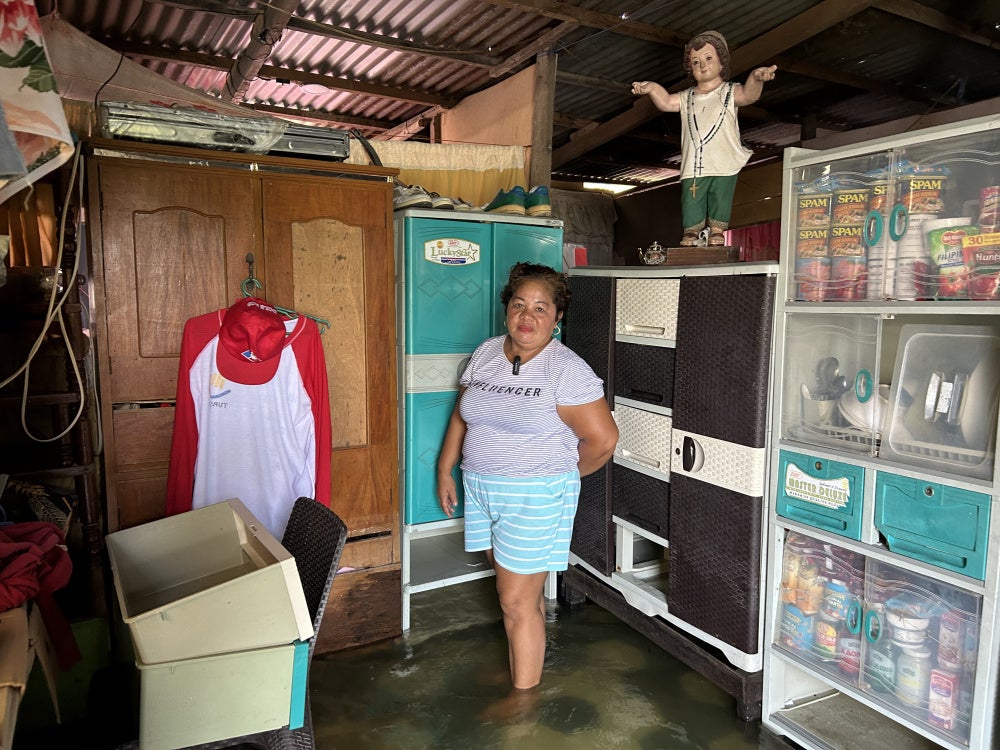
Maria Mallari, 50, lives in a bungalow that she says is rarely dry. Her furniture is damaged, and she lifts heavy appliances every day to protect them from water. When the water subsides, the family scrubs the floor clean, only for it to be flooded again the next day. "I'm sick of it, so sick of it," she said.
Residents said they had fewer options for livelihood now. Several of them relied on selling fruit and vegetables they grew on the island to supplement their irregular incomes as laborers, construction workers, tricycle drivers, farmers, and fisherfolk. Some residents have left their families in the relocation site to seek work elsewhere.
Although the relocation site is closer to the town center, frequent flooding requires a longer journey to access services like the hospital than when the community lived on Pulo Island. In July, a woman fell ill but could not be immediately transported to the hospital because the water level was too high, making boat transfer risky. She was in critical condition in the hospital for weeks, but has since recovered. Children have to wade through flood to get to and from school every day.


