
A University scholar has helped resolve one of art history's more intriguing mysteries after identifying the controversial mistress and muse of famous French poet Charles Baudelaire.
Professor Maria Scott located a photograph of Jeanne Duval in France's national library archives, more than 160 years after it was taken and printed on a 19th-century 'carte de visite'.
It is just the second photo ever found of Duval and sheds new light on her life in the 1860s and her relationship with the poet. It also appears to confirm that she sat for two notable paintings from the era, one of which may now lend itself to a radical new interpretation of the artist's intention.
Professor Scott, an expert on Baudelaire and French-language literature and culture, has told the story of her research in a feature printed in Times Literary Supplement. In it, she explains how she was alerted to the picture, the steps she took to correlate it with the other photo and artwork, and how it challenges some conventional assumptions about Duval, including some that are racist, sexist and ableist.
"Duval was the fascinating and much-discussed, though also famously under-documented (and unphotographed), long-term mistress and muse of Baudelaire," said Professor Scott, of Exeter's Department of Languages, Cultures and Visual Studies. "She was and still is often described as the poet's 'Black Venus', because she was seen at the time as a woman of colour and because she inspired some of the most scandalous love poems in Baudelaire's epoch-making poetry volume The Flowers of Evil (1857)."
Recent archival work by other scholars confirms that Duval was born in Haiti and moved to France as a child in 1821. In the early 1840s, she met Baudelaire and embarked on a tempestuous 19-year relationship, captured in his aforementioned collection, Les Fleur du Mal.
Professor Scott had been researching and writing a book on Baudelaire when she encountered a photo of Duval online, credited to a writer and journalist, Summer Brennan. Ms Brennan had documented this discovery on her Substack and had drawn links to a painting called Music in the Tuileries (1862) by Édouard Manet.
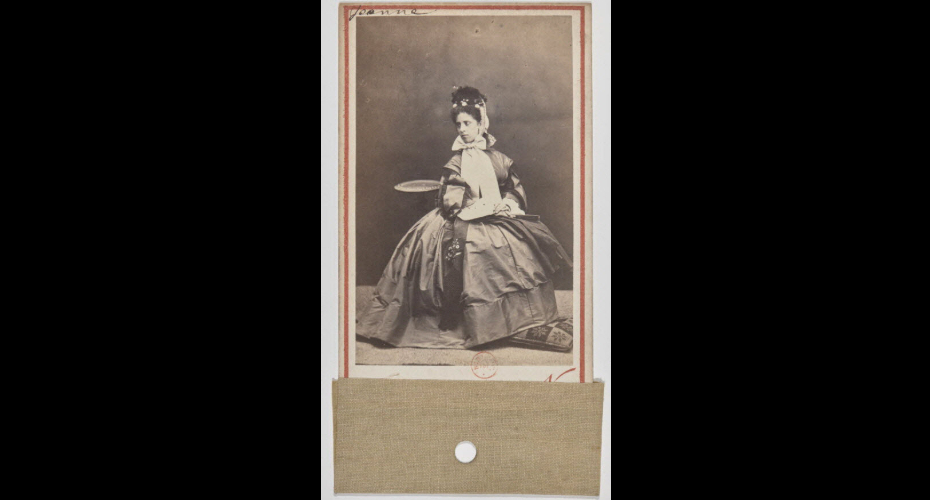
Inspired by this discovery, Professor Scott visited the Bibliothèque Nationale in Paris, where she found a second photographic card portrait, bearing the same name "Jeanne", right beside the first. Both photographic cards, akin to business cards, show the stamp of the studio of Félix Nadar, a contemporary and friend of both Manet and Baudelaire, and both were made on the same date.
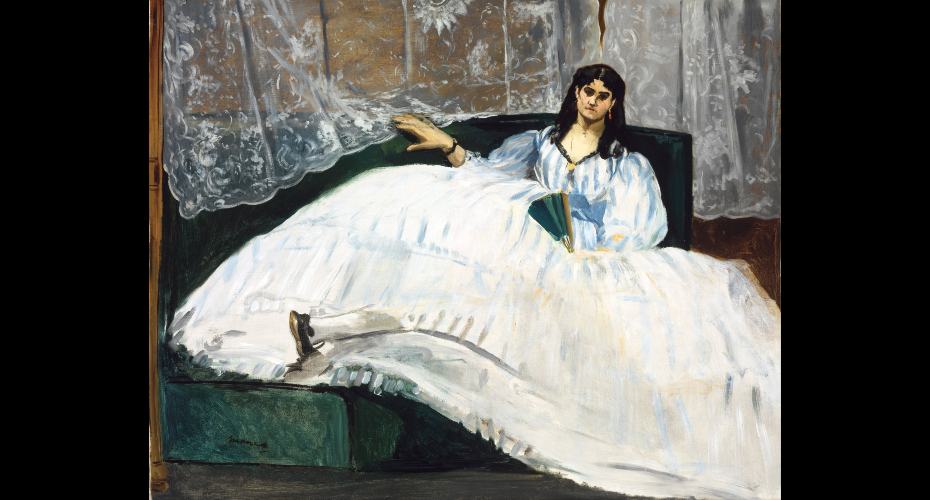
Though the women in the two pictures did not look very similar at first glance, Professor Scott compared high-resolution versions and found key consistencies, as well as connecting evidence from the legal deposit register held at the Paris archive. She also compared the photo she found to Manet's famous painting, Baudelaire's Mistress (1862) and noted that both women wore a crucifix and boasted several other similarities in their features. This led her to conclude that Manet almost certainly worked from this picture when he painted his piece, thereby answering a key question long asked, namely: is it definitely of Duval?
Scott also discovered evidence relating to these photographs that Duval may have modelled for Manet's Music in the Tuileries, and that elements of this famous group painting gesture towards her presence. This enables a new reading of the painting.
"At first glance, it appears to celebrate the affluence and festive atmosphere of the French Second Empire," Professor Scott continues. "But if we notice a network of allusions to Duval in the female figures in the foreground, then this enables us to see other half-hidden figures in the painting. The painter may be communicating a covert anti-Imperial and Republican message. It can perhaps be read as a criticism of the Empire's habit of pushing the poor into the margins, and making them invisible, most notably in its modernisation of the city of Paris."
Equally important, says Professor Scott, the findings might help to counter the historical narrative that painted Duval as a malign figure, "synonymous with vice and scandal". The presence of a ring on her wedding finger in both photographs suggests that she may have considered herself married to Baudelaire, or that she may have wished to present a "respectable" counter-narrative about herself, and her upright and poised demeanour challenges critical commentary that portrays her as an old, unattractive woman after her stroke in 1859.
"These pictures tell us that Duval may have been more youthful and vigorous in 1862 than previously thought and that she may have wanted to set the record straight about her often impugned morality," she adds. "They represent an important discovery for feminist cultural criticism, which has always been interested in the figure of Duval, a woman who never got to tell her side of the story."


