
PULLMAN, Wash. - Cell walls are a crucial structure of plant life, protecting cells from damage, giving plants shape, and containing energy-rich nutrients. And yet the process of how the walls begin to form remains mysterious.
Researchers from Washington State University have now identified the first known signaling pathway that prompts internal cell components to form exterior walls, as well as discovering the unique routes of energy-dense "cargo" transported into the walls - a discovery that suggests possibilities for designing cell walls to boost nutrition or produce biofuels.
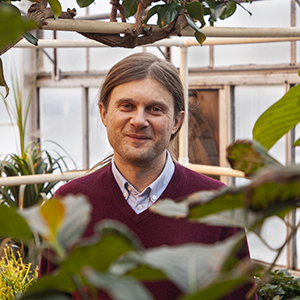
"To form a cell wall, the cell has to recognize that something internal must become external," said Andrei Smertenko, a professor in the Institute of Biological Chemistry in the College of Agricultural, Human and Natural Resource Sciences, and corresponding author of the new paper. "This, in a nutshell, is what we've discovered: the first pathway that allows cells to determine that this intracellular compartment becomes extracellular - part of the cell wall."
The findings, published in the journal Science Advances, also reveal new insights into how plant life evolved and sustained human civilization.
Cell walls are vital to the formation of all plant life on earth. They give cells their shape and structure. They contain all the nutrition in the plant foods we eat, as well as the materials needed to produce biofuels.
Animal cells do not have a wall structure. For plants, Smertenko said, the formation of walls through a cellular structure known as the cell plate is akin to the Big Bang: a burst of creation that produces the structures, conditions and materials for that plant's existence. The cell plate is like a sorting hub, directing materials and processes that produce the wall during the process of cell division.
"If you look out the window, everything that is not man-made that stands out above the ground comes from the cell plate," Smertenko said. "The cell plate is a Big Bang of plant nature, because it allows plants to create all the sophisticated shapes and forms we see around us."
But the early stages of that process are not well-understood. Smertenko's new work sheds light on it by identifying the mechanism by which a cell comes to "perceive" or "understand" that it needs to begin the chain reaction to build the cell wall.
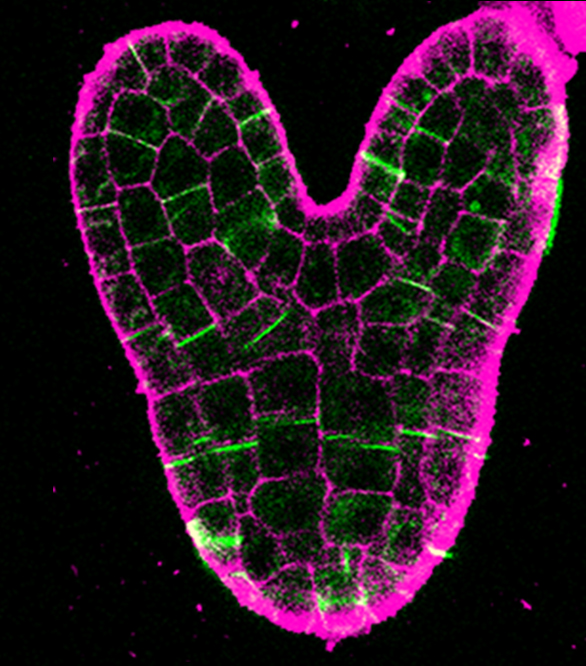
Using a combination of gene editing and live cell imaging, researchers identified a previously uncharacterized signaling module in the cell, comprised of two proteins involved in cell signaling: inflorescence meristem receptor-like kinase 2, IMK2, and IMK3. The IMK2-IMK3 module promotes several functions that lead to the creation of a cell wall.
The receptors are key to the process of cell division as plants grow. When a cell splits into daughter cells, many signals within the cell work together to begin sending proteins and other building blocks in tiny sacs known as vesicles to various spots in the cell plate to drive its development. This includes depositing carbohydrates known as polysaccharides that make the backbone of the cell plate.
The IMK2-IMK3 module is like a communications center for this complex process. Smertenko's discovery lays the groundwork to pursue further research into the signaling process and regulation of cell wall creation.
Co-authors on the publication included Tetyana Smertenko, a postdoctoral research associate; scientific assistant Deirdre Fahy; and research associate Glenn Turner. The work was funded, in part, by the National Science Foundation.
As spring arrives, the results of the cellular processes that Smertenko has been exploring are showing up everywhere you look.
"Right now, we have new leaves emerging from buds. The buds contain all cells necessary to make the leaf, produced through these multiple billions of cell plates synthetized sequentially, even before you notice the bud opening," he said. "From my point of view, it's just a beautiful process: billions of cells behaving in exactly the right way to produce leaves for each plant."


