How do plants achieve their remarkably regular arrangement of leaves and flowers? And why does this pattern remain so stable, even as plants grow and respond to their environment? Researchers at Wageningen University & Research and the Dutch fruit and vegetable breeding company Rijk Zwaan have identified the biological mechanisms that underpin this precision. Central to the process are so-called PLETHORA proteins, which act as key regulators of plant growth.
Phyllotaxis - the arrangement of leaves or flowers along a stem according to a fixed pattern - has long fascinated plant scientists. These patterns often follow striking mathematical rules that minimise overlap between leaves, which is believed to optimize the absorption of sunlight for photosynthesis. While the outward geometry of plant architecture has been carefully described over decades, the mechanisms that generate and stabilise these patterns have remained far harder to unravel.
In experiments using the model plant Arabidopsis thaliana and cucumber, researchers from WUR and Rijk Zwaan demonstrate that genetic regulation, growth rate, hormone dynamics and the plant's physical properties work in concert to maintain stable organ arrangement. Their findings have been published in two separate papers in the leading journal New Phytologist, one of which was featured on the journal's cover.
From observation to mechanism in Arabidopsis
The first study builds on earlier work investigating PLETHORA transcription factors (PLTs), proteins known to play a central role in plant development.
"We originally switched off three PLT proteins to study their role in shoot meristems", explains first and co-corresponding author Merijn Kerstens of the Laboratory of Cell and Developmental Biology. "Unexpectedly, we observed subtle but consistent changes in the spiral arrangement of leaves and flowers in Arabidopsis. At the time, we did not yet understand how these deviations arose."
In the new study, the team examined this phenomenon in detail. Kerstens: "We found that the altered patterns do not primarily result from leaves or flowers being initiated in the wrong position. The shoot apical meristem - the plant's growth centre - initially functions largely normally. However, in the absence of PLT regulation, the inflorescence develops more rapidly and therefore becomes more sensitive to subtle twisting of the stem. Small positional shifts accumulate during growth, ultimately leading to clear deviations in the phyllotactic pattern. These findings suggest that PLT proteins help maintaining robustness in the patterning of leaves and flowers as the plant grows."
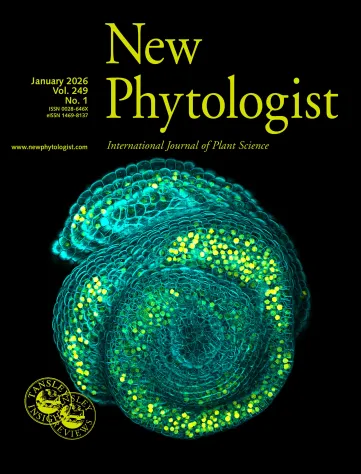
Without PLTs, the growth point in Arabidopsis remains largely normal, but it does become more sensitive to disturbances. The image - which also appeared on the cover of New Phytologist - shows a growth point without PLTs with an additional mutation in the PIN1 protein - a transporter of the plant hormone auxin. This PIN1 mutation has no effect when PLTs are present, but without PLTs, the auxin response becomes disrupted and the plant hardly produces any flowers. This occurs because this hormone no longer accumulates in specific locations, but instead - for instance - forms a spiral pattern, visible as yellow cell nuclei in the growth point when viewed from above.
Confirmation and extension in cucumber
The insights gained from Arabidopsis prompted a second follow-up study, this time in cucumber, an important vegetable crop with a different growth habit. The key question was whether PLT proteins play a similar role there as in Arabidopsis. This appears to be the case, but with clear species-specific differences.

Kerstens: "In cucumber plants carrying mutations in PLT3/7, a normal shoot apical meristem fails to form in the seed and is replaced by a flattened apex," says Kerstens. "Only later in development do new meristems emerge. Mature plants show irregular spacing between leaves, altered stem architecture and shifts in organ arrangement. The typical spiral pattern subtly shifts towards a more opposite arrangement, where pairs of leaves can appear at the same height on the stem."
Fundamental knowledge as a foundation for breeding
According to co-corresponding author Viola Willemsen, professor and chair of the Laboratory of Cell and Developmental Biology, the combined findings show that PLT proteins perform evolutionarily conserved functions across plant species while also acquiring species-specific roles in shaping growth.
"Phyllotaxis depends not only on where new organs are initiated, but also on how quickly a plant grows and how its tissues behave physically," she explains.
Willemsen emphasises that the studies highlight the importance of fundamental research. "In the long term, this knowledge can support plant breeding by clarifying how stable growth patterns are established and how sensitive they are to disturbance. That may help breeders optimise plant architecture not only for performance, but also for robustness under variable conditions. At the same time, we must guard against an overly rapid focus on application. Without a solid understanding of the underlying biology, you simply don't know which levers to pull."