
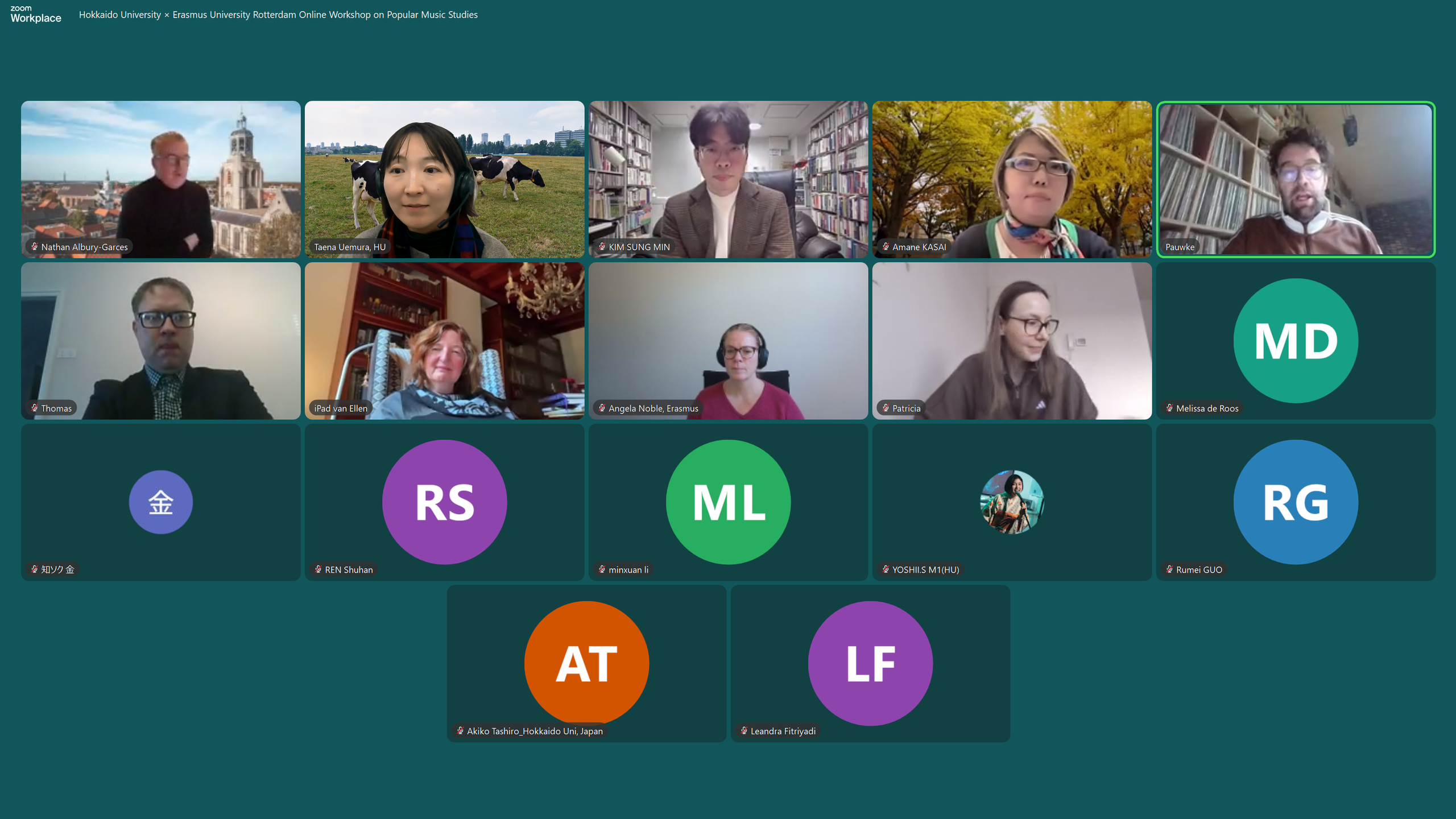
Hokkaido University (HU) and Erasmus University Rotterdam (EUR) jointly held an online workshop on Popular Music Studies, bringing together researchers from both universities to exchange perspectives on music, society and culture and to explore opportunities for future collaboration. The workshop opened with remarks highlighting the importance of popular music as a lens through which cultural, social and technological change can be understood. Representatives of both universities also welcomed the workshop as another step forward in the rapidly developing relationship between HU and EUR.
Presentations covered a wide range of topics, including the sociology of popular music, the mental health and well-being of musicians, Korean popular music and cultural identity, and the relationship between music, human mobility and place.
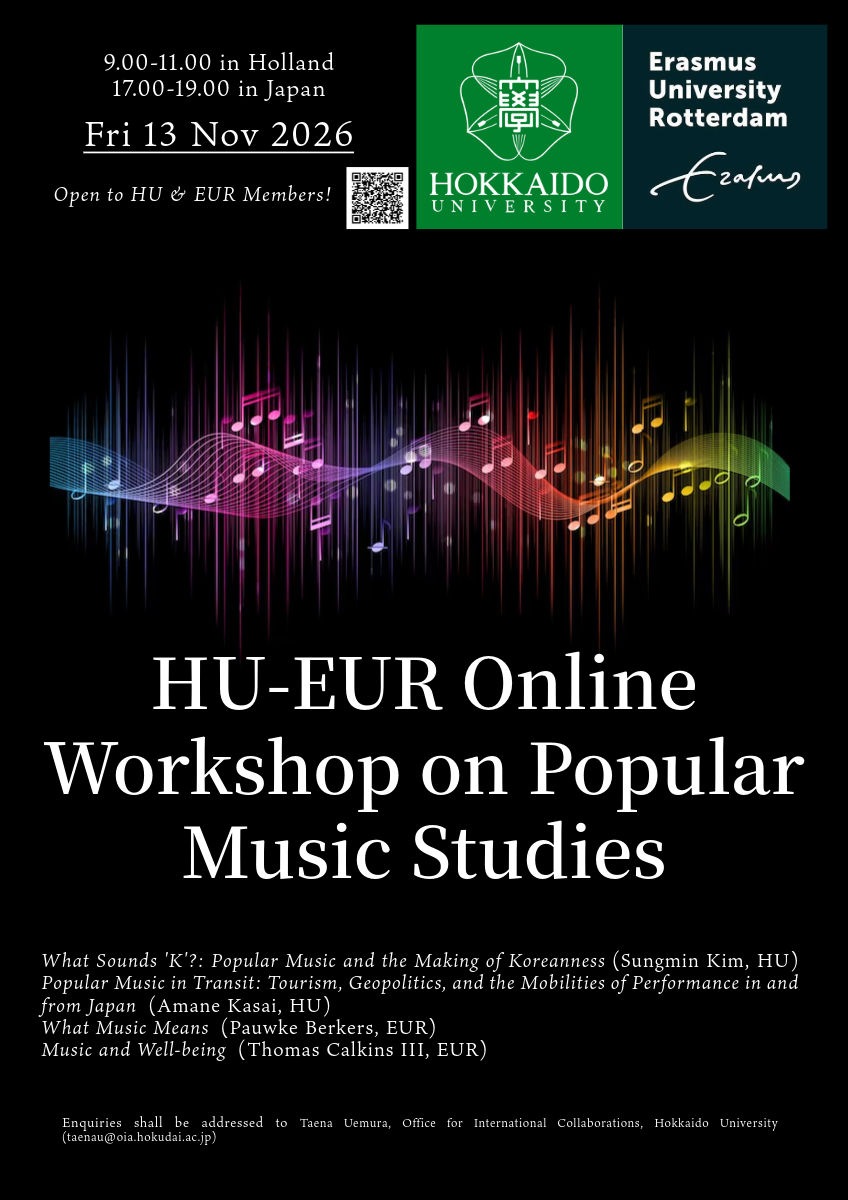
Professor Pouwke Berkers and Assistant Professor Thomas Calkins from EUR introduced sociological approaches to popular music and discussed research into the mental health of musicians in the Dutch popular music sector. Popular music, Professor Berkers explained, is deeply embedded in everyday life and intersects with topics such as social inequality, cohesion, identity and economic activity. His presentation also introduced the work of the research centre Rotterdam Popular Music Studies (RPMS), including research on inclusion and equity, music and well-being, artificial intelligence, music education and cultural heritage. Assistant Professor Calkins' research suggests that everyday stressors from working in the popular music sector negatively impact the mental health of musicians, even when controlling for demographic and career differences.
From HU, Professor Sungmin Kim examined the historical relationship between popular music and collective identity in South Korea, with particular emphasis on its complex and changing musical relationship with Japan and how it has shaped the meaning of "Koreanness" in K-pop.
Another presenter from HU, Associate Professor Amane Kasai, explored musical practices in and from Japan through mobility, from popular songs and performing arts across transwar East Asia to Ainu music as 'world music' and hot spring entertainment, arguing that movement affects what is performed and how it is heard.

Artificial intelligence also emerged as an important common interest. Participants discussed its growing use in the music industry, its implications for musicians and artistic practice, and the potential for further research in this rapidly developing field. The workshop concluded with a lively exchange on possible areas for future collaboration, including AI and music, musicians' well-being, cultural mobility and identity. Both universities expressed their interest in continuing the dialogue and exploring new opportunities for joint research.
(Photos and text provided by the Office for International Collaborations)


