
Key Points
A new compound has showed strong anti-viral activity against HIV, including some drug-resistant variants
The HIV virus that causes AIDS remains a major global health challenge
The team used MX2 beamline to determine how the compound IC-2i bound to the HIV protein shell
A large international team has developed a new compound that showed strong anti-viral activity against HIV, including some drug-resistant variants.
Despite major advances in HIV treatment, lifelong therapy is still required because the virus cannot be completely eradicated, creating a need for safer and more effective drugs that can overcome drug resistance.
In research reported in the journal MedComm earlier this year, investigators combined and refined useful parts of previously studied HIV inhibitors too create smaller, more stable compounds that bind an additional, less mutation-prone region of the HIV capsid, or protein shell.
The HIV-1 capsid (CA) has been validated as an antiviral target that plays critical roles in both the early and late stages of the viral life cycle.
To understand why the new compound IC-2i was effective, they used the Microfocus crystallography (MX2) beamline at the Australian Synchrotron. MX2 can reveal the structure of biological molecules at atomic resolution.
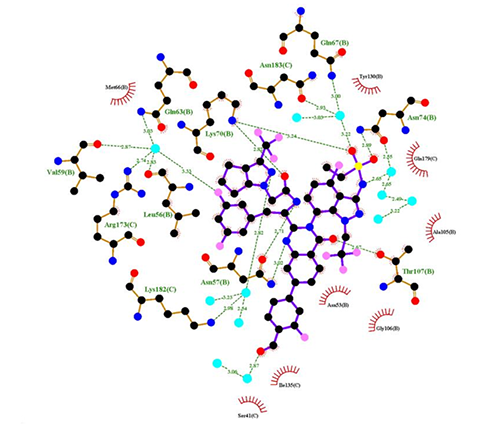
Using MX2, the team determined how IC-2i bound to the HIV capsid. The data revealed the interactions that help the drug bind to its target and provided insights into how future HIV medicines could be designed to address resistance.
Previous compounds had problems, such as toxicity, poor stability, low solubility and drug resistance.
"MX has proven very useful in the study of infectious diseases including HIV, because it helps investigators detangle the complex interactions in the molecule that contribute to infectivity and drug resistance. We have had many research groups use or beamlines for HIV research, " said Dr Rachel Williamson, Beamline Group Manager, Crystallography.
According to the World Health Organisation, HIV-1, the virus that causes AIDS, remains a major global health challenge. It attacks key immune cells, weakening the body's ability to fight infections and some cancers. By the end of 2022, around 39 million people were living with HIV worldwide, with 1.3 million new infections and 630,000 deaths reported that year.
Although modern combination antiretroviral therapy can control HIV very effectively, it cannot eliminate the virus completely because HIV can hide in long-lived reservoirs within the body. Because of this, people living with HIV must take treatment for life.
Long-term treatment can lead to the development of drug-resistant HIV strains and side effects that can affect patients' health and quality of life.


