
In the morning light, before they even set a spade to the Earth, the archaeologists gathered on what was once a fortified hilltop. Below, Peru's Colca Valley - twice as deep as the Grand Canyon - unrolled in a breathtaking vista. A distant volcano breathed forth the occasional puff of pale smoke.
The researchers awaited the arrival of a shaman and residents of the nearby town of Achoma. Together, they sat in a ring around a curved stone as the pago - the "payment" - began, asking permission from the goddess Pachamama to dig in the sacred Earth.
Handed small balls of alpaca fat, the researchers - Binghamton University Associate Professor of Anthropology BrieAnna Langlie and her team of students - added coca leaves. The shaman laid the offerings on a cloth woven of alpaca wool, adding local plants and a sprinkle of minerals on top before placing the entire bundle into the fire.
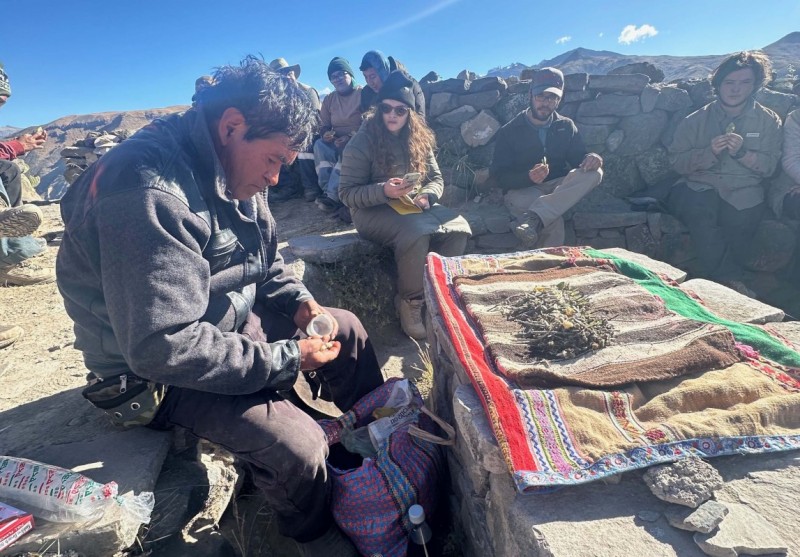
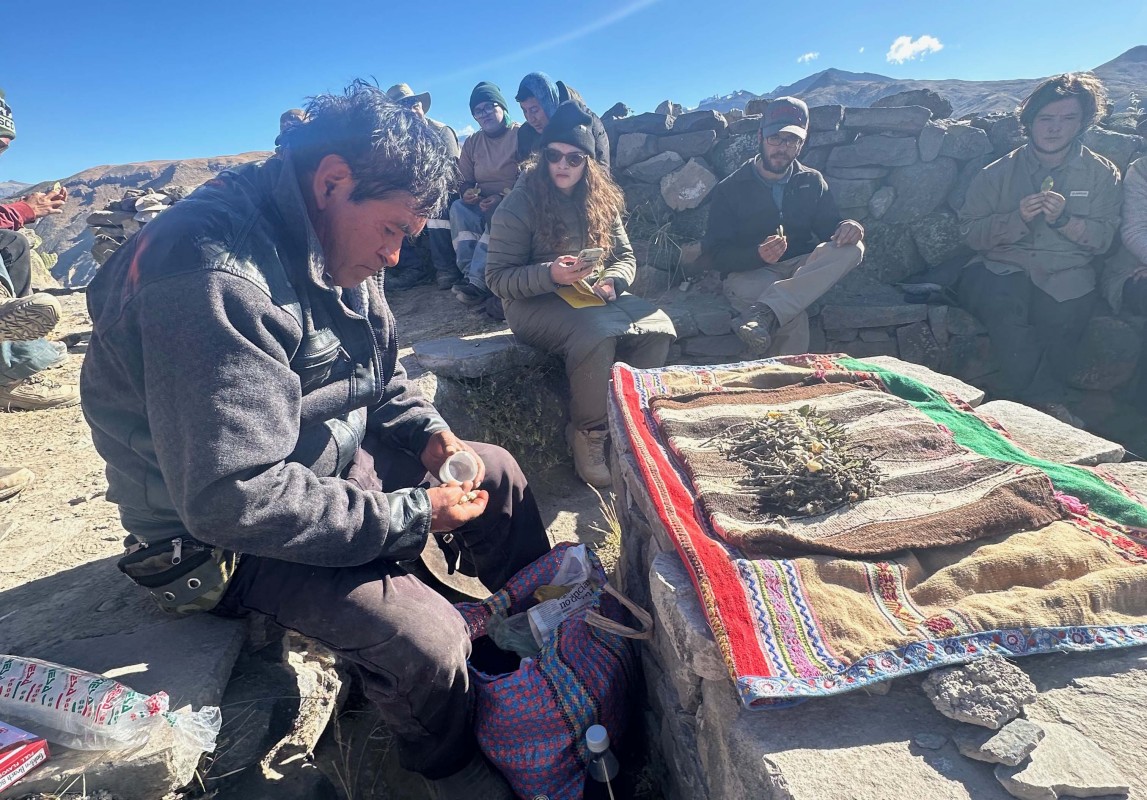
A spark of the sacred flame lit an incense burner. Participants took turns blowing smoke to the local apus, or mountains, and voiced their vision for the upcoming field season.
"It was a very communal experience. The whole point was that everyone participated; you weren't just watching," remembered anthropology major Sara Boudreaux. "Everyone is part of the ceremony. It was a very respectful way to start an excavation season."
Known as Proyecto Alpaca, the National Science Foundation-funded project in the Peruvian valley is now in its second year; Langlie is one of the principal investigators. In June and July, 30 people from five universities came to Achoma to excavate a 1,000-year-old hillfort, half of them professional archaeologists from Peru and the other half from the U.S.
The team included doctoral students Bailey Raab and Arianna Cozzarelli '24 and master's in public archaeology students Gabriel Lindsay and Emma Angell, all of whom received the Isbell/Siggins Andean Archaeology Student Research Grant, established in honor of Distinguished Professor Emeritus William H. Isbell by Judy Siggins and other private donors. Also among them were Boudreaux, who received a Provost Award to fund her very first excavation, and Julio Ruiz Diaz, MA '24, an alumnus from the master's in public archaeology program and now a Cornell University doctoral student.
In 2024, Langlie and other researchers involved in Proyecto Alpaca spent a field season surveying agricultural terraces across the valley, mapping irrigation networks and working with the local population to learn what research questions they have about their agricultural and archaeological landscape. In 2025, they spent 11 weeks excavating one of the largest hillforts in the central Colca Valley - along with archaeological conservation work, installing weather stations and participating in cultural activities, including community parades and the shamanic ceremony.
"It was an immersion program for all involved," Langlie said.
A glimpse into the past
At 11,000 feet above sea level, Achoma is twice as high as Colorado's Mile High City, Denver. On a clear day, you can see for 100 miles in either direction - which was most days during the Peruvian winter. Temperatures reached a high of around 70 degrees, dipping below freezing during the chilly nights.
"Every day, we would have these breathtaking views, and we would sometimes see the storms roll in," Langlie said.
The hilltop site contains large houses, ceremonial centers and civic spaces, surrounded by a rock wall 2 to 3 meters tall. It dates to Peru's Late Intermediate Period, which spans from 1100 to around 1450 CE.
Originally, researchers believed that excavations would be shallow and that the structures they saw were only half a meter deep. Instead, the stone walls turned out to be around 3 meters tall; the archaeologists needed ladders to access the square holes they dug.
Most of the excavation units took place in the ruins of houses or the courtyards in between, Lindsay explained. Researchers would mark off a square and then begin excavating layer by layer, gingerly working their way around the blocks of rhyolitic stone that composed the collapsed houses.
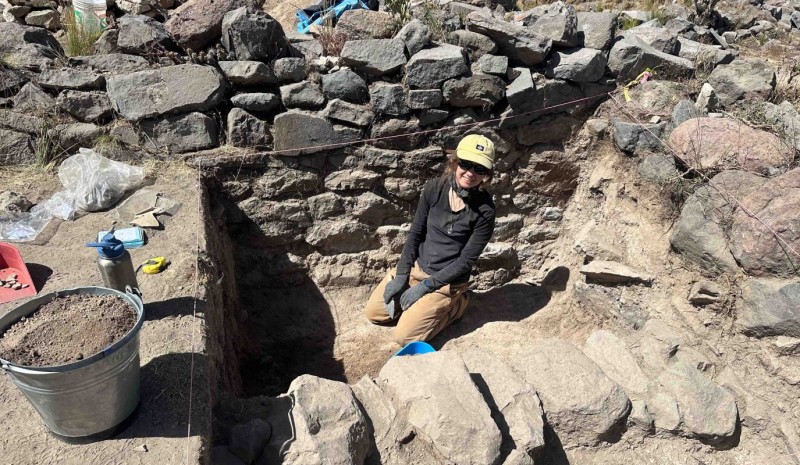
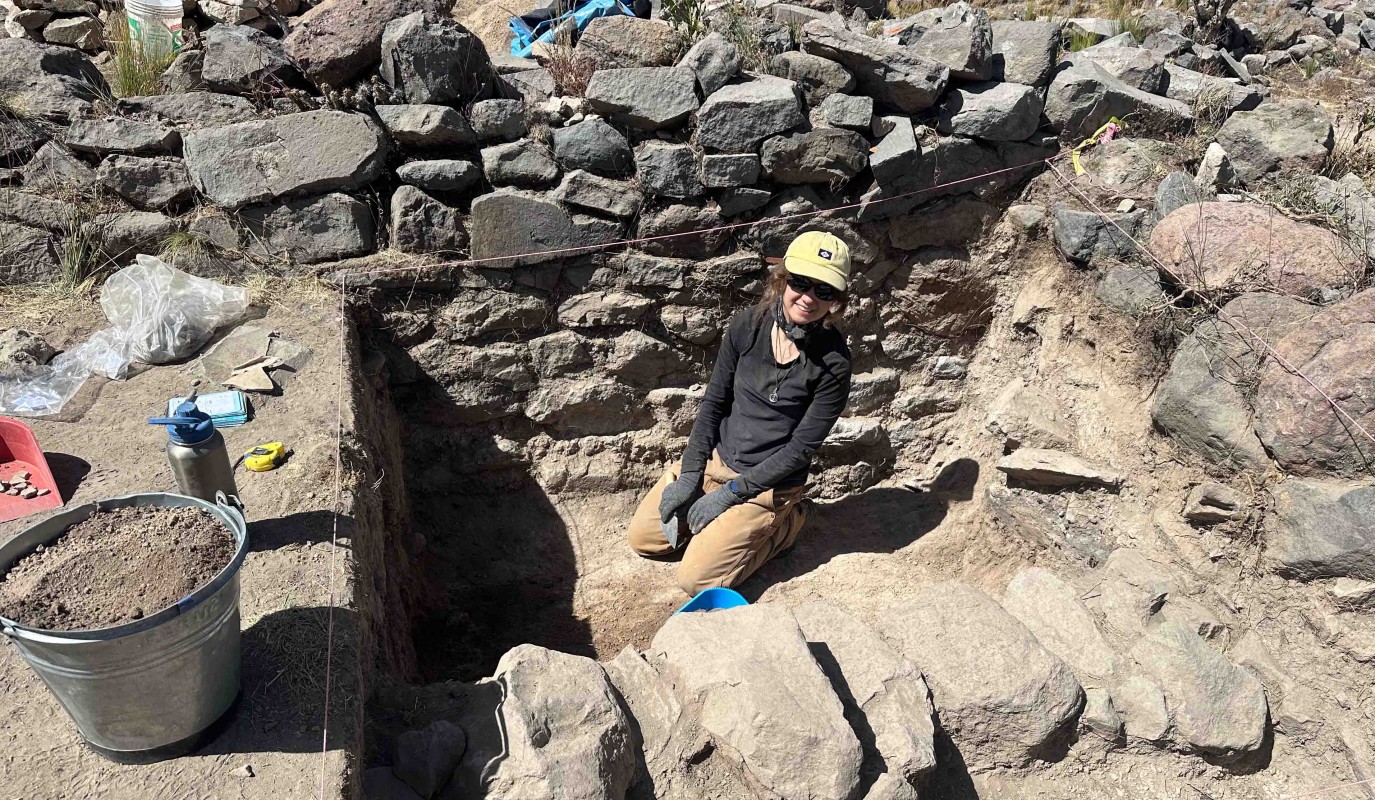
The diverse international team included an array of specialists: a bioarchaeologist that specializes in human remains, a geospatial archaeologist that handled all the site mapping and related equipment, zooarchaeologist who studies animal bones, a lithicist specializing in stone tools, and Langlie, a paleoethnobotanist whose research centers on plant remains. The Binghamton graduate students were unit leads and led excavation teams, which consisted of undergraduates and local residents.
At the apex of the site, researchers found more than 200 painted stones - small, flat slabs with simple decorations that may have been left as offerings. They also excavated three huatias, or earthen ovens, full of maize and animal bones. The ingredients are virtually the same as those used by the locals today, and earthen ovens are still made using the same technique. Excavations also unearthed weaving instruments similar to those currently in use.
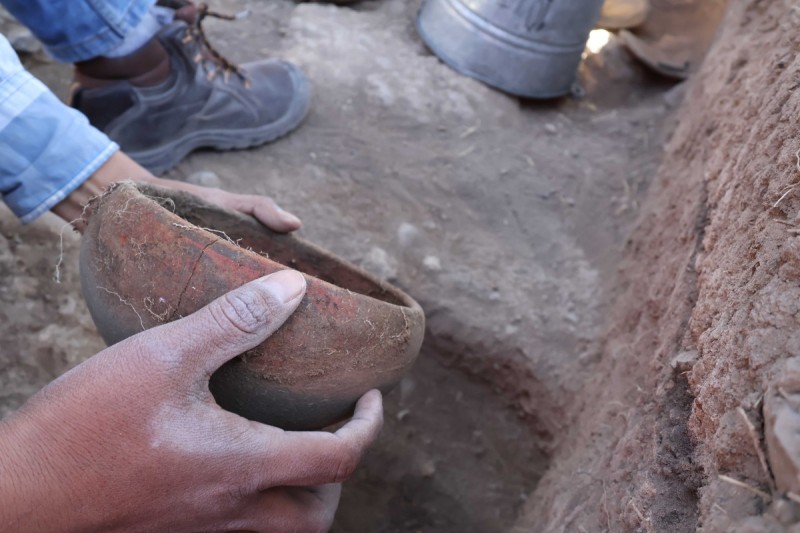
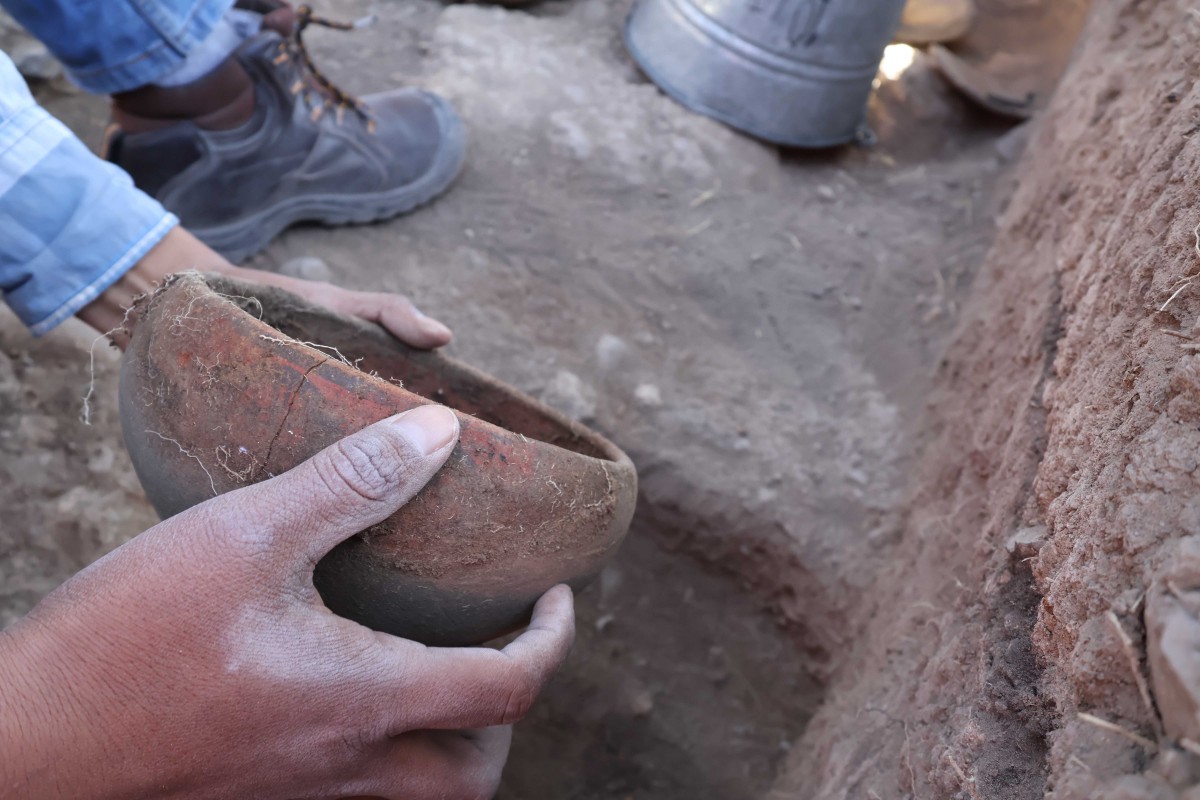
In Raab's unit, researchers discovered a burned corncob, the eighth of a size of a modern cob - the remnants of someone's long-ago dinner. Angell's excavation site unearthed someone's kitchen: a ceramic hearth around 4 feet wide, edged with clay. It contained beautiful pots, including one shaped like a duck and a complete ceramic bowl, unshattered despite the passage of time.
Indigenous partnership
Partnership with the local community is an essential ingredient for Proyecto Alpaca. Indigenous identity and pride are at the heart of Peruvian culture and, to a certain extent, the country's economy; sites such as Machu Picchu draw tourists from around the world. The people of Achoma also offered valuable insights into research findings, since some of their cultural practices and foodways are similar today.
"Obviously, they have indoor kitchens just like we have, running water and solar power. We weren't roughing it with our high-speed internet, but the traditions are still alive," Langlie said. "We very much enmesh ourselves in the community."
The artifacts and remains legally belong to Peru's Ministry of Culture. Laws governing excavations are strict in the country; licensed Peruvian archaeologists are on the excavation team staff, and Ministry officials came out to supervise.
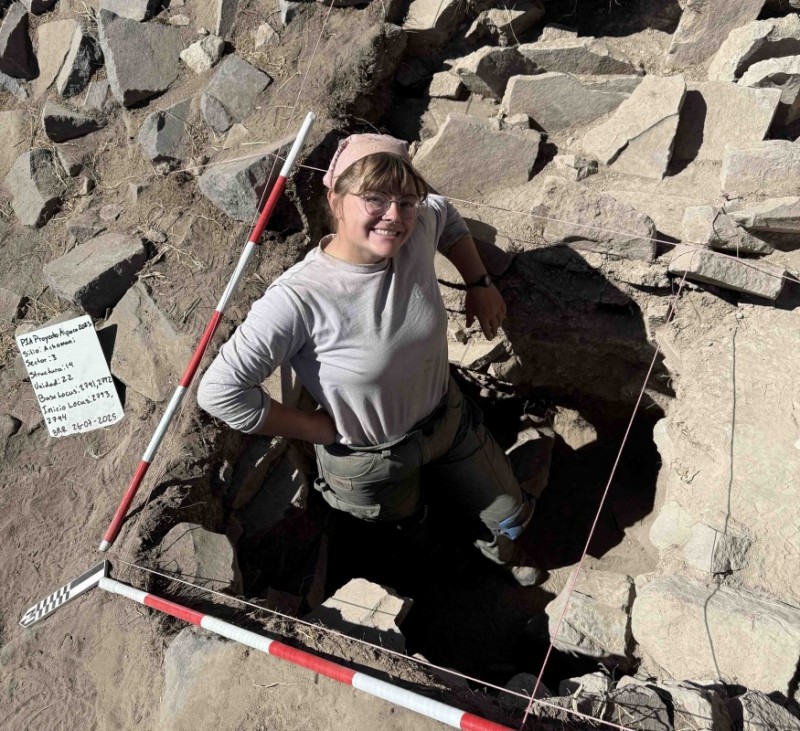
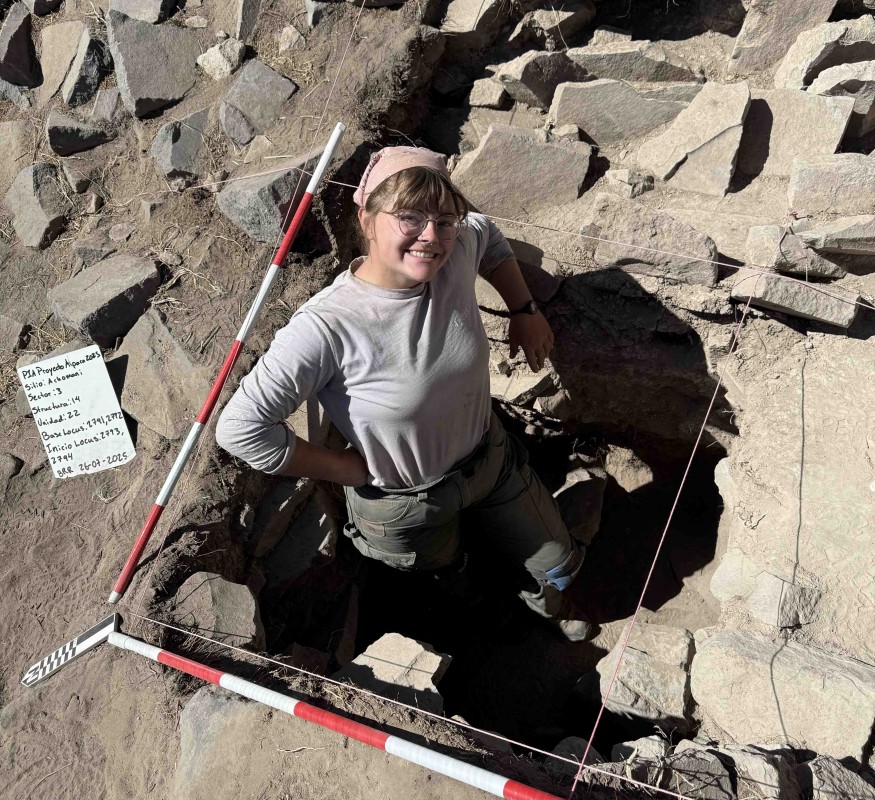
During town meetings, the researchers presented their findings to the local community; all the artifacts are stored in the municipal building outside of the mayor's office, which is a bit like having a lab set up in Binghamton City Hall. Local officials and community members also frequently visited the excavation site and formed part of the project's staff. Langlie and her colleagues also gave lectures sponsored by the regional governor's office in the second largest city in Peru, Arequipa.
"They're interested in increasing tourism at the site and in order to increase tourism, they need to know more about it," Langlie said.
Team members also had the chance to engage in tourism themselves. It was Boudreaux's first time leaving the country, and she made the most of it, visiting famous sites and museums, and even doing a horseback riding tour. Also joining the team for a visit were alumnae Lisa Gallagher '89, MBA '92, Watson College's senior assistant dean for finance and human resources, and Michelle Gardner, MS '19, senior supervising director of Foundation Relations with the Division of Advancement.
In accordance with safety rules, all the dirt they removed from the excavation site was backfilled at the end of the excavation season. Once future excavations wrap up, the site may someday be eligible for a conservation project that would expose the buildings there and make them safe for visitors, similar to what's been done with Machu Picchu, Langlie said.
In the meantime, plans are in the works for next year's field season, when researchers will analyze the ceramics they unearthed - now safely stowed away in the mayor's office.
"This year, we were going for breadth and trying to understand the whole site," Langlie said. "The next time we excavate, we're going for depth to understand these significant areas of the site - uncovering a whole house rather than just one corner."


