
Around 200 RMIT staff, students and partners came together in person and online on Thursday 28 May for a National Reconciliation Week event exploring what reconciliation looks like in practice.
Around 200 RMIT staff, students and partners came together in person and online on Thursday 28 May for a National Reconciliation Week event exploring what reconciliation looks like in practice.
Centred on the 2026 national theme All In, the event explored how reconciliation is built through long-term relationships, responsibility to Country, and practical decisions that create change.
Building long-term pathways for young people
The event highlighted RMIT's long-running relationship with Ganbina, an Aboriginal-led organisation based in Shepparton.
Ganbina works alongside young people and families over many years, supporting children from school through to further study, work and careers.
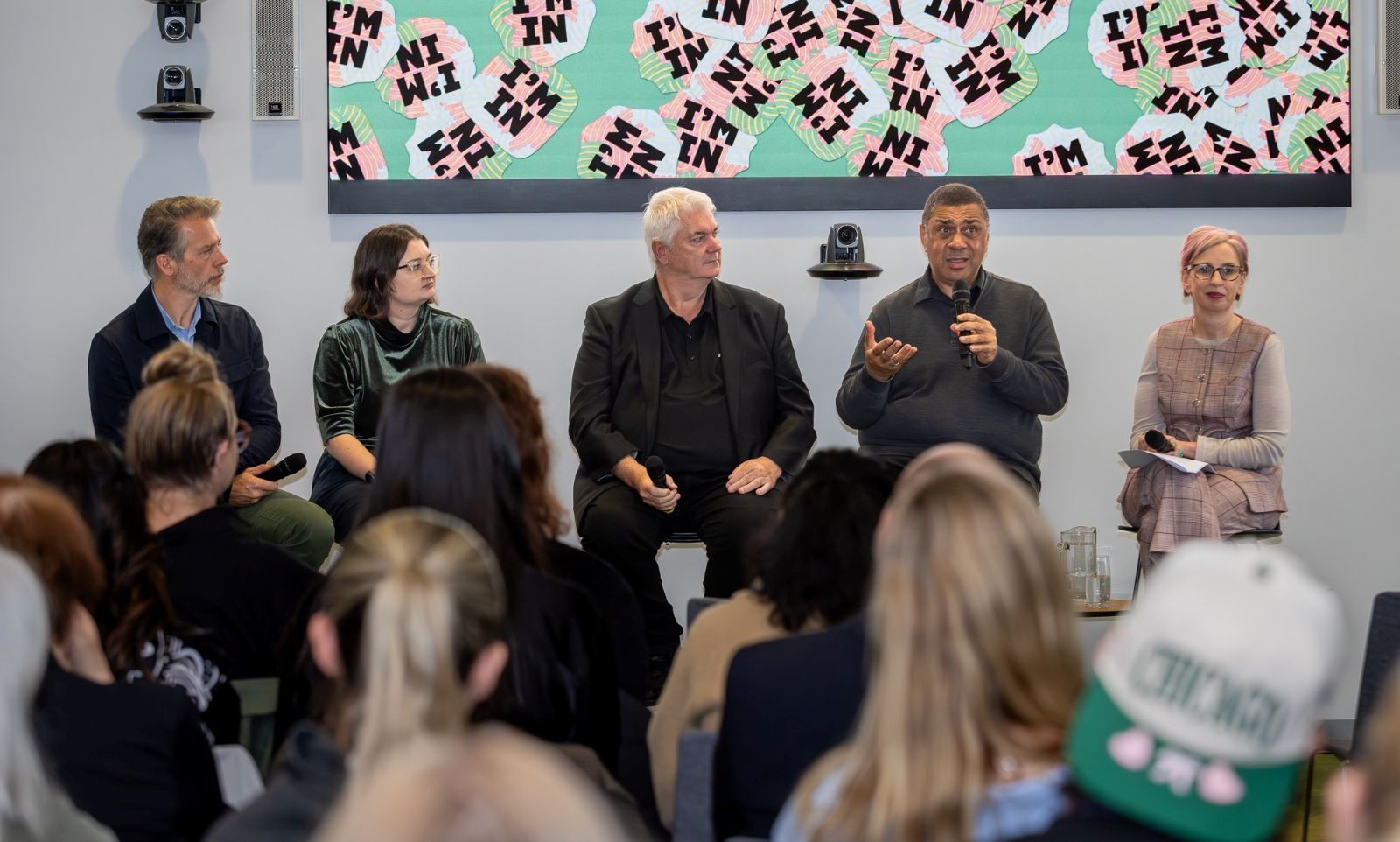
Ganbina CEO and Taungurung man Anthony Cavanagh said the partnership with RMIT's Ngarara Willim Centre helps create a continuum of support for young Aboriginal and Torres Strait Islander people.
He said young Aboriginal and Torres Strait Islander people are encouraged to consider tertiary education, and are supported to feel connected and succeed when they take that next step.
"Reconciliation is not only about awareness, it's about action. It's about leadership," he said. "The time for action is always now."
Embedding responsibility to Country in place
Speakers also explored RMIT's new Living Places Plan.
The plan will guide how the University shapes, designs, builds and operates its physical environments.
Sarah Lynn Rees, Associate Principal at Jackson Clements Burrows Architects and a Palawa woman, worked with RMIT on the First Nations Framework that forms part of the Living Places Plan.
She said Indigenising the built environment starts with recognising that every project in Australia takes place on or within someone's Country.
Architecture and planning have often been destructive to Country, including through processes of erasure, Sarah said.
"But we don't have to do it that way," she said.
"For me, it comes down to asking: what does it look like to maintain, to repair and to celebrate?" she said. "We should not get the honour of celebrating unless we do the work to repair."
Responsible Practice in action
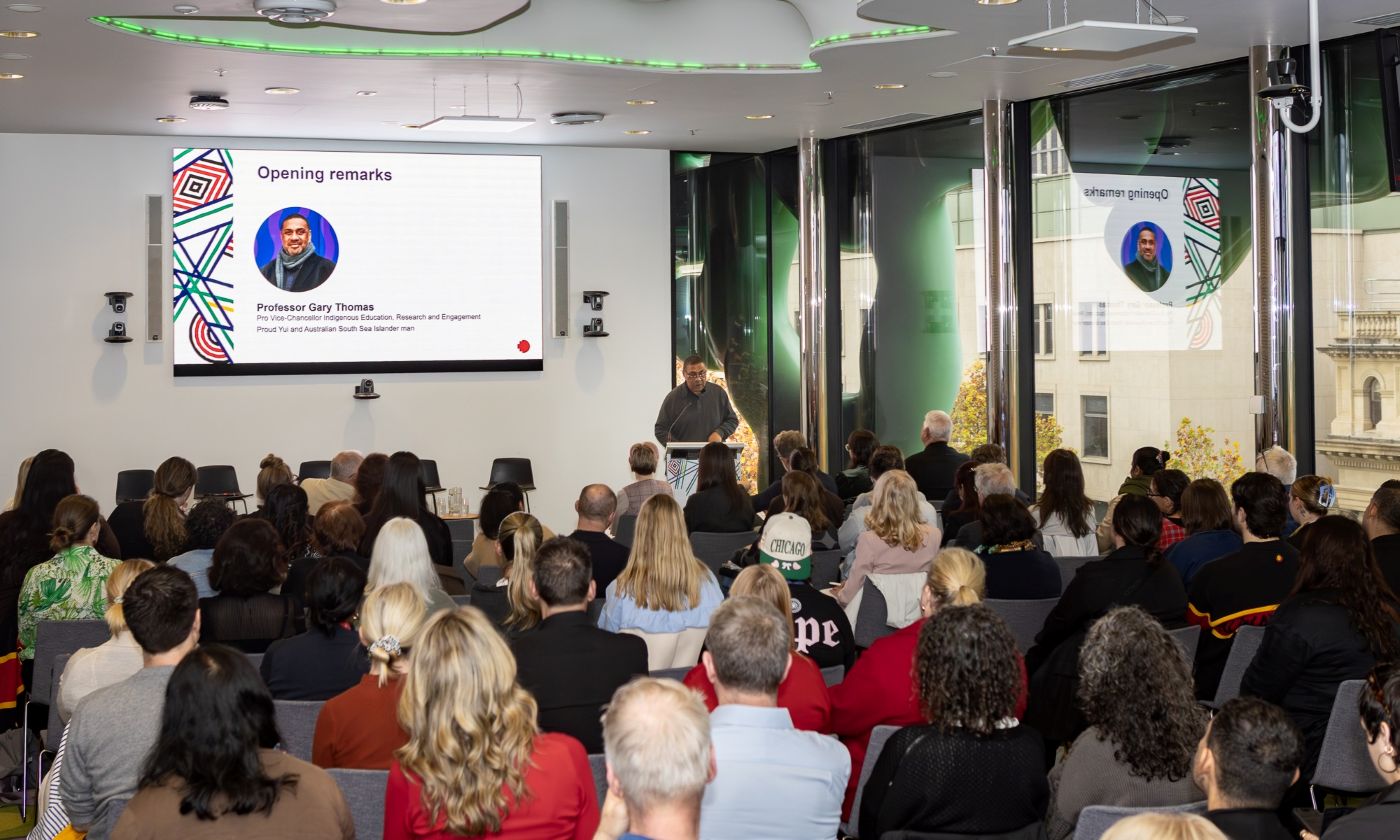
RMIT Pro Vice-Chancellor Indigenous Education, Research and Engagement Professor Gary Thomas reflected on the complexity of National Reconciliation Week.
Professor Thomas, a Yui and Australian South Sea Islander man, said the week could bring mixed feelings, from frustration about what had not changed to recognition of the meaningful work happening across organisations and communities.
He said the 2026 theme, All In, was about the investment people and institutions make in reconciliation.
"It really is about the investment that we make, and that investment shows up in time and energy," he said.
"It's about power sharing, but it's also power disruption. It's the emotional weight that we carry through our learning opportunities. It's about the discovery and recovery and visibility that we promote through truth-telling." For RMIT, he said, this meant enacting commitments made through its Knowledge with Action strategy and following through on the University's enabling plans and frameworks.
Across the event, speakers returned to a shared message: reconciliation is not a single moment in the calendar. It is built through relationships, commitment and the willingness to keep showing up.


