
Transtibial prostheses components are the focus of consensus work aimed at safely expanding the field
CU Anschutz is a leader in the field of osseointegration, a reconstructive surgery for patients where a prosthetic implant is connected directly into the bone. The field has advanced significantly in recent years, with research showing potentially numerous benefits for patients over traditional socket prostheses.
"We're also seeing more and more literature showing the benefits of osseointegration devices for folks who are having challenges with a traditional prosthetic socket," said Eric Earley, PhD, an assistant research professor of orthopedics at the CU Anschutz School of Medicine.
With research and care advancing quickly, how do you build a common set of guidelines amidst all this change to give patients the best possible outcomes, especially when a prosthetic device is individualized to each patient?
It starts with a team approach - building a consensus with experts in the field from around the globe.
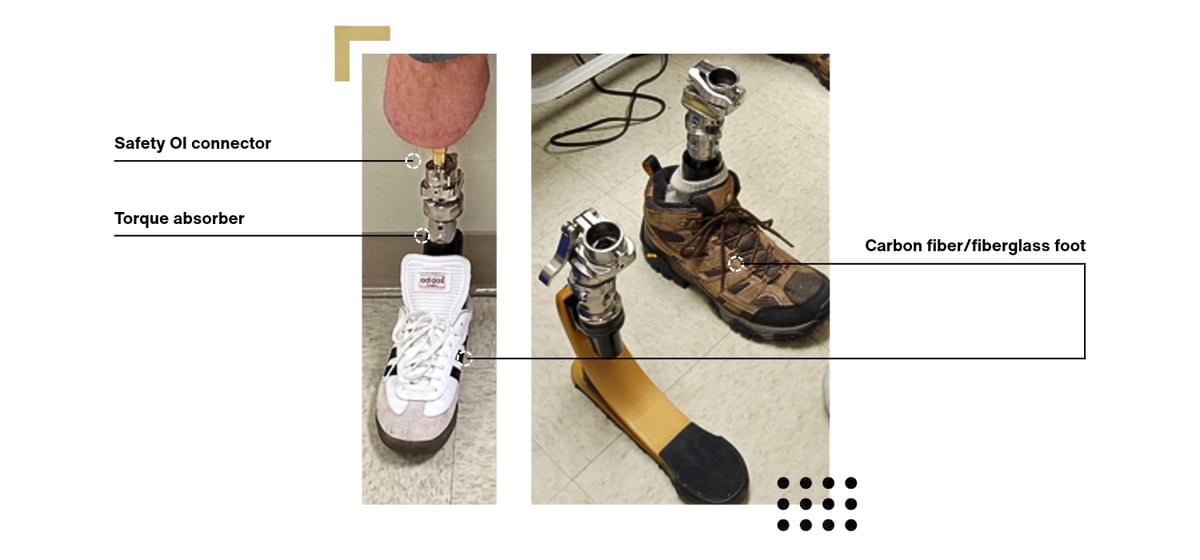
"Osseointegration is still in its nascency," said Earley. "At CU Anschutz, we've published several studies and reviews that have worked to identify the current consensus and recommendations for prosthetic prescription."
The goal now is to begin the process of formalizing best practices into clinical guidelines. Currently, prosthetists are sharing information in the field, but specifics about bone-anchored limbs or osseointegration is not a major part of prosthetic training.
In the following Q&A, Earley describes the important parts that make a prosthetic, why everyday activity and safety should always lead for patients, and insights from a recent CU Anschutz published Delphi Consensus study on transtibial bone-anchored limbs.


