
Plant scientists from the University of Nottingham are part of a team of researchers awarded £4.5m to futureproof crops against climate change and crop production shortages.
Durham University, UK, will lead the research into how plants adapt to their environments along with the University of Nottingham and Cambridge and Liverpool Universities.
As an immobile organism, plant survival relies on its ability to adapt to the environment. Plant adaptation to stresses like heat, high salinity and lack of water is partly dependent on a quick and reversible process that modifies proteins called SUMO (small ubiquitin-like modifier).
Durham and Nottingham researchers have shown that manipulating SUMO modification of certain proteins can help the plant to survive and flourish in harsh environments.
The funding, awarded by the Biotechnology and Biological Sciences Research Council (BBSRC), will help researchers further understand what triggers SUMO modification and how this activity helps plants to adapt to environmental stresses.
Project lead Professor Ari Sadanandom from Durham University's Department of Biosciences, said: "Understanding how protein modification control adaptive responses in plants will have huge implications for agriculture, as this knowledge will be crucial for generating stress resistant crops".
"BBSRC funding will help us learn more about SUMO modifications and determine how it programs processes that enable plants to adapt their growth based on their environment.
"We want to understand how SUMO converts environmental signals into a physiological response in plants.
"By understanding the 'SUMO code', we hope to help researchers and breeders to edit and rewrite the code to develop crops that are futureproofed against changes in climate to protect crop productivity."
The Nottingham team is composed of senior and early career Future Food Beacon of Excellence researchers including Professor's David E Salt and Malcolm Bennett and Dr Rahul Bhosale, Leah Band and Tony Bishopp.
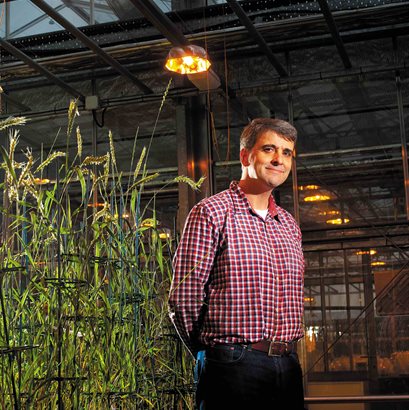
SUMO is a vital regulator used by plant (and also animal) cells to respond to environmental stresses. The Nottingham team will help create a SUMO Cell Atlas using their expertise to image components of the SUMO machinery and their target protein's within plant cells exposed to environmental stresses. We will also characterise what happens to crop plants after their SUMO machinery or targets are modified. Our roles exploit the world-class research infrastructure at Nottingham which includes advanced laser and X-ray imaging facilities, and our high throughput ionomics facility Ultimately, the knowledge generated from our studies will help engineer future crop varieties better equipped to respond to challenges arising from climate change.
The research brings together research expertise from across the four universities, including bioimaging, protein biochemistry, and computational biology. The team has been working together for a number of years following original discoveries in Durham about SUMO based protein modification system in plants.


