
Review of the global literature suggests Kawasaki disease may be linked to outdoor environmental exposures, with the most consistent signals for long-term or prenatal particulate matter and airborne biological agents, and mixed findings for meteorology and short-term air pollution that likely reflect differences in study methods and local contexts.
The study was led by Associate Professor Lina Madaniyazi (Graduate School of Tropical Medicine and Global Health, Nagasaki University) with collaborators from the University of Tokyo, the National Institute for Environmental Studies, Jichi Medical University, Hokkaido University, and partner institutions in South Korea and Taiwan.
Background
Kawasaki disease is an acute pediatric vasculitis with an unclear etiology, although environmental triggers have been proposed. Kawasaki disease incidence is highest in East Asia-particularly in Japan, South Korea, and Taiwan-where most research has been concentrated. This scoping review examined epidemiological evidence on outdoor environmental stressors and Kawasaki disease incidence, with the aim of summarizing existing findings and identifying opportunities for future research and policy development to better understand potential environmental contributions to Kawasaki disease.
Key findings (Figure 1)
A systematic literature search through December 2024 identified 32 eligible studies.
- Most-studied exposures: Meteorological variables and air pollutants were the most frequently investigated outdoor environmental exposures.
- Meteorological evidence is mixed: Approximately half of the studies on meteorological variables reported associations with Kawasaki disease, with some suggesting the role of temperature or wind-driven transport of airborne agents.
- Air pollution differs by exposure window: Findings for short-term air pollution exposure were inconsistent. In contrast, studies more consistently reported that Kawasaki disease incidence was higher where long-term or prenatal particulate matter exposure was higher.
- Airborne biological agents: Although relatively few in number, studies of bioaerosols, pollen, and dust-associated microorganisms more consistently reported that Kawasaki disease incidence was higher when these airborne exposures were higher.
Why results differ across studies
Despite a growing number of studies, results are not always consistent. Differences likely reflect variation in study methods and local contexts, including how exposures were measured (e.g., daily vs. monthly values; average vs. minimum/maximum), the statistical approaches used, which other factors were adjusted for, the spatial and temporal resolution of the data, and differences across locations in climate and population characteristics.
Next steps
The review supports an increasingly multifactorial view of Kawasaki disease etiology but cautions that heterogeneity in methods limits comparability across studies. The authors call for standardized, multinational research with harmonized exposure metrics and outcome definitions, and for integrated approaches that can test gene-environment interactions and investigate potential long-range atmospheric transport of airborne agents.
Publication information
Journal: The Lancet Regional Health - Western Pacific
Title: Kawasaki disease and outdoor environmental stressors: a scoping review
Authors: Lina Madaniyazi, Jefferson Alpizar, Chau-Ren Jung, Whanhee Lee, Xerxes Seposo, Ryusuke Ae, Eun-Hee Ha, Ho Kim, Masahiro Hashizume, Shoji F. Nakayama, Aurelio Tobias.
Published: January 7, 2026
DOI: 10.1016/j.lanwpc.2025.101791
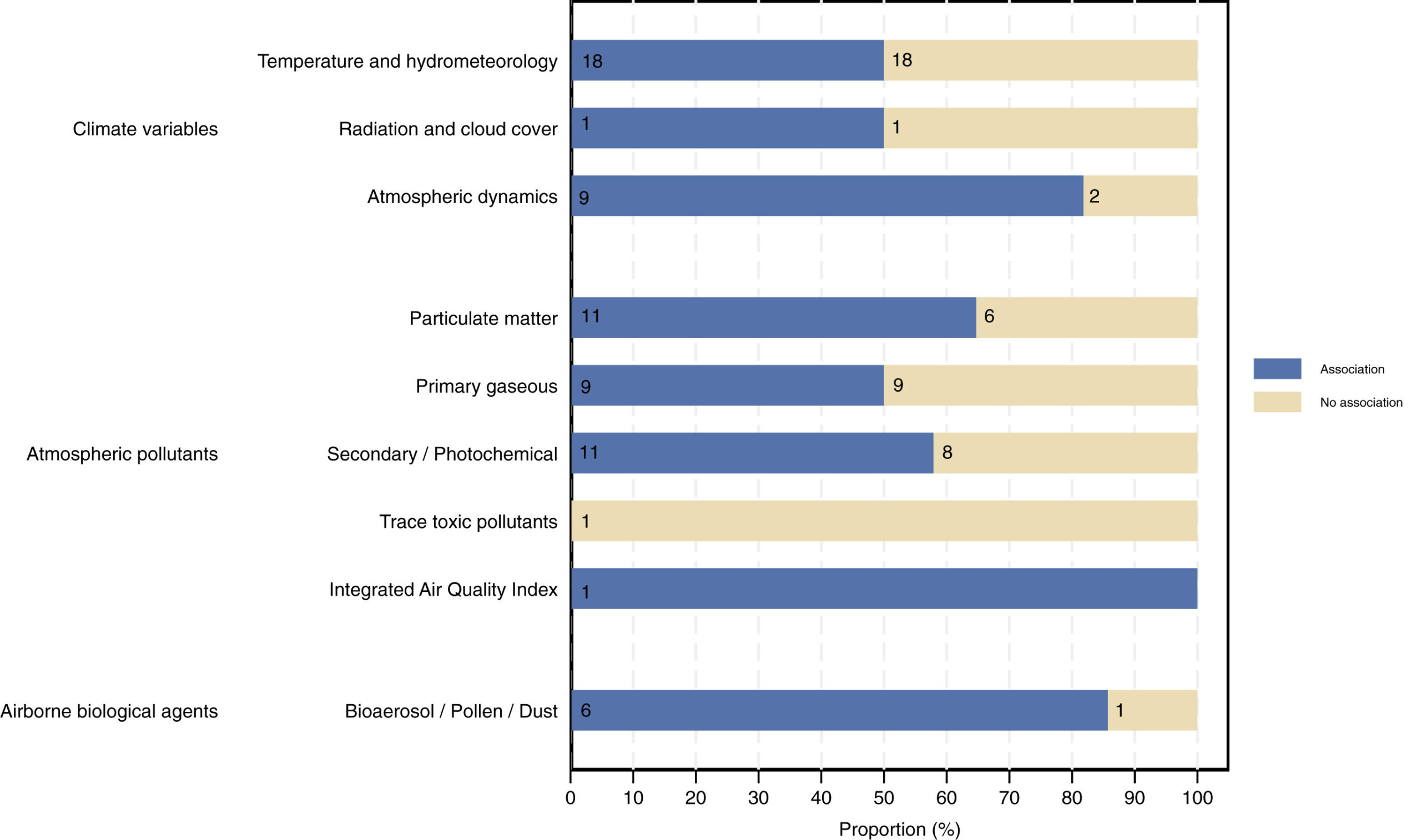
Figure 1. Evidence map of the environmental stressors associated with Kawasaki disease.
Numbers within the bars represent the number of studies identified in each exposure group.


