
The environmental legacy of a uranium-copper mine continues to impact the ecosystem of a major Top End river system more than 50 years since the site was closed, a first-of-its-kind study led by Charles Darwin University (CDU) has found.
Located at the headwaters of the Finniss River, Rum Jungle Mine was Australia's first large-scale uranium mine and supplied materials for the US and British nuclear programs until the site closed in 1971.
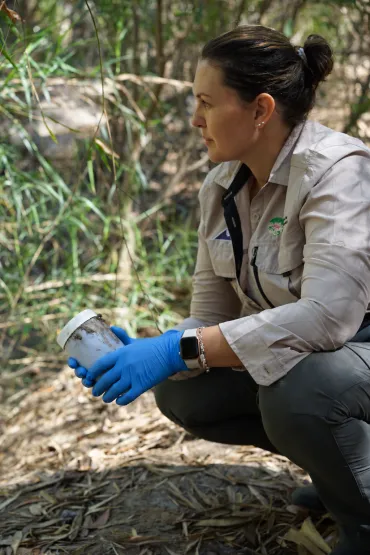
While the Finniss River's water quality and aquatic organisms have been extensively monitored since the mine's closure, CDU PhD student Isabel Ely has become the first to examine metal accumulation across a complex river food web.
The study determined the mine's legacy by measuring copper, manganese, zinc, arsenic, lead, and cadmium across a range of organisms occupying different positions in the river's food web.
Ms Ely found organisms such as algae and freshwater mussels generally held the highest concentrations of metals, while fish contained comparatively low concentrations of arsenic, lead and cadmium.
"It is like tracking the metals' pathways to find where these elements were transferred, from the base of the food web to top predators, such as barramundi," Ms Ely said.
The study found that filamentous algae, Spirogyra, and detritus (decaying organic material) had particularly high metal concentrations, even though they had not previously been included in monitoring of the Finniss River.
Ms Ely said these findings mean that the algae, which is commonly found in the Territory's freshwater systems, and detritus could be useful indicators of contamination.
"This is important because algae and detritus help support the river's food web, providing food for a range of organisms," she said.
"Finding elevated metal concentrations there shows that contamination remains present at the very foundation of that food web, serving as a reservoir. Animals such as freshwater mussels and prawns are the first receptors of contamination and exhibit higher concentrations than predatory fish - a pattern known as trophic dilution.
Monitoring a broader range of food web components, particularly Spirogyra and detritus, could help track whether metal exposure declines as rehabilitation progresses.
Ms Ely said further research should explore the impacts of metal accumulation on organisms' health, growth, and reproduction.
"Measuring accumulation tells us that exposure is occurring; understanding its biological consequences is the next step," she said.
Legacy of the Rum Jungle Mine: Bioaccumulation of metals and metalloids in the Finniss River food web was published in the Journal of Hazardous Materials Advances.


