
A groundbreaking study from an international team of experts in veterinary medicine, human medicine and genomics provides the first large-scale genetic map of feline cancer, revealing that cats may hold the key to understanding several human cancers.
The study, published Feb. 19 in Science, identified key similarities between certain oncogenes - the class of genes whose mutations cause cancer - in the feline cancers studied and their homologous counterparts in humans.
For example, one finding showed a striking similarity between genetic changes in malignant feline mammary tumors and some subtypes of human breast cancer that could eventually lead to new, effective treatments for both humans and cats.
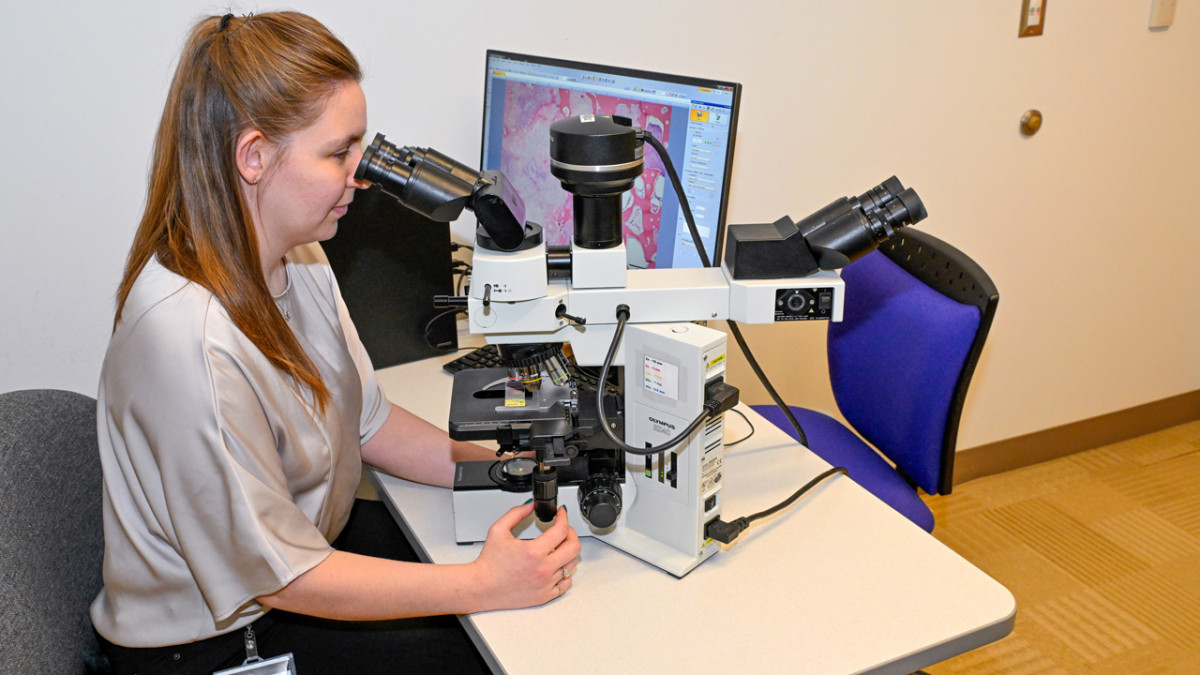
Dr. Latasha Ludwig was co-author of the study.
"This confirms that the domestic cat is not just a beloved pet, but a vital partner in the fight against cancer," said Dr. Latasha Ludwig, a co-author of the study and an assistant clinical professor and veterinary anatomic pathologist in the Department of Population Medicine and Diagnostic Sciences in the College of Veterinary Medicine (CVM).
The research was facilitated by a partnership led by the Wellcome Sanger Institute in Cambridge, England; the team included scientists from CVM, the Ontario Veterinary College at the University of Guelph and the University of Bern.
By sequencing DNA from 493 cat tumor tissue samples for 13 different cancer types that had already been collected by veterinarians for diagnostic purposes, the researchers were able to analyze the diseases as they naturally occur in the cat population across five different countries.
"We are now moving toward a stage where we can treat the specific mutation, not just the species or necessarily a specific tumor type," Ludwig said. "We can utilize the information that we find in people and translate that to cats, and also from cats to humans. We are no longer looking at these as separate problems, but as a shared biological challenge."
Cancer is commonly caused by alterations, including mutation, dysregulation and abnormal expression of oncogenes. The most frequently mutated feline gene, which was mutated in 33% of all tumors studied, is called TP53. This gene mutation was also found to be present in 34% of all tumors in another study of human cancers.
"Among the attractive aspects of studying feline cancers to learn more about human cancers is that cats are exposed to similar environmental conditions as humans - as opposed to, say, mice, a commonly used animal in biomedical research," said Dr. Bruce Kornreich, D.V.M. '92, Ph.D. '05, director of the Cornell Feline Health Center and a cardiologist at the Cornell University Hospital for Animals. "They also suffer from many of the same diseases as humans, supporting the notion that these two species share at least some basic mechanisms of disease."
The similarities in breast cancer between cats and humans were among their most exciting findings, the researchers said.
Feline mammary carcinomas are notoriously aggressive in cats. Recent findings have pinpointed seven specific driver genes which, when mutated, trigger the onset of the disease. The most prevalent of these is FBXW7, which was altered in more than half of the feline tumors studied. This discovery reflects human clinical data, where mutations in the FBXW7 gene are typically linked to a worse prognosis in breast cancers.
The research further demonstrated that specific chemotherapy treatments showed higher efficacy against feline tumors carrying these FBXW7 mutations. While these results were observed in laboratory tissue cultures and necessitate more extensive study, they highlight a promising therapeutic strategy that could eventually benefit both feline patients and humans battling breast cancer.
The research also revealed parallels with human mutations in cancers of the blood, bone, lungs, skin, gastrointestinal tract and central nervous system.
"Another interesting finding pertains to cutaneous squamous cell carcinoma," Ludwig said. "We were able to show that a lot of these skin cancers were associated with UV-induced radiation, which is similar to what we see in different types of skin cancer in humans as well. So that speaks to our shared environment from that perspective."
The study bolsters the "One Health" concept - the idea that a two-way flow of data between veterinary and human medicine may accelerate cures for both.
In collecting and analyzing the 493 tumor samples, the team has created a freely available resource for the global scientific community. This database will allow researchers to further explore how tumors develop and how different species respond to the same oncological drugs.
"This is one of the biggest-ever developments in feline oncology and means the genetics of domestic cat tumors are no longer a 'black box,'" said Dr. Louise Van Der Weyden of the Wellcome Sanger Institute, a senior author of the study. "We can now begin to take the next steps forward towards precision feline oncology, to catch up with the diagnostic and therapeutic options that are available for dogs with cancer, and ultimately, one day, humans."
Christina Frank is a freelance writer for the College of Veterinary Medicine.


