
The University is undertaking works to restore the historic organ to the iconic Capitol Theatre, the final part of the restoration of one of Melbourne's most iconic venues.
The organ is nicknamed 'Eliza' and is a 1920s Wurlitzer theatre organ.
Eliza's presence at the Capitol will not only allow students to benefit from its presence but allow for new public-facing creative works to be put on show at the theatre.
"Reinstalling Eliza at The Capitol is the finishing touch to the venue's restoration - a significant milestone for the theatre and for Melbourne audiences," said Professor Naomi Stead, Associate Deputy Vice Chancellor Engagement in the College of Design and Social Context (DSC) at RMIT University.
"It's also a major win for RMIT students, who will benefit from the unique opportunity to engage with the organ in their learning and research."
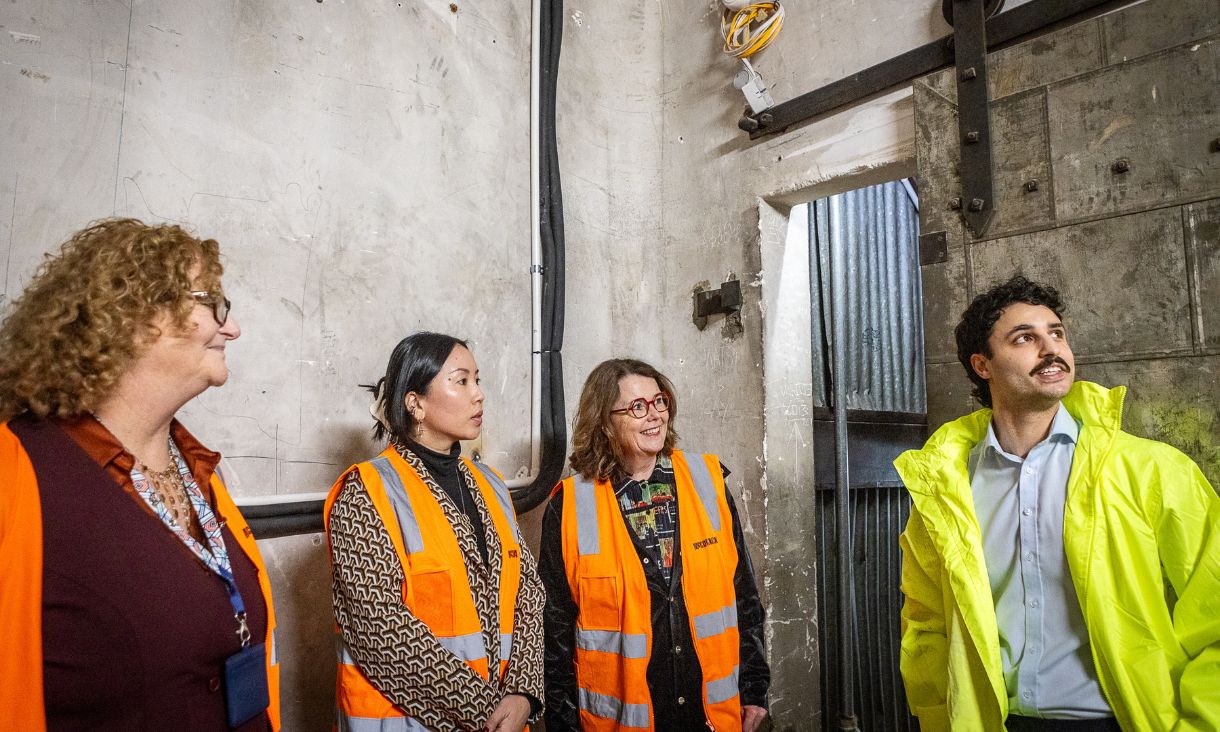
Built in 1923, Eliza was purchased from the Wurlitzer factory in the state of New York for £15,000. When she arrived in Melbourne the following year, she was the largest Wurlitzer organ ever exported from the USA.
Eliza made a grand entrance in 1924, accompanying the silent film The Ten Commandments, and remains an important and beloved part of the theatre's history, with a classical mahogany wooden exterior.
"The organ boasts over 1000 pipes and 6000 individual pieces, making it essentially the 1920s equivalent of a contemporary synthesiser," said Stead.
"During Eliza's time at the Capitol, organs were an integral part of the theatre experience, often serving as an accompaniment to the silent films popular at the time.
"In the inter-war era, the Capitol's capacity was over 2000, meaning Eliza has been played to some of the largest audiences in the theatre's history!"
The now-102-year-old organ was relocated to the Dendy Cinemas, Brighton, more than 50 years ago when cinema flourished over theatre, and the advent of in-home televisions reduced theatre audience numbers more generally.
Half a century later, the iconic organ is ready to return to her rightful place in the spotlight one of Melbourne's most historical and iconic venues.
Among many options for usage, the reinstallation of Eliza makes it possible to screen silent film with accompanying live music at the Capitol - as was common in the inter-war 'golden age' of the Capitol - as well as for audiences to hear live organ performances from some of today's finest instrumentalists.
Giving with impact to the whole Melbourne community
The restoration was made possible thanks to a number of generous donations to the Capitol Innovation Fund, which was established in 2017.
In particular, a significant philanthropic gift from Ling Ang - a filmmaker and artist who is an RMIT alum - was instrumental in allowing the restoration works to proceed.
"We are immensely grateful to the hundreds of donors who have contributed to The Capitol Innovation Fund since 2017, and those who have donated specifically to support the reinstallation of Eliza, the original Wurlitzer theatre organ," said Michael Hobday, Director, Commercial & Leasing - Property Services at RMIT University.
"Their generosity has supported the restoration work and will help ensure Eliza can be enjoyed by new audiences.
"We are especially grateful to Ling Ang for her longstanding and transformational support of The Capitol.
"I'd also like to thank our partners in this reinstallation project, the volunteers from the Theatre Organ Society of Australia, who have worked tirelessly to ensure Eliza's place in Melbourne's history is not forgotten.
"They have not only donated to the project, but are providing technical advice, which is greatly appreciated by the University."
The work to return Eliza to the Capitol will be undertaken over the 2026-27 period. It is the final step in the full restoration of the Capitol Theatre, a project which commenced over a decade ago.
With works slated to last until late 2027, the University will provide further updates about the first scheduled event to feature Eliza over the next year.


