
Scientists from Tomsk State University, the Institute of Electrophysics of the Ural Branch of the Russian Academy of Sciences (Yekaterinburg) and the University of Murcia (Spain) tested new approaches to water treatment from crystalline violet fast industrial dye. Ultraviolet irradiation with a specific wavelength and electron treatment were equally effective. In just half an hour, they completely destroyed the pollutant and made the solution in which it was contained absolutely not toxic to plants. The findings will help improve wastewater treatment systems and protect them from industrial chemicals. The results of the study, supported by a grant from the Russian Science Foundation (RSF), are published in the Journal of Photochemistry and Photobiology A: Chemistry (Q2).
Crystalline violet is widely used as a dye for staining bacterial cells in medicine and biology, as well as in the textile industry. This organic matter is quite poorly destroyed in natural conditions, therefore, getting into wastewater, it may accumulate and harm living organisms. Usually, water is purified from it using charcoal filters or microbial treatment, but these methods are not effective enough. Therefore, scientists are looking for new methods of destroying this dye.
Researchers from Tomsk State University, the Institute of Electrophysics of the Ural Branch of the Russian Academy of Sciences (Yekaterinburg) and the University of Murcia (Spain) compared two methods of destroying crystalline violet, not yet used in practice. As part of the first approach, this substance, dissolved in water, was irradiated with ultraviolet light at different wavelengths - 222 and 282 nanometers. The first, shorter wave has more energy, and therefore decomposes complex organic molecules faster.
In the ultraviolet irradiated solution, the authors additionally introduced powerful oxidizing agents - hydrogen peroxide or sodium persulfate - which "attacked" the dye molecules and helped to destroy them.
The second approach was that the dye solution was irradiated with electrons, which were emitted by a special facility. Such radiation penetrated into the liquid and created active particles capable of splitting even the most stable chemical bonds.
It turned out that when treated with ultraviolet light with a wavelength of 222 nanometers, the dye completely collapsed in just 32 minutes. Irradiation at 282 nanometers was less effective: in an hour, it removed less than 50% of crystalline violet from water.
The exposure to electrons allowed the destruction of 100% crystalline violet in 30 minutes. Thus, electron and ultraviolet irradiation with a wavelength of 222 nanometers in the presence of an oxidizing agent turned out to be equally effective.
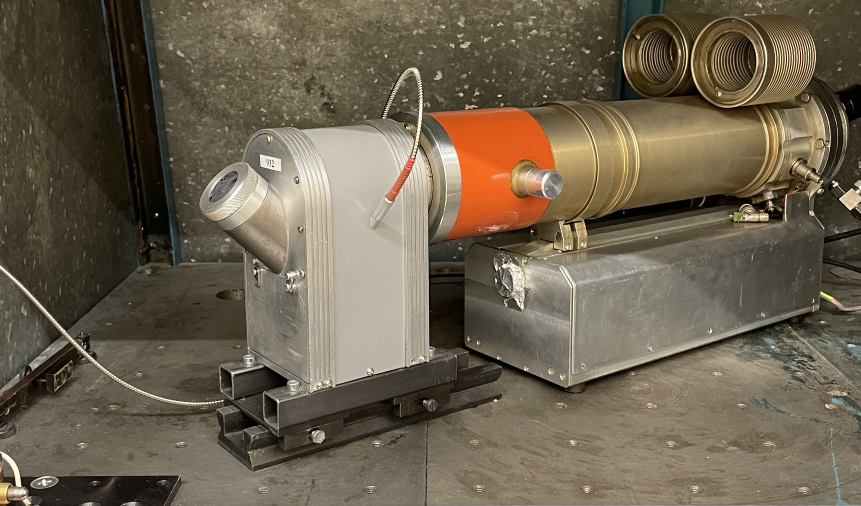
Photo by Olga Tchaikovskaya
To assess how safe the dye-free water has become for living organisms, the authors treated watercress seeds with it. The experiment showed that the solutions that were affected by all radiation options for 30 minutes were safe: they did not worsen the germination of seeds and the growth of young plants. In contrast, the initial solutions with crystalline violet slowed down these processes by about half.
- We were able to show that the methods of destruction of crystalline violet are equally effective. However, it is important to remember that in the case of ultraviolet light, you need to use a certain wavelength and additives of oxidizing agents. In case of electron beams, it is necessary to bring the treatment to the end, since our experiments with shorter exposure times (about four minutes) showed that the solution with the dye remains toxic due to harmful intermediate decay products. Only after a long 30-minute exposure they are completely neutralized. In the future, we plan to apply this technique to destroy other industrial dyes and their mixtures, - says the project manager Olga Tchaikovskaya, Doctor of Physics and Mathematics, Professor of the Department of Optics and Spectroscopy of the TSU Faculty of Physics.
Text by InScience.News


