
27 March 2026
The German Science and Humanities Council has highlighted the scientific and strategic importance of the planned High Brilliance Neutron Source. In its statement released today, it expressly recommends that the first phase of the facility, known as HBS-I, be implemented at Forschungszentrum Jülich.
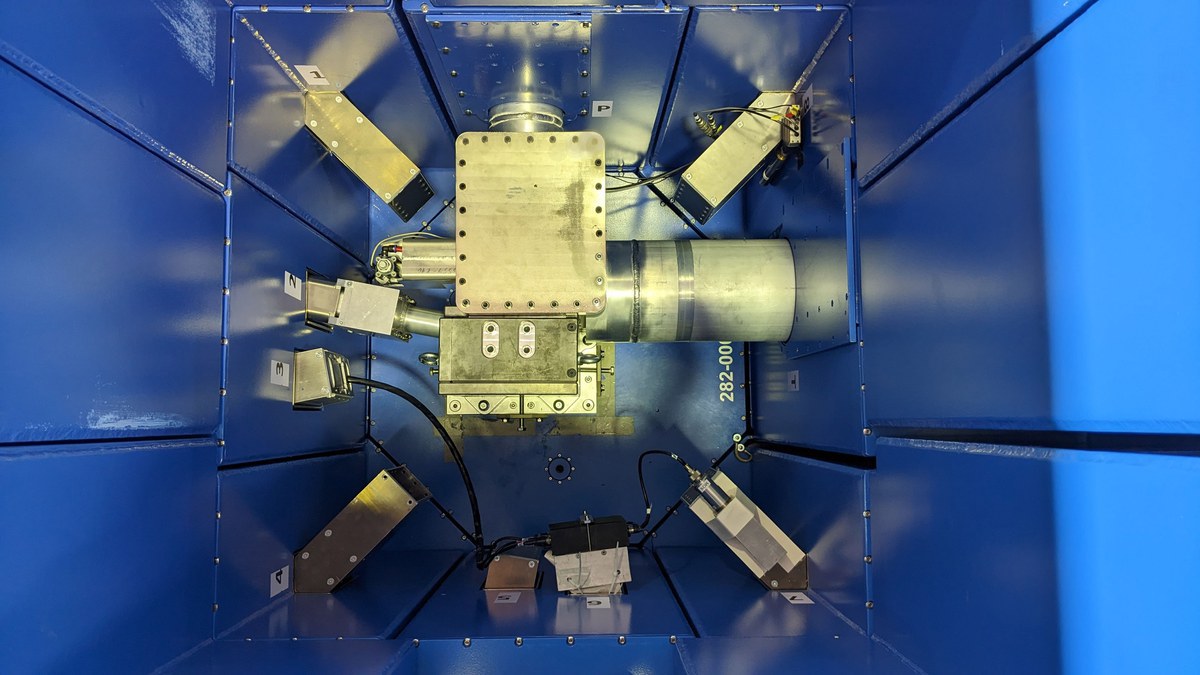
The recommendation marks another important milestone on the path to a new national neutron source, which Forschungszentrum Jülich is developing in collaboration with the Helmholtz-Zentrum Hereon and Goethe University Frankfurt. At the same time, it sends a strong signal regarding the future of neutron research in Germany and Europe, which faces significant challenges in light of declining capacities.
Cutting-edge research focused on practical applications
This topic forms part of Forschungszentrum Jülich's presentation at HANNOVER MESSE 2026. General information about the exhibition, the projects on display and Forschungszentrum Jülich's stand can be found on the central landing page for the fair.
The HBS-I is based on an efficient, accelerator-based concept. Unlike conventional research reactors, it operates without nuclear fuel. The technology generates highly brilliant neutron beams with a small cross-section, enabling investigations of very small samples. This allows the structure, dynamics, and magnetism of materials to be analyzed at the atomic and molecular levels-ranging from basic research in physics, chemistry, and the life sciences to industrial applications.
"We are pleased with the Science Council's positive assessment," says Prof. Stephan Förster, Managing Director of the Jülich Centre for Neutron Science (JCNS-1). "The recommendation is an important signal for neutron research in Germany. The demand is high - neutrons provide deep insights into materials and processes that are only possible to a limited extent with other methods," adds Prof. Mirijam Zobel, Director of JCNS-3 and Chair of the German Committee Research with Neutrons (KFN, Komitee Forschung mit Neutronen).


According to the German Science and Humanities Council's assessment, the HBS-I is well-suited to strengthen German neutron research in the long term and increase the international visibility of the research location. "The facility is designed as a user-oriented research infrastructure and is intended to provide both science and industry with fast and comparatively low-threshold access to experiments," says Paul Zakalek, Head of JCNS-HBS and HBS-I Project Coordinator.
In July 2025, following the recommendation of the Science Council and other experts, HBS-I was placed on the shortlist of the federal funding program for large research infrastructures as one of nine projects. This was followed by a review of all projects on the shortlist by the Science Council to ensure the best possible implementation. Based on the current assessment of the Science Council, the Federal Ministry of Research, Technology and Space is expected to decide on the funding of the project in the course of 2026.
The German Science and Humanities Council
The German Science and Humanities Council is the oldest science policy advisory body in Europe. It was founded on 5 September 1957 in the Federal Republic of Germany by the federal and states on the basis of an administrative agreement. It advises the federal government and the governments of the states on any questions pertaining to the content and structural development of science, research and higher education.


