
Nora Lippai '26 (CLAS), a molecular and cell biology major, used her experience in the selective program to build the interdisciplinary research and communication skills she will carry into graduate school.
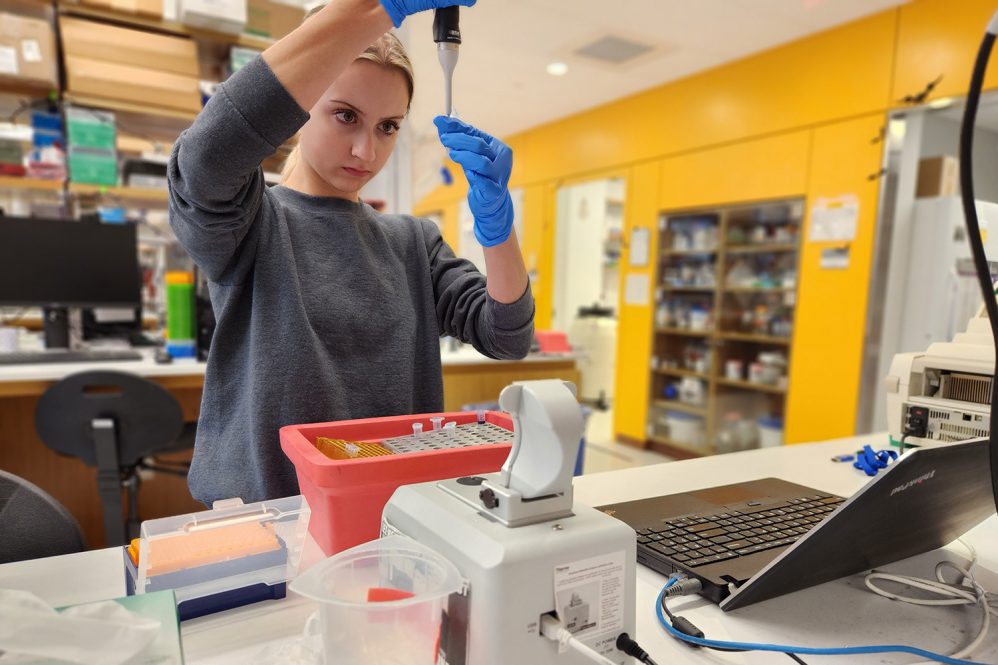
Nora Lippai '26 (CLAS), a molecular and cell biology major and University Scholar, working in the Core Lab. (Contributed Photo).
As one of the several CLAS students in the highly competitive 2025 cohort of University Scholars, Nora Lippai '26 (CLAS) spent her senior year strengthening her research and science communication skills that are crucial for her next steps after graduation.
A molecular and cell biology major, Lippai recently presented her research at the Frontiers in Undergraduate Research exhibition. It was the latest step in work she has found compelling since the start of her academic career at UConn: tackling unanswered questions in biological research and exploring the molecular and cellular underpinnings of health and disease.
"Starting out I was overwhelmed with how much there was to learn, but it was then when I learned that the beauty of research is that nobody knows everything," says Lippai, who started her research journey early on in her college career.
During the second semester of her freshman year, Lippai enrolled in a Gene Expression course taught by her current PI, Leighton Core, an associate professor of molecular and cellular biology and member of the advisory committee for Lippai's University Scholars project. This course was pivotal for Lippai, sparking her interest and involvement in research and led her to join Core's lab.
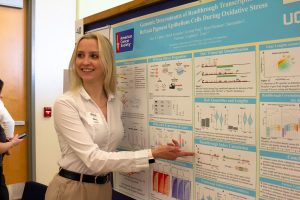
In her research, "Investigating the Influence of Genomic Elements on Readthrough Transcription," Lippai focuses on transcription, the highly regulated process of converting DNA to RNA. The first step in gene expression, transcription acts as the regulator for which proteins are produced from DNA and is vital to life, according to Lippai.
Proper transcription is essential for cellular function. However, under stress, the final step can fail, producing abnormal RNAs that aren't turned into protein, disrupting normal gene expression.
Lippai is researching what happens when that process doesn't stop where it should, particularly under conditions of cellular stress linked to disease development and viral infection.
Her work, which emphasizes sequencing experiments and interpreting complex biological data, is helping build a better understanding of how transcription changes depending on the type of cell and stress involved.
"We know that stress is so prevalent in a lot of disease phenotypes, so it's crucial to understand the full transcriptional processes that underlie these various diseases," says Lippai.
Though the research field was intimidating at first, the time she has dedicated to Core's lab has allowed her to grow into an independent and skilled researcher.
"Being able to acknowledge your own shortcomings, learn from others and understand that research is a team effort. It's everyone's shared understanding and curiosity that drives the process," says Lippai.
The University Scholars program gave Lippai a new perspective on her learning, challenging her to think more intentionally about how her research and coursework inform one another. She says the experience also taught her how to write a strong proposal and approach her learning from a new perspective.
"The structure of the University Scholar's program is amazing in the regard that you're able to really see how what you're learning in the classroom or lecture hall can apply to the lab and vice versa," she says.
Throughout her research, Lippai has spent time both conducting physical experiments and computationally analyzing the results. Having an environment where an interdisciplinary perspective is encouraged has been beneficial in building a multifaceted understanding of her field, she says.
In addition, by presenting at Frontiers and other events, Lippai says she has strengthened the skillset she will carry to her future endeavors.
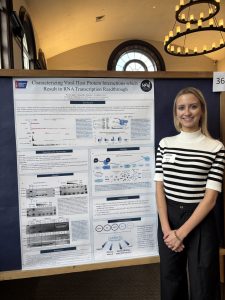
"Presenting to a wide variety of audiences, from professors to other undergraduates, feeds into my broader career goal of becoming a professor," shares Lippai. "In that profession, I have to make sure that I'm delivering information in an accessible manner to encourage continued curiosity and inspire the next generation of scientists."
Upon graduation, Lippai will pursue a Ph.D. in biomedical research at Weill Cornell Graduate School of Medical Sciences. Her program is interdisciplinary, including biochemistry, molecular biology, development biology and more, allowing her to integrate a lot of the same lessons she's learned at UConn.
She credits the rigor and breadth of her UConn coursework with inspiring her Ph.D. choice, along with recognizing the value of the skills she's gained as an undergraduate.
"My experience in Dr. Core's lab, where work at the bench and behind the computer goes hand in hand, fundamentally shaped my outlook on modern research and prepared me to confidently pursue graduate studies," she says.


