
Researchers at Karolinska Institutet have developed a computational method capable of simulating the movements of some of the cell's largest protein complexes. The study is published in Nature Communications.
Large protein machines in the body carry out many of the cell's most essential tasks, from energy production to the regulation of signal transmission. Although they can now be imaged in great detail using cryo-electron microscopy, it has long been difficult to understand how these complexes actually move and function.
In the new study, researchers at Karolinska Institutet present a method that makes it possible to simulate the movements of very large protein structures. The method, called eBDIMS2, was developed by the research group led by Laura Orellana , researcher at the Department of Oncology-Pathology .

"Many of these protein complexes are so large that they have previously been considered too complicated to simulate. We focus on the key motions rather than every individual atom, which makes the problem manageable," says Laura Orellana.
How researchers can track the movement of the cell's largest proteins
The method is based on simplifying proteins to their most important motion patterns. By starting from the forces that drive protein function, the researchers can create simulations even for very large structures that would otherwise require supercomputers.
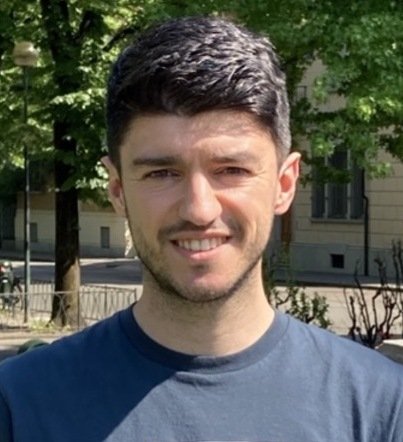
"This shows that even large molecules can be described using relatively simple physical principles. It opens the door for more researchers to study protein dynamics without advanced computer equipment," says Domenico Scaramozzino , postdoctoral researcher at the same department and last author of the study.
The findings may contribute to a better understanding of how cellular machines operate and how changes in protein movements can influence disease processes. This could, for example, help understand which mutations cause cancer and be a powerful tool in drug discovery. The study also highlights that complex biological systems can sometimes be understood by simplifying rather than increasing computational power.
The work was carried out by researchers at Karolinska Institutet and was funded by the Swedish Cancer Society and the Swedish Research Council. The researchers report no conflicts of interest.
Publication
Scaramozzino D, Lee BH, Orellana L
Nat Commun 2026 Mar;():


