
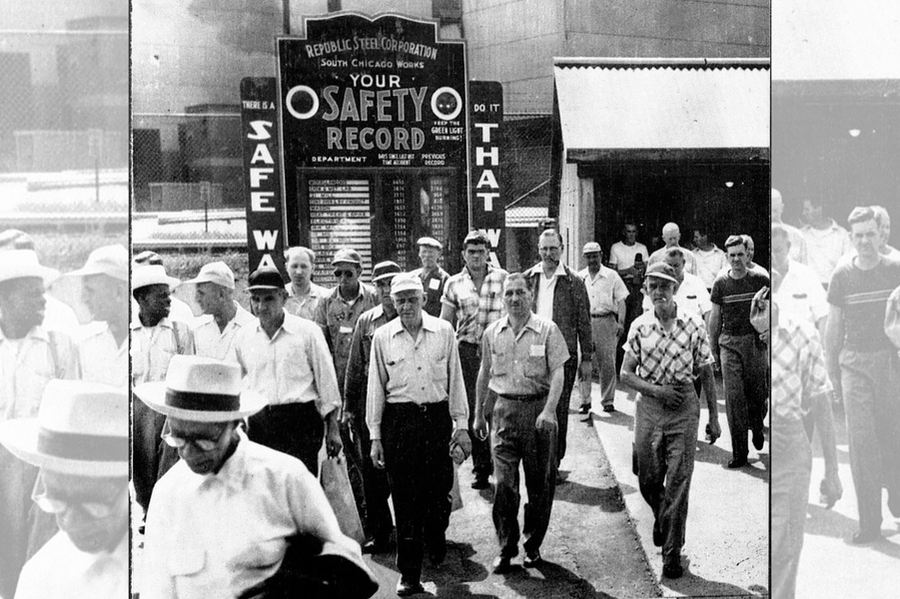
For generations, the steel mills of Southeast Chicago offered work and a way of life, experienced by tens of thousands of families. Open around the clock, three shifts per day, the vast works of U.S. Steel, Republic Steel, Inland Steel, and many others provided demanding but steady jobs, while making materials to build the country.
Professor Christine Walley, head of the MIT Anthropology program, grew up in the area, where her father worked for Wisconsin Steel. Over time, U.S. manufacturing downsized - her father's plant closed in 1980 - and the mills left Chicago. Walley's 2013 book, " Exit Zero: Family and Class in Postindustrial Chicago ," chronicles the economic and psychological toll plant closures took on the area's workers and families. The book was followed by a documentary, " Exit Zero ," directed by Chris Boebel, media development director at MIT Open Learning (and Walley's husband).
Previous item Next item
Then Walley turned to a new effort - the Southeast Chicago Archive and Storytelling Project , an online repository of objects and images, as well as new video features about the industry, labor history, and the local community. The project was developed in collaboration with a team from the Southeast Chicago Historical Society, which in 1985 opened a museum about the steelworking life. This award-winning newer online project has been supported, in part, by MIT, the National Endowment for the Humanities, and others.
The idea is to use objects to tell stories about the area's history. To mark Labor Day, MIT News offers this photo essay based on materials from the Southeast Chicago Archive and Storytelling Project, recognizing America's workers - and reflecting on the jobs, work, and life produced by industry and innovation.
Previous item Next item
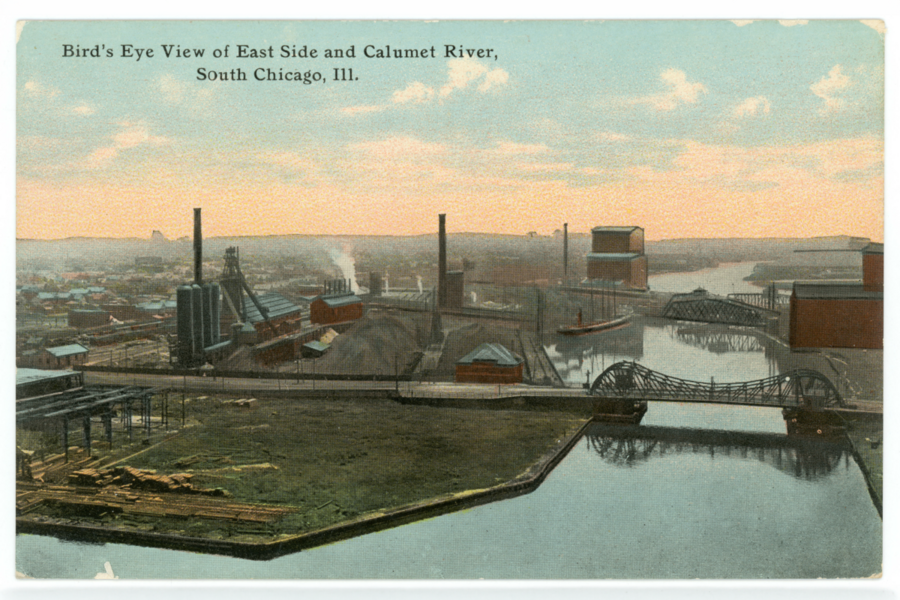
It's hard to depict the vastness of Southeast Chicago's steel manufacturing area, which stretched for miles into Northwest Indiana and included mills that employed 120,000 workers at their peak. This vintage postcard shows the industry along the Calumet River.
MIT's 12th president, Howard Johnson, grew up in the area during the Great Depression, where family members toiled in the mills. Johnson's father worked for U.S. Steel for 50 years, becoming a bookkeeper and accountant, and Johnson attended Bowen High School, which is still open today.
"Families - ours and thousands like it - were the essential centers of life in the community," Johnson writes in his memoir, published by the MIT Press.
Families have also been essential to the Southeast Chicago Archive and Storytelling Project, which displays more than 1,100 items from the local historical museum's collection: clothing, photos, scrapbooks, news clippings, recreational objects, oral history materials, and more. Walley says that anyone could take this approach, and use objects to tell stories about their own local history, work, and community life.
"People tend to experience history in their day-to-day lives not through books written by experts, but by telling stories around family objects and photos," Walley says. "What is meaningful to us about the things we save from the past? Might these items be 'clues' that take us on a deeperhistorical journey?"
Previous item Next item
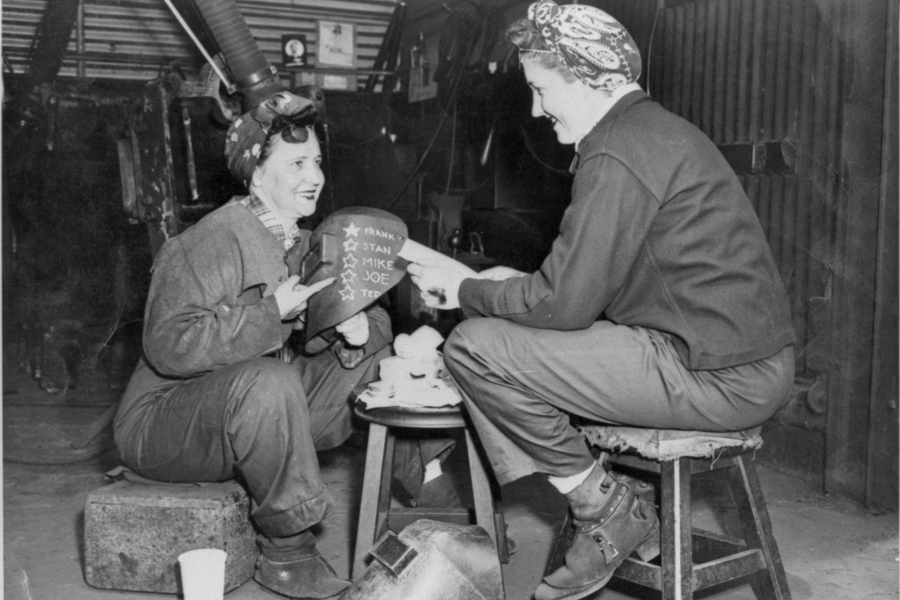
Kitty Kalwasinski Markovich (above, left) didn't set out to become a welder - but as one, she nearly appeared the movies. Born Kazmira Kalwasinski, she immigrated with her family to Chicago from Poland in 1913, at age 10. During World War II, the steel mills sought replacements for men serving in the military, and she started welding at the South Works of U.S. Steel in Chicago.
Warner Brothers depicted her in this photo shoot (with Florence Josephs, right), as a worker in the "Rosie the Riveter" mode, and considered making a film featuring her. Five of her brothers served in the military, and their names are seen on Markovich's welding helmet. One of them, Frank Kalwasinski, was killed in World War II, and his sacrifice is represented by the solid star.
Although many American women returned to their former lives as homemakers at the conclusion of the war, Markovich kept working in the mills, welding for 23 years in the South Works before she retired in 1967. It's also where she met her husband, Michael Markovich. Kitty Kalwasinski Markovich's family donated many materials to the Southeast Chicago Archive and Storytelling Project.
Previous item Next item
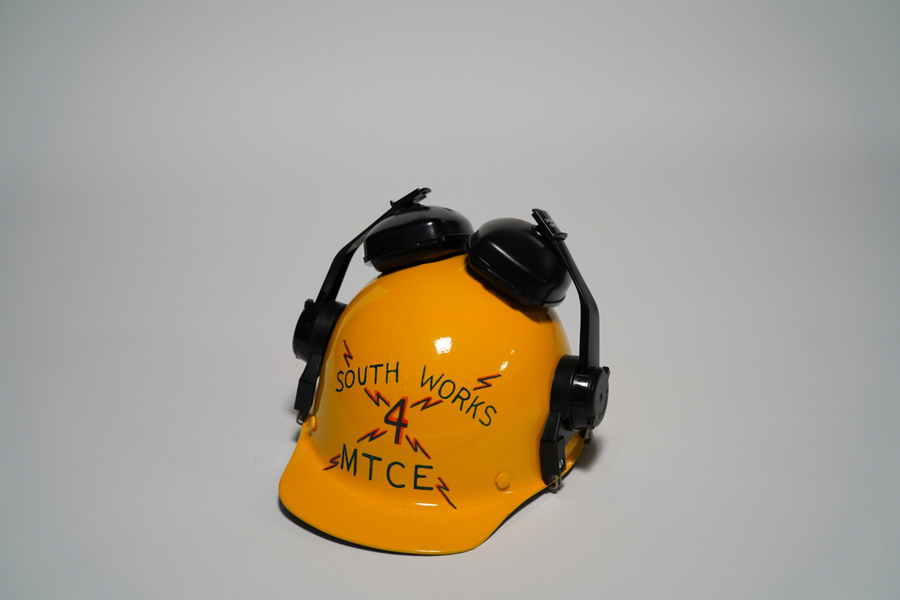
This hard hat, made around 1986, was donated to the Southeast Chicago Historical Museum along with a cutting from the last beam ever produced at U.S. Steel's once-mighty South Works, which closed in 1992, having produced steel since the 1800s.
At its peak, South Works employed about 20,000 people. The Chicago steel mill closures, the 1970s through the 1990s, devastated employees and their families who, as Walley details in the "Exit Zero" book, identified strongly with steelworking. Her own father was a third-generation steelworker.
The online storytelling project deploys MIT scholar Sherry Turkle's notion of "evocative objects," those that hold great resonance and get our minds in motion. As Turkle writes, "we love the objects we think with."
Donated to the museum by James Stapay, this hard hat evokes the end of a long industrial era in Chicago, and is featured in " The Closing of the Mills ," one of the project's four documentary videos created from donated objects.
Previous item Next item
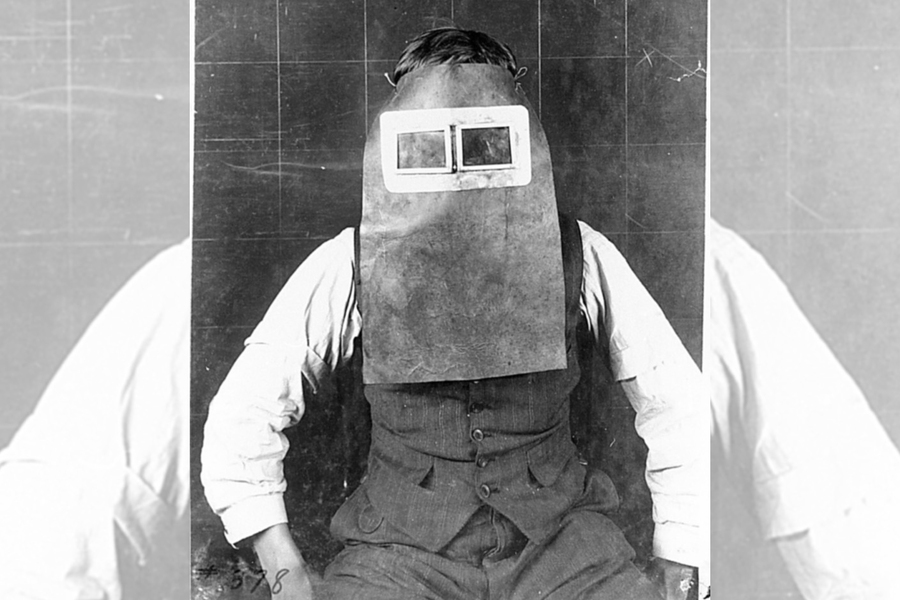
Working in steel mills was not just physically demanding, but dangerous. Worker injuries and deaths were a recognized problem, especially in the early years. This is prototype safety gear from around 1911-12, from a series of photo albums donated to the Southeast Chicago Historical Society by U.S. Steel itself in the 1980s.
U.S. Steel set up a Committee of Safety early in the 1900s, which recommended 3,000 changes to operations. However, in oral history interviews, workers often recount continuing dangers and terrible accidents in the steel mills.
Some first-person accounts state that as late as the 1960s, workers were still not regularly wearing hard hats. Basic safety practices seemed to improve, though, after the introduction of the U.S. Occupational Safety and Health Administration in 1970. Worker safety was a long-term work in progress.
Previous item Next item
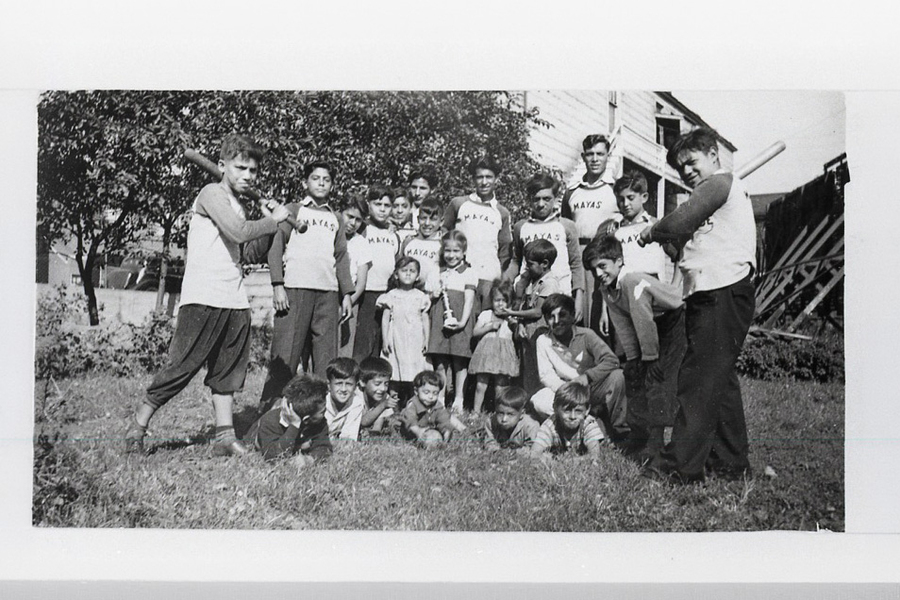
Many of the close-knit communities formed around the mills have donated materials to the project that range far beyond the factory. For instance, family recreation was important in steelworks neighborhoods. Pictured here, in a photo donated by the Cordero family, is the "Mayas" softball team, made up of members of Southeast Chicago's Mexican-American community, which won a 1937 community league championship.
Justino Cordero immigrated to Chicago in 1923, became a steelworker, then eventually did electrical work in the mills while opening a radio shop. Cordero, a father of three (two of his children are pictured), organized and coached youth sports teams to keep kids "out of trouble"; wrote a column for The Daily Calumet, a local newspaper; and was involved with his church, Our Lady of Guadalupe. After retirement, Cordero earned undergraduate and master's degrees, to work with children with disabilities.
Another documentary video from the Southeast Chicago Archive and Storytelling Project, " Mexican-American Journeys ," explores the long history of Mexican-American steelworkers in Chicago, in many dimensions. At least a dozen parishoners of Our Lady of Guadalupe members who had been in the U.S. military in the 1960s were killed in the Vietnam War, serving their country.
Previous item Next item
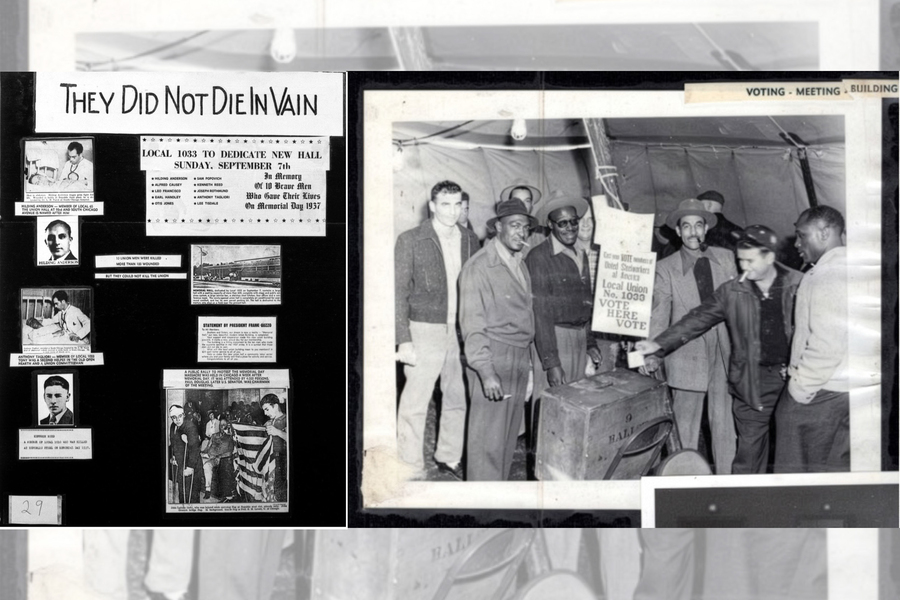
In 1937, steelworkers went on strike in Chicago. On Memorial Day, during a peaceful protest at Republic Steel, 10 workers were killed by law enforcement officials - an event that provoked congressional hearings in Washington. The image at left is a poster made up for Local 1033, the union branch for the Republic Steel plant; at right, Local 1033 workers take a vote in later years.
While the so-called "Memorial Day Massacre" was a landmark event in national labor history, it is remembered in more intimate ways in the local area, with many families later donating photos, news clippings, scrapbooks, and interviews about it to the Southeast Chicago Historical Society.
And though the Southeast Chicago Archive and Storytelling Project project focuses heavily on working-class employment and daily life, there are many other possibilities for U.S. community-based history, involving almost any topic. Whatever the places, objects, and stories, but the goal is the same: to keep the past alive.


