
When the H5N1 highly pathogenic avian influenza virus was discovered on a poultry farm in Asia in 1996, there was little indication that it would become so widespread and so destructive. Within 30 years, it reached every continental region except Oceania, infecting more than 400 million poultry, tens of thousands of elephant seals and sea lions, about 1,000 people and many other mammals and wild birds.
Pinnipeds, which include seals and sea lions, have been hit unusually hard by the virus.
A study from the University of California, Davis, steps back to look at the overall impact of the virus on pinnipeds worldwide and offers recommendations for moving forward to monitor, characterize risk and build resilience in the affected species. It also suggests ways to help prevent the virus from reaching currently unaffected but vulnerable pinniped species, such as the endangered Hawaiian monk seal or Galapagos sea lion.
The paper is published in Philosophical Transactions B as part of a themed issue, "Managing Infectious Marine Diseases in Wild Populations." It states that throughout Peru, Chile, Brazil, Uruguay and Argentina, highly pathogenic avian flu outbreaks have killed at least 36,000 South American sea lions, 17,400 southern elephant seals and 1,000 South American fur seals.
"There is a huge, unprecedented conservation risk," said corresponding author Christine Johnson, director of the Institute for Pandemic Insights at the UC Davis Weill School of Veterinary Medicine. "Influenza is constantly changing, and that is a big problem now that it's widely circulating in birds and marine mammals."
Elephant seals: Canary in coal mine
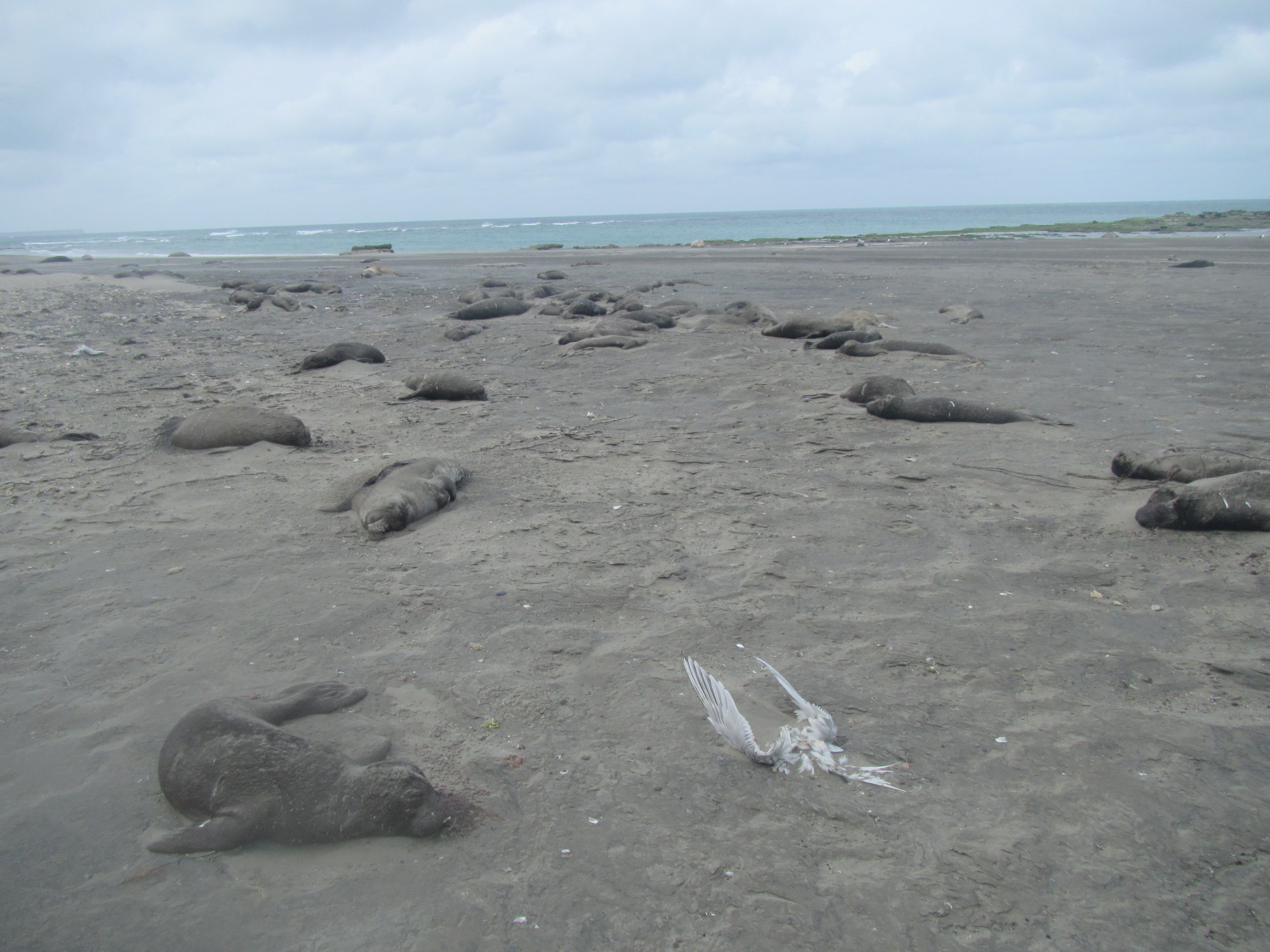
Co-author Marcela Uhart, a veterinarian with the UC Davis Karen C. Drayer Wildlife Health Center and its Latin America Program, witnessed and chronicled a massive 2023 outbreak of HPAI H5N1 in southern elephant seals in Argentina.
"Southern elephant seals were the canary in the coal mine alerting us to a bigger issue of pinnipeds throughout the entire world," said Uhart. "We can do something better to be prepared the next time before it spreads to other species."
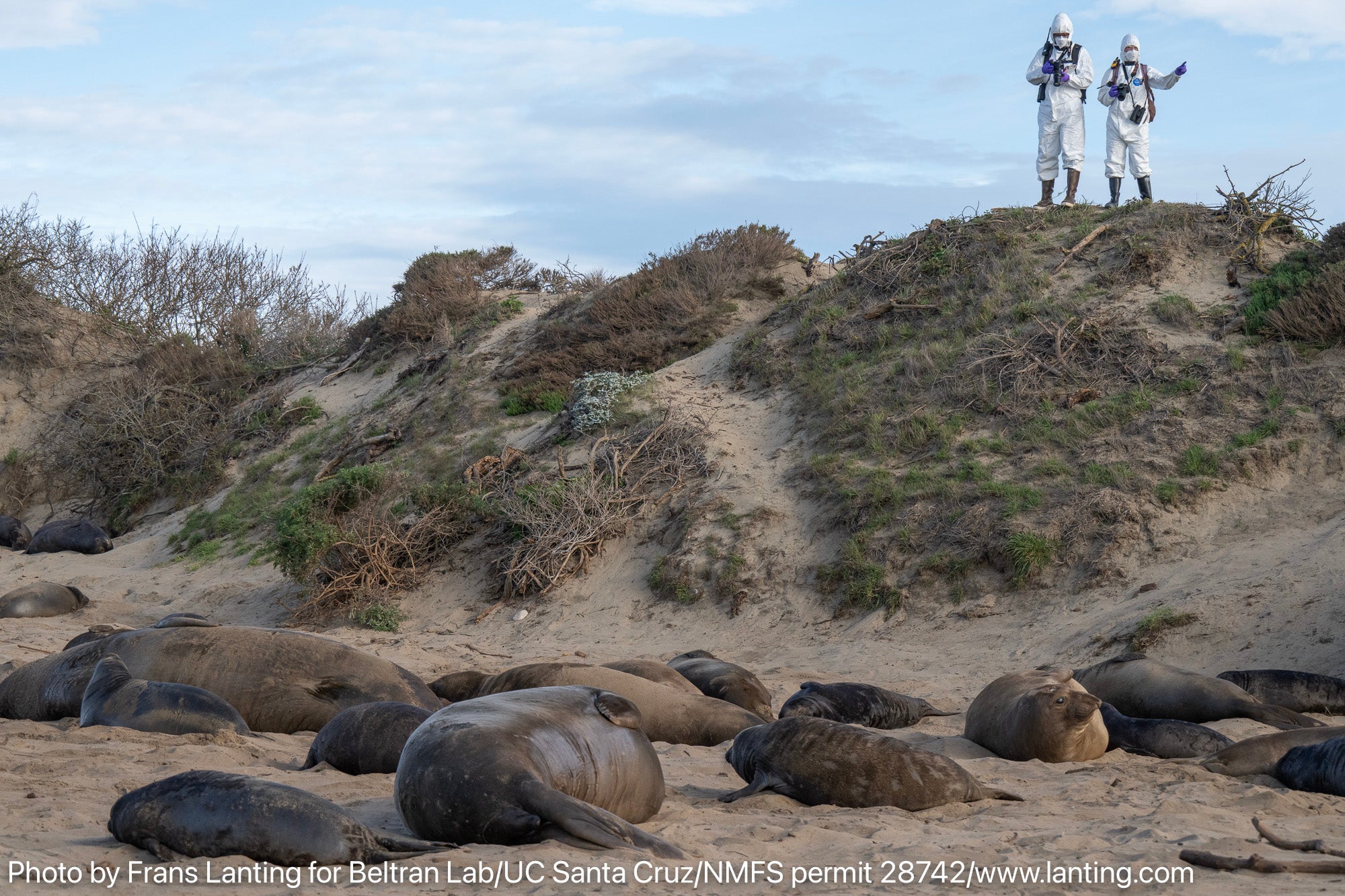
In late February, northern elephant seals in California marked the first cases of HPAI H5N1 in a marine mammal in the state. The speedy detection was due to routine surveillance for H5N1 that was set up over a year prior by UC Davis and Año Nuevo Natural Reserve in collaboration with UC Santa Cruz's long-term monitoring of the northern elephant seal colony at Año Nuevo State Park.
At the end of 2025, in response to a growing number of H5N1 cases in Bay Area seabirds, the team increased surveying efforts, walking the length of the reserve to document and sample any sick or dead bird or mammal throughout the elephant seal breeding season.
These efforts in advance of the outbreak allowed teams to quickly respond to changes in the seals' health and collect samples for testing at UC Davis. Johnson called it an "exceptionally rapid detection of an outbreak in free-ranging marine mammals," and an example of the kinds of preemptive efforts to detect and respond to outbreaks effectively.
Key recommendations
The paper's key recommendations include:
- Fund and support long-term wildlife monitoring, and conduct surveillance both between and during outbreaks to detect trends early and respond swiftly before outbreaks spread.
- Build stronger communication and coordination networks among local, national and global researchers, agencies and academic partnerships to prepare for outbreaks. This includes working with public health practitioners and social scientists to engage and protect people at risk of disease exposure.
- Make wildlife health surveillance a routine part of conservation research and management activities.
- Improve technologies for non-invasive monitoring. For example, the UC Davis Institute for Pandemic Insights brings together engineers and wildlife health experts to deploy auditory and thermal imagery with satellite imagery to better understand key events or tipping points that may indicate an outbreak is likely.
- Pursue high-level policy changes and international agreements that address the root causes of avian influenza outbreaks.
- Address concurrent conservation threats. The authors emphasize that avian influenza is just one of many stressors affecting marine wildlife. Many species face challenges including habitat loss, declining food supply and climate change. Small populations are especially vulnerable.
"H5 avian influenza viruses are an emergent threat to seal and sea lion populations already facing numerous conservation pressures," said first author Elizabeth Ashley, a graduate student researcher pursuing a dual degree in veterinary medicine and epidemiology at UC Davis. "Understanding how this virus spreads in coastal ecosystems is critical for protecting vulnerable marine wildlife."
Additional authors include co-first author Ralph Vanstreels of UC Davis Weill School of Veterinary Medicine, Michelle Barbieri of NOAA Fisheries, Wendy Puryear of Tufts University, Frances Gulland of the Marine Mammal Commission, and Cara Field of The Marine Mammal Center.
The research was funded through a US National Science Foundation Center for Pandemic Insights award, National Marine Fisheries Service-Sea Grant fellowship, and California Sea Grant.


