
Three mass graves were recently uncovered in northeastern Syria, including one reportedly at the site of a former detention centre run by the Kurdish-backed Syrian Armed Forces (SDF).
UN human rights investigators were informed of the discovery - made last month - during a five-day mission to Al-Hassakeh Governorate that concluded on Tuesday.
The team heard first-hand testimonies of past and present human rights violations. These include a significant number of killings, enforced disappearances, arbitrary detention and the deportation of detainees to Iraq, according to the UN human rights office, OHCHR .
Spokesperson Thameen Al-Kheetan also described growing protection concerns for people in southern Syria, because of "expanding operations by Israeli forces occupying these areas" that are placing lives at risk.
Reports intensify
"We have received reports of increased harassment and intimidation, detentions, interrogations, house searches and movement restrictions," he said.
"In the Quneitra governorate, Israeli forces have reportedly erected checkpoints, searched residential properties, and arrested and detained civilians."
Mr. Al-Kheetan pointed to "another worrying development" as the Israeli Government has approved a project to expand illegal settlements in the occupied Syrian Golan.
The rights spokesperson also noted that the opening of a trial in Damascus of former Syrian President Bashar Al-Assad and figures from his regime - mostly in absentia - is "an important first step".
He stressed that "justice and redress for the hundreds of thousands of victims must be achieved, in accordance with international human rights standards."
He added that the arrest of former Syrian regime official Amjad Youssef, allegedly responsible for orchestrating a "horrific massacre" in the Tadamon neighbourhood of Damascus in 2013, is also significant.
Call to step up Cuba relief efforts
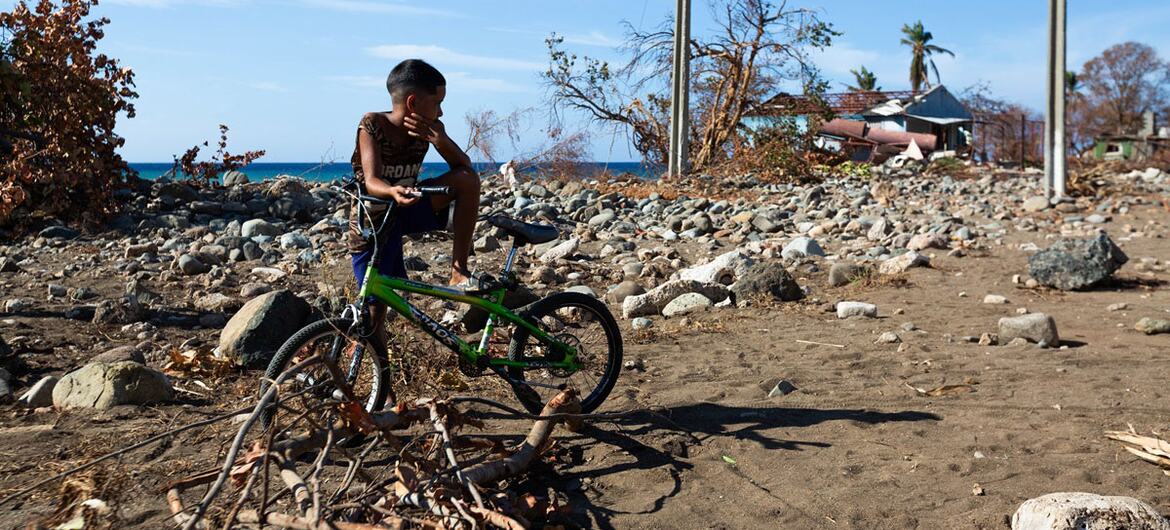
The International Federation of the Red Cross (IFRC) has stressed the need to support ongoing relief efforts in Cuba six months after Hurricane Melissa slammed the island nation, affecting more than two million people.
Cristian Torres Bermeo, IFRC Deputy Regional Director for the Americas, issued the call on Tuesday during the bi-weekly humanitarian briefing at the UN Office in Geneva.
Hurricane Melissa caused widespread damage in Cuba, with hundreds of thousands of homes destroyed, more than 700 health facilities affected, and water systems severely disrupted. Entire communities were left without access to reliable electricity, clean water and basic services.
Fuel shortages affecting recovery
He recalled that response took place amid a prolonged epidemic of mosquito-borne diseases - thus placing additional pressure on the already strained health system - and recently, under severe energy constraints following near total US restrictions on oil imports.
"Across the country, fuel shortages and instability in the electricity grid have been disrupting transport, water systems, waste collection and the delivery of health services," he said, speaking from Panama City.
The IFRC launched an emergency appeal immediately after the hurricane to support 100,000 people over two years. Despite being significantly underfunded, it has supported the Cuban Red Cross in assisting nearly 45,000 people with essential services, psychosocial support, and relief items such as mosquito nets and shelter materials.
Rights expert calls for global action to end impunity in Myanmar
The international community must take stronger action against Myanmar's military rulers, the independent UN human rights expert who monitors the country said on Tuesday in his final report.
Special Rapporteur Tom Andrews said that decades of impunity have led Myanmar to what he described as "a human rights catastrophe."
He said that "ending the crisis will require not only dismantling the military's capacity to attack and oppress the people of Myanmar but also holding those responsible for grave human rights violations to account."
He noted that "the international community has done far too little to support those seeking justice and accountability."
Frustration and anger
Mr. Andrews warned that the people of Myanmar are frustrated and angry that a decades-long cycle of violence and oppression continues unabated, and not a single senior military official has been held accountable.
For decades, the military has attacked civilians, persecuted ethnic minorities, and committed widespread sexual violence, among other serious human rights violations, he said.
Yet despite extensive evidence collected by civil society and international investigators, "accountability remains elusive."
Although some cases have been brought to international tribunals, he said these efforts are narrow in scope and insufficient to dismantle impunity.
The rights expert added that the UN Security Council 's failure to refer the situation in Myanmar to the International Criminal Court was "an abdication of responsibility and an indictment of the world's commitment to justice."
His report also outlines work being done by activists, lawyers, human rights defenders and other bodies seeking justice for abuses.
Special Rapporteurs receive their mandates from the UN Human Rights Council in Geneva. They are not UN staff and do not receive payment for their work.


