A new study has unveiled a new method to cost-effectively and practically test for "forever chemicals" in water, potentially revolutionising environmental PFAS monitoring.
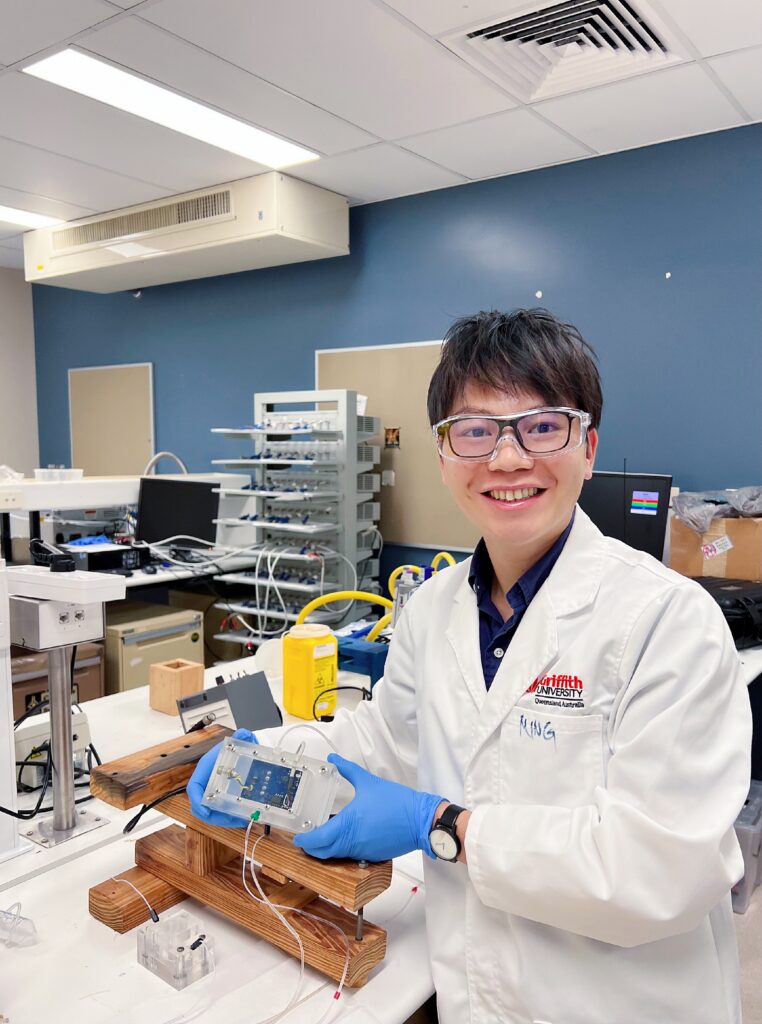
Led by Griffith University, the novel PFAS detection technique is a portable sensor designed to provide rapid, highly sensitive, and selective on-site testing, offering a practical alternative to laboratory-only analysis.
PFAS (Per- and polyfluoroalkyl substances) are a group of more than 10,000 synthetic chemicals widely used in products such as firefighting foams, water-resistant clothing, and non-stick cookware.
Known for being "highly persistent", these chemicals do not break down in the environment and have been linked to serious health conditions, including certain cancers and thyroid diseases.
"Many countries, including Australia, have implemented guidelines for PFAS levels in drinking water," lead author Dr Ming Zhou said, from Griffith University's Australian Rivers Institute.
"And there are many ongoing global campaigns for environmental surveillance due to their unbreakable nature and links to numerous health issues."
Current PFAS testing relied heavily on laboratory-based liquid chromatography-tandem mass spectrometry (LC-MS/MS), a process that requires complicated sample pretreatment, expensive laboratory equipment, and highly trained technicians, creating a major constraint for routine monitoring and environmental surveillance.
At a cost of exceeding $200 per sample, current methods were often inaccessible for regional areas and developing nations, such as the Pacific Islands.
"This triggered our pursuit for an on-site, low-cost, fast-detection technology," Dr Zhou said.
"If we view the traditional lab test as the 'PCR test' of water monitoring, our technology is closer to a rapid test kit, while still providing quantitative results."
"I was very excited to see the excellent response of our sensor to a specific PFAS," said Lipeng (Jason) Gan, the PhD candidate who worked with Dr Zhou on this project.
"This result shows the potential of the technology to enable fast, selective, and on-site PFAS detection, helping make high-quality PFAS monitoring more affordable and accessible."
The study 'Molecularly imprinted polyaniline-functionalized lateral-flow membrane for highly sensitive and selective per- and polyfluoroalkyl substances detection in water' has been published in Environmental Science and Technology.