
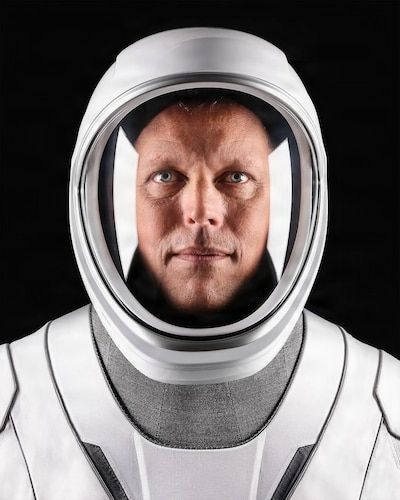
As NASA prepares to execute one of the most complex human missions into space since the Apollo era, an Air Force aviator has been selected to ensure its success.
Col. Bob "Farmer" Hines, an Air Force test pilot with more than 4,000 flight hours in 50 different types of aircraft, was selected by NASA to train alongside the prime crew as the mission's alternate crew member.
"It is incredibly humbling, because I don't think we've ever [had one person identified as a backup for every spot on a crew] before in NASA," Hines said. "To have the organization put that trust in me is really humbling. There's a lot of responsibility, and I certainly take that seriously."
Serving as the alternate crew member for Artemis III demands a rare level of versatility from Hines, who must maintain peak proficiency across multiple crew positions. If called upon, he must be ready to helm any seat on the 4-person crew to ensure seamless execution of the mission.
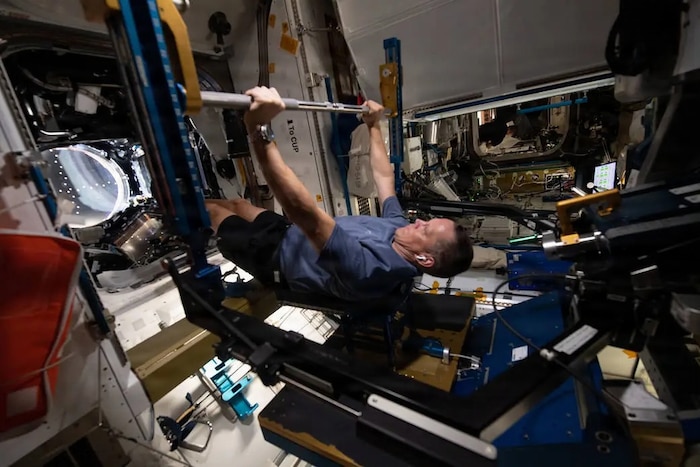
"At least early on in the training, my focus will be on the skills that the commander is learning," Hines explained. "Then I just need to make sure I'm branching off and understanding all the other crews' roles and responsibilities as well."
Artemis III, which NASA plans to launch in 2027, will feature multi-vehicle docking procedures between the Orion capsule and entirely new commercial landers. The mission is a crucial forerunner to plans for landing a crew on the moon in 2028. Hines' background equips him with the unique pedigree needed to diagnose unscripted technical glitches, making him an invaluable asset to the crew's safety as they train for the mission.
"We have the Orion spacecraft, and we'll be working with two different companies for new lunar landers-it'll be the first time they will have flown," said Hines. "We'll have to learn about those, and then, as we look forward to future Artemis missions, we'll have new spacesuits to work on the moon with. Those are developmental programs-lunar rovers, habitats, tools, all the things that we'll be working with on the surface of the moon. All those things will be new and continuously changing, and so that skill set of test and development is valuable."
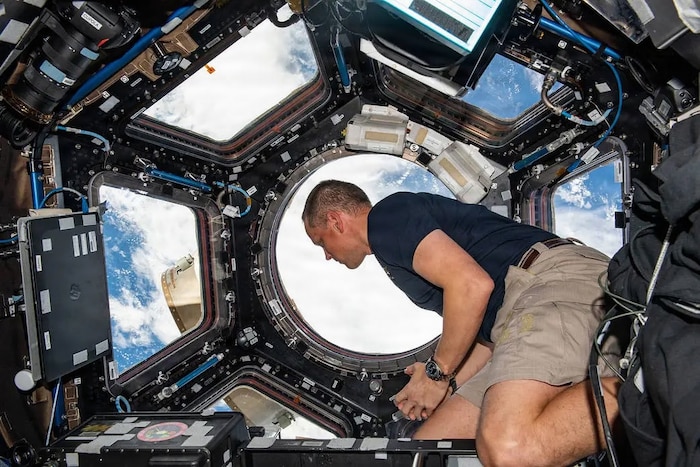
In addition to his military experience, Hines is also well-versed in spaceflight, having already logged 170 days in orbit. In 2022, he piloted the SpaceX Crew-4 mission to the International Space Station.
"Being familiar with the logistics of spaceflight will be really helpful, understanding the training profile, but the mission itself is completely different," Hines said. "On the space station, you're living and working there for a long duration. It's more akin to a military deployment. Probably the most valuable part from Space Station will be the interpersonal, inter-crew skills and dynamics, and understanding that in the spaceflight environment. In the military, we know how important it is to work in a team and managing those team dynamics."
Ultimately, the mission represents a return to the golden age of flight test.
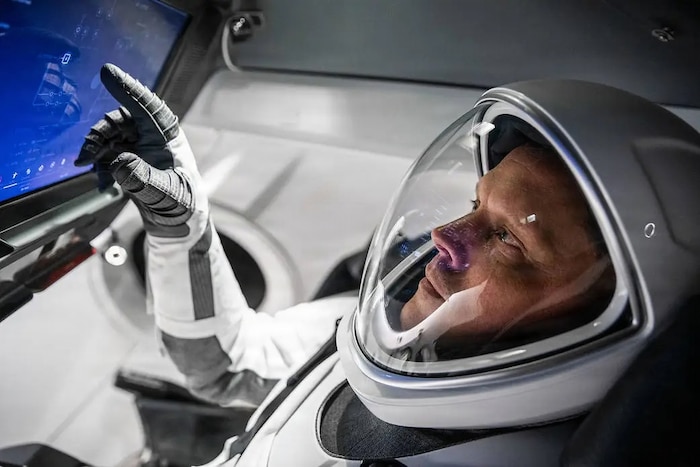
"The amazing thing about Artemis is truly stepping back into exploration, which NASA made its name doing, and exploration, by its very nature, is doing things that no one's ever done before," said Hines. "We certainly need all the other skill sets too, but for these early missions, test pilots are front and center. You'll notice on the prime crew we have two test pilots sitting in the front seats with Randy Bresnik and Luca Parmitano."
In many ways, his selection for the Artemis team is the culmination of an airborne career that started in 1997 by earning a degree in aerospace engineering from Boston University. That led to the Air Force, to Officer Training School followed by frontline service as an Air Force pilot that includes 76 combat missions in the F-15E Strike Eagle and two other aircraft types.


