
Did you know that women are 50% more likely than men to receive the wrong initial diagnosis after a heart‑related problem?
Heather Donaldson, advanced practice supervisor for the UC Davis Heart and Vascular Center, understands this better than most — both as a provider and as a patient.
In 2021, Donaldson, a nurse practitioner, was training with her husband and friends to hike to Mount Everest base camp. During their training, she began to have tunnel vision, numbness in her fingers and toes, and extreme fatigue.

Her friends, also health care providers, told her not to worry and said she was just out of shape.
"I had a really hard time during that training session," reflected Donaldson. "I felt emotional and disappointed in myself because I thought I had not trained hard enough."
Over the next three years, Donaldson continued to have the same symptoms during training. She kept dismissing them until 2024, when they worsened, even at rest.
"That is when I knew something was wrong," she said.
She was eventually diagnosed with supraventricular tachycardia (SVT).
SVT is a type of irregular heartbeat, also called arrhythmia. It is a fast heartbeat that affects the heart's upper chambers. Common symptoms include heart palpitations, dizziness, chest pain and shortness of breath.
To treat the condition, Donaldson underwent a curative ablation procedure.
She eventually resumed training and reached Mount Everest base camp. She continues to climb mountains today.
Although Donaldson's story has a happy ending, not all women are this fortunate.
"I ignored my symptoms. Because I did not fit the image of someone with heart disease, others ignored my symptoms as well," she shared. "This is why it is so important to listen to your body.
You know yourself best, and if something does not feel right, you should have it checked by a medical professional."
Treat me right national campaign
Donaldson shared her story alongside Katren R. Tyler, clinical professor of Emergency Medicine, at this year's 21st annual Women's Heart Care Forum, hosted by the UC Davis Women's Cardiovascular Medicine Program.
The forum, on Feb. 6, focused on the "Treat Me Right" campaign, which aims to improve how heart disease in women is understood, diagnosed and treated by making sure they are aware of symptoms and receive timely diagnosis and evidence-based care.
"Treat Me Right" is designed to give women the tools, education and confidence to advocate for themselves. At the same time, it encourages health care providers to listen closely, take symptoms seriously and respond without delay.
"One of our goals is to raise heart‑health awareness among women, who dismiss their own symptoms," UC Davis Health cardiologist Amparo C. Villablanca shared.
Villablanca is the founder and director of the UC Davis Women's Cardiovascular Medicine Program and the Frances Lazda Endowed Chair in Women's Cardiovascular Medicine.
"Heart disease begins many years before symptoms appear," she said. "That is why it is so important to engage women early, so they can take steps to protect their heart health throughout their lives."
Exploring heart health at the forum
The annual forum took place on National Wear Red Day, the first Friday in February, to raise awareness about heart disease in women.
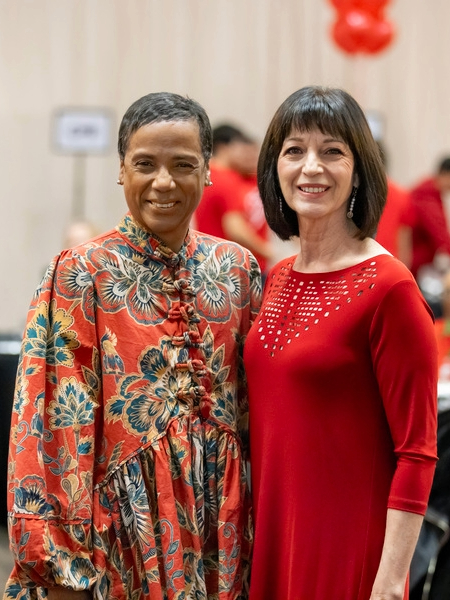
Guests included LeShelle May, wife of UC Davis Chancellor Gary S. May, and a representative and video message from Congresswoman Doris Matsui's office. Invited community leaders in attendance had the chance to explore learning stations where they could:
- Practice hands‑only CPR to help someone who collapses and needs immediate care
- Test their 'heart smarts' about heart health
- See new cardiac interventional tools for monitoring and treating heart disease
- Check their blood pressure, BMI and waist circumference
- Write a personal heart‑health goal for the year on a red heart and pin their heart health pledge to a tule dress
The stations were staffed by volunteers — UC Davis nurses and undergraduate pre‑health students.
Leading the nation in women‑focused heart care
The UC Davis Women's Cardiovascular Medicine Program began in 1994. It was the first program in the country focused on heart disease in women and on caring for women through research, education and community outreach.

The program provides personal, team‑based care designed for women. It treats heart conditions that are unique to women, show up differently in women or are more common in women. The clinic also uses proven guidelines to ensure every patient received woman-centered care.
Villablanca has led the program since its founding. She continues to teach patients, health care providers and leaders about why women's heart health needs are unique.
"Heart health is vital for all, including women," explained Villablanca. "We hope today's Forum attendees takes these lessons to heart, become ambassadors of the heart care message, and help spread the message that heart disease is the leading cause of death in women — and largely preventable through heart‑healthy lifestyle choices."


