

After 15 years of operation, the IceCube Neutrino Observatory has completed its first major upgrade, an expansion that will significantly push the observatory's scientific capabilities.
Located at the U.S. National Science Foundation's Amundsen-Scott South Pole Station, the observatory uses one cubic kilometer of Antarctic ice to detect nearly massless "ghost particles" called neutrinos. Because they pass through matter undisturbed, neutrinos offer a direct view of distant and otherwise hidden astrophysical sources. Thus far, IceCube has discovered very high-energy neutrinos, identified two galaxies as neutrino sources and observed neutrinos from our own Milky Way galaxy.
The University of Utah's Department of Physics & Astronomy has been a critical collaborator from IceCube's beginning. While most celebrated from campus, U postdoctoral researcher Vedant Basu was on hand to meet U.S. Senator John Curtis, who toured the site last month to mark the occasion.
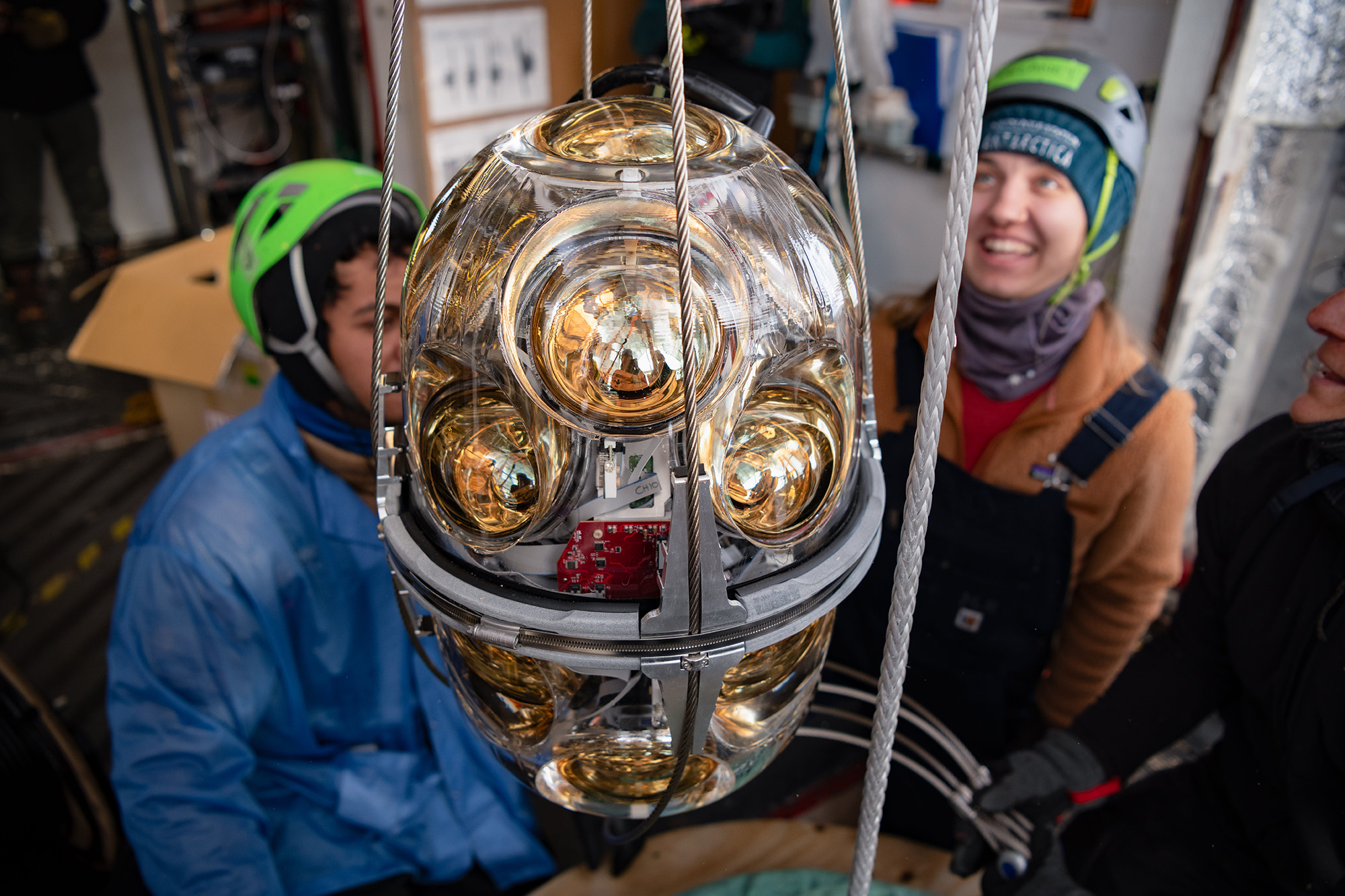
Basu was part of the international team that drilled six mile-and-a-half-deep holes into the ice-a crucial step in the upgrade. IceCube uses more than 5,000 light sensors to detect faint flashes produced when neutrinos interact beneath the frozen surface. The exceptional clarity of Antarctic ice makes it one of the few places on Earth capable of capturing this light. Using a 5-megawatt hot-water drill system-the largest of its kind-the team took three days to complete each hole, working around the clock to working around the clock to make way for the new sensors that are three times more sensitive than the current ones.
"The IceCube upgrade is an exciting opportunity to study fundamental neutrino interactions, while also providing us with a new window into the characteristics of our detector," said Basu. "We've also been able to deploy and test a variety of new sensors which greatly benefits the development of sensors for the IceCube-Gen2 effort."
The U's IceCube legacy
At the start of IceCube's construction in 2005 Carsten Rott, U physics department chair, performed detector calibration and verification efforts. For the upgrade, Carsten and his team secured a new camera system from Korea to better understand the operation's environment. The system will improve the scientists' ability to determine the cosmic ray composition and measure neutrinos from galactic supernovae.
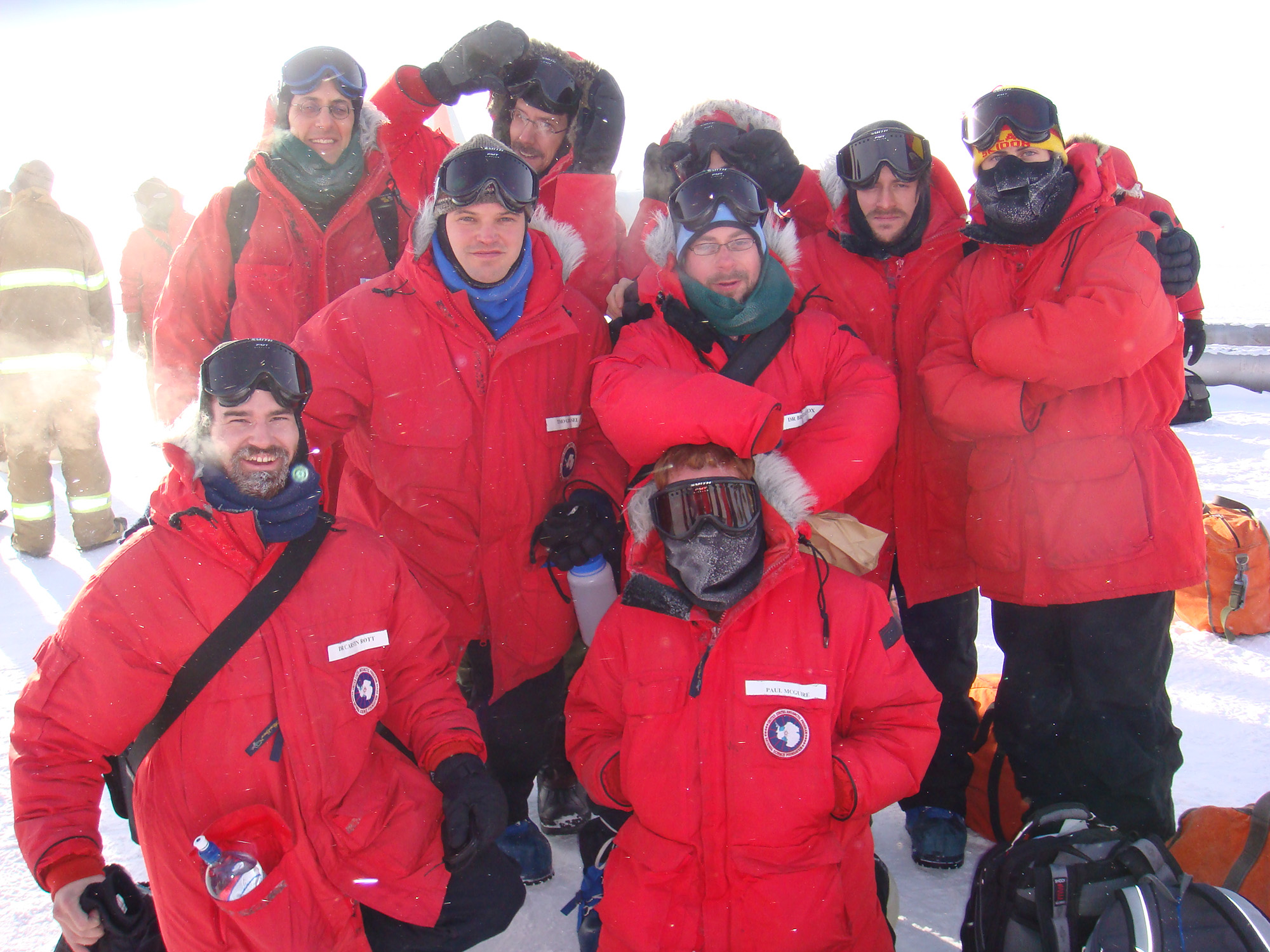
"My group designed and built a novel camera-based calibration system, which consists of over 2,000 cameras and LED light sources," Rott said. "It will be used to better understand the properties of the Antarctic ice that is used as a detector medium for the neutrinos. It might uncover new phenomena, which have so far been hidden in the data."
U physicist Dennis Soldin, IceCube's new analysis coordinator, is responsible for the oversight, management and approval of all physics analysis at the IceCube Neutrino experiment-including any analysis of the data with the newly deployed strings, part of the multi-year-long IceCube upgrade.
"Using the enhanced devices deployed in the ice," said Soldin, "scientists will be able to better characterize the surrounding ice, leading to improved reconstruction of neutrinos and a [retroactive] reanalysis of 15 years of archived data."
The U team is also helping to develop solar panels, tested on Utah's salt flats, to replace kerosene-powered components of the operation, which can result in substantial cost saving in the future.
Results from the IceCube Neutrino Observatory will be integrated into The IceCube Masterclass at the U April 25, 2026, in which high school students and their science teachers participate in an "authentic physics experience," according to Soldin. This includes hands-on activities such as building tabletop cloud chambers, working with real IceCube cosmic-ray data and participating in a Zoom call with IceCube scientists at the South Pole.
Cosmic possibilities
Now that the upgrade is finished, commissioning will continue to be the top priority to verify functionality of the newly deployed devices. The upgrade, a steppingstone to the proposed IceCube-Gen2-eight times the instrumented volume of its predecessor-will ensure that the observatory remains at the forefront of neutrino astronomy for years to come.
"The successful deployment of the IceCube upgrade project is a feat of U.S. engineering that demonstrates significant logistical capabilities in Antarctica," said Marion Dierickx, NSF program director for IceCube. "This upgrade will secure the nation's continued leadership in neutrino physics for years to come, paving the way for new cosmic discoveries."
Edited from a release from the IceCube Neutrino Observatory. Video below: 7-hour time-lapse of the preparation and start of drilling the first hole for the IceCube upgrade. Credit: Jennifer Wang and Vedant Basu, IceCube/NSF


