
UC Davis Medical Center has become the first hospital in the United States to treat a patient with symptomatic functional mitral regurgitation using a new minimally invasive therapy as part of a clinical trial.
The trial is evaluating the investigational CARLEN System, a transcatheter device designed to support the heart's natural mitral valve without permanently altering its structure. Unlike other transcatheter mitral valve repair procedures, this device aims to preserve the valve's anatomy while improving function.
UC Davis Medical Center is the only hospital in Northern California participating in the trial and currently offering eligible patients access to this investigational treatment option.
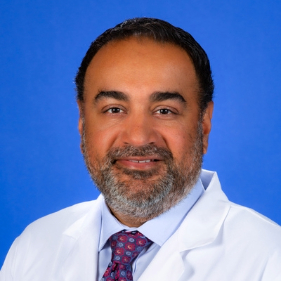
"We are honored to be the first U.S. hospital participating in this clinical trial and to play a role in advancing this innovative treatment option for patients," said Gagan Singh, director of the Structural Heart Program at UC Davis Health. "Making this possible for our patient took a large team working behind the scenes for months."
"We are honored to be the first U.S. hospital participating in this clinical trial and to play a role in advancing this innovative treatment option for patients."-Gagan Singh
Making history
Jim Fowler liked to walk, and in the small mountain town of Weaverville, he walked everywhere. Most days, he made the nearly two-mile trek to the grocery store, a trip that typically took about 30 minutes.
But over time, something changed.
Fowler's once-brisk walk was taking longer and longer. He was stopping frequently to catch his breath. Eventually, the half-hour stroll stretched into a grueling two-hour journey.
The problems followed him home. He struggled with brain fog, chest pain and sleepless nights.
"I didn't know what was going on," Fowler recalled. "I felt like I was just waiting around to die."
Concerned by his worsening symptoms, Fowler visited his cardiologist, Mohamed Khan, at the Cardiovascular Center in Redding. Evaluations showed he had functional mitral regurgitation, a condition in which the heart's mitral valve does not close properly, causing blood to leak backward through the heart. Khan told him the valve needed surgical replacement.
Fowler was referred to Singh at UC Davis Health who explained that functional mitral regurgitation is a leak driven by weakening of the heart muscle rather than by damage to the valve itself. Treatment is decided by a heart team of cardiologists and cardiac surgeons.
Singh told Fowler he could be a good candidate for a new clinical trial of the catheter approach.
The device used in the trial was designed to help the patient's valve close more effectively while preserving its natural movement and leaving future treatment options available.
"At first, I was nervous about having a new type of procedure, but I just wanted to get better," Fowler said. "If it was going to help, I felt it was worth trying."
Fowler became the first patient in the United States to enroll in the ENHANCE Early Feasibility Study (EFS) and successfully underwent the procedure.
Remarkable improvement
Fowler underwent the catheter repair in early July 2026. He has since experienced a dramatic improvement in his symptoms.

Jim Fowler undergoes an echocardiogram following his mitral valve repair.
He is sleeping through the night again, moving with renewed energy and confidence, and has resumed regular walks.
"It's truly night and day," Fowler said. "I'm happier than I've been in a long time."
Now, with his health restored, Fowler is focused on a more promising future.
"I want to get back into shape, maybe even return to work," he said. "I owe it all to the UC Davis Health team. They helped get me back on my feet and gave me the chance to enjoy life again."
A well-planned 'first' procedure that took a village
While Fowler's procedure took about two hours in the cardiac catheterization lab, it was the result of months of preparation by a multidisciplinary team.
Research coordinators, nurses and imaging specialists evaluated Fowler's eligibility for the trial, guided him through enrollment and planned his long-term follow-up care.
Cardiac anesthesiologists, catheterization lab staff, recovery nurses, pharmacy teams and regulatory experts also played essential roles in supporting his care and bringing the study to UC Davis Health.
"There is an army of people working behind the scenes to make opportunities like this possible for patients," said Kaelyn Tuermer-Lee, cardiovascular clinical research supervisor. "Our research coordinators, nurses, imaging specialists, anesthesia teams, physicians, study sponsor and many others built the foundation that allowed us to bring this trial to UC Davis Health and offer it to patients."
Fowler's successful procedure represents more than a clinical milestone for Singh.
"Being first is exciting, but what matters most is giving patients access to new treatment options that can improve their quality of life," he said. "This was truly a team effort, and every person involved helped make this possible."


